





2nd US Aircraft Carrier Rerouted From Caribbean To Mideast As Iran In Crosshairs
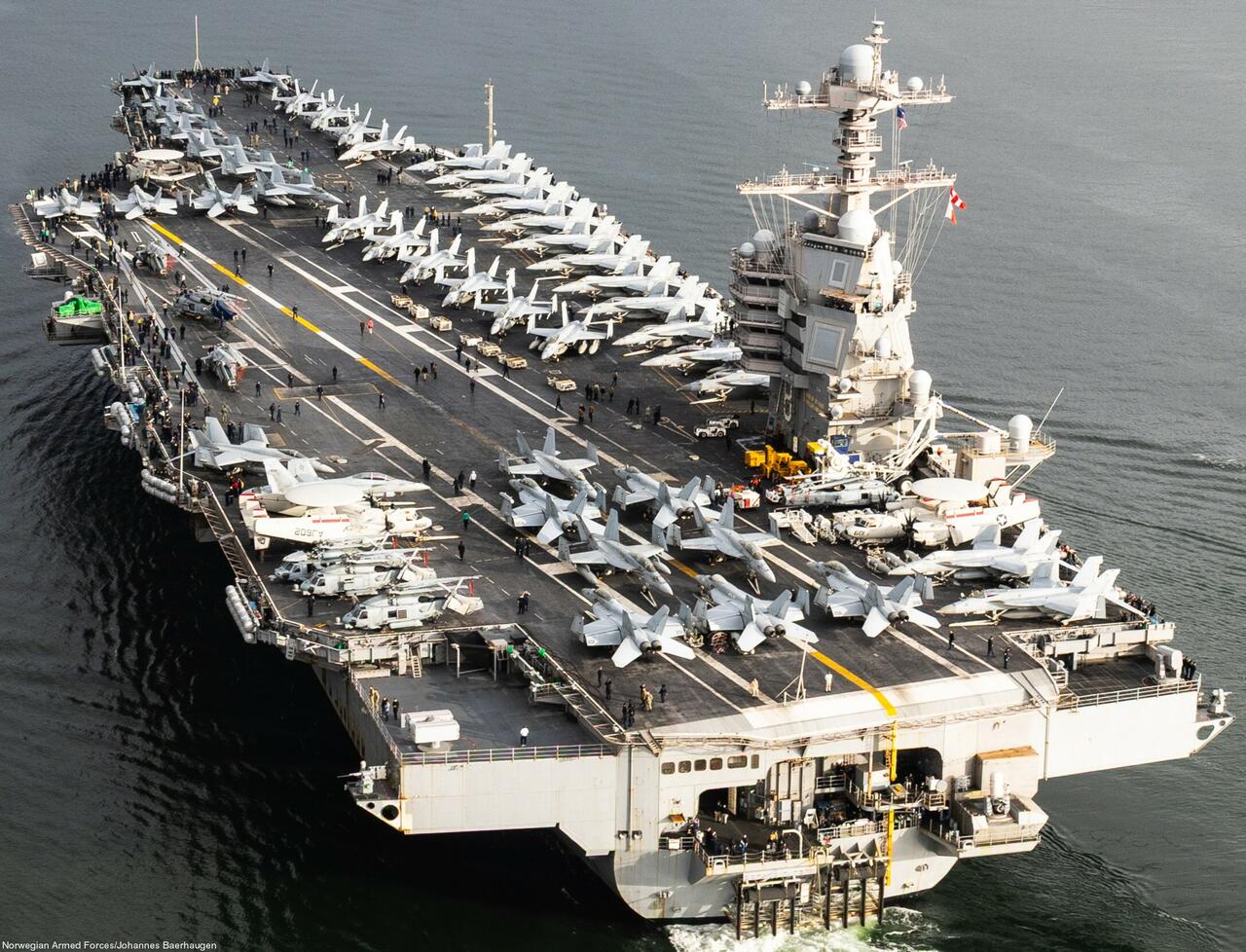
Soon on the heels of Netanyahu’s meeting with President Trump at the White House this week, the US has quietly ordered its USS Gerald R. Ford, the world’s largest aircraft carrier, to depart the Caribbean Sea and head to the Middle East, at a moment the White House is weighing possible military action against Iran, NY Times and others are reporting.
The redeployment will give Washington two carrier strike groups in the region, stacking additional warships alongside the already-deployed USS Abraham Lincoln as Trump turns up the pressure on Tehran over its nuclear program as well as ballistic missile arsenal. It’s expected to take at least two weeks or more for the Ford to reach its destination off Iran.
USS Gerald R. Ford, via US Navy
Trump had openly discussed the idea of sending a second carrier strike group to the region earlier this week, a clear escalation as indirect US-Iran talks in Oman sputter with no breakthrough, but he’s all the while expressed hope that he wouldn’t have to use them.
“The ship’s crew was informed of the decision on Thursday, according to four U.S. officials who spoke on the condition of anonymity because they were not authorized to speak publicly about the decision,” NY Times reports.
Previously, the Ford had been operating in the Caribbean after its abrupt redeployment from the Mediterranean, as part of the earlier show of force tied to Venezuelan operations – making its rapid retasking toward Iran a stark reversal of routine scheduling for one of America’s 11 total carriers available globally.
On this, the NY Time details:
The Ford’s warplanes participated in the Jan. 3 attack on Caracas that captured President Nicolás Maduro. The strike group’s current deployment has already been extended once, and its sailors were expecting to come home in early March.
The new delay will further jeopardize the Ford’s scheduled dry dock period in Virginia, where major upgrades and repairs have been planned.
Trump has warned Tehran that failure to cut a deal would be “very traumatic” even as US diplomacy clings to the possibility of a quick agreement.
Trump took the opportunity to repeat a US ultimatum to Tehran early this week: “Either we will make a deal or we will have to do something very tough like last time,” he told Axios to kick off the week. The Iranians will no doubt have this ringing in their ears headed into a planned second round of talks next week.
The USS Abraham Lincoln and its strike group currently there, just south of Iran, involves dozens of fighter jets, Tomahawk missiles, along with several support warships.
Trump has still claimed that Iran “wants to make a deal very badly” and is engaging much more seriously than in the past. There are signs that this is accurate, given the latest offer to dilute its enriched uranium in exchange for the lifting of all sanctions.
The US president days ago articulated his view that the June war taught the Iranians a huge lesson: “Last time they didn’t believe I would do it,” Trump said. “They overplayed their hand.”
US Navy aircraft carrier status as of today.
Deployed – 2
Available to deploy – 1
Post deployment availability – 2
Training – 2
Maintenance – 5 pic.twitter.com/OEHpB5MWZo
— TheIntelFrog (@TheIntelFrog) February 9, 2026
Meanwhile, two observations from The Economist’s Gregg Carlstrom:
1) The lesson from last summer’s failed effort at diplomacy is to watch what Trump does, not what he says; his vaguely optimistic statements about negotiations do not reflect reality (and that goes double for Witkoff’s).
2) No matter how much Trump beefs up the American military presence in the Middle East, he still lacks the sort of military option he prefers (a quick, decisive “win”).
Tyler Durden
Fri, 02/13/2026 – 08:55