










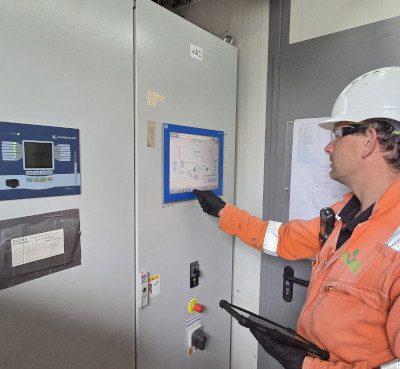
Recording engine readings is one element of maintaining certification.
Anaerobic digestion (AD) plants across the UK are raising the bar on compliance and safety through the introduction of Competency Management System (CMS) certification – a standard created by the Energy and Utility Skills (EUS) body and recognised by the Environmental Agency (EA). One group to have embraced the certification is AD operator Eco Verde Energy (EVE), which explains more about the benefits.
EVE has introduced CMS certification across its five active anaerobic digestion (AD) waste sites, which have a total potential capacity to turn 235,000 tonnes of organic farm and food wastes into renewable energy and electricity for the grid.
The move marks a shift away from reliance on individual Waste Management Industry Training & Advisory Board (WAMITAB) qualifications, enabling EVE to demonstrate collective competency across its sites. This approach offers operational flexibility and a more robust approach to environmental compliance.
Health, Safety, Environment and Quality director at EVE, Will Rogers, says the introduction of CMS ensures all staff on site are trained and accountable.
“The benefit of the CMS certification is that it’s the collective responsibility of everybody on site as they all have technical competency,” he said.
CMS certification aligns with EVE’s management systems including ISO 9001, 14001 and 45001, helping to reduce duplication, streamline audits and strengthen environmental and safety standards.
With multiple sites around the UK, scalability is an important factor for EVE, and CMS certification allows potential new sites the option for seamless integration into management systems.
“It works for multi-site operations, because you can scale it and everyone’s working to the same set of standards,” said Will.
Although AD has faced challenges around public perception, independent third-party certification demonstrates a commitment to efficiency, safety and continual improvement.
Will Rogers added: “The industry needs to show that we are being effective in terms of competency approaches, and that we’re demonstrating that to regulators and stakeholders.
“These certifications are assessed against UKAS standards, with rigorous audits over many years. This ensures AD remains a renewable circular business without added environmental risks.”
With renewable energy services currently in the spotlight of the UK’s goals to de-carbonise the country by 2050, certification and training is key to showing the commitment of the AD industry in reaching these targets.