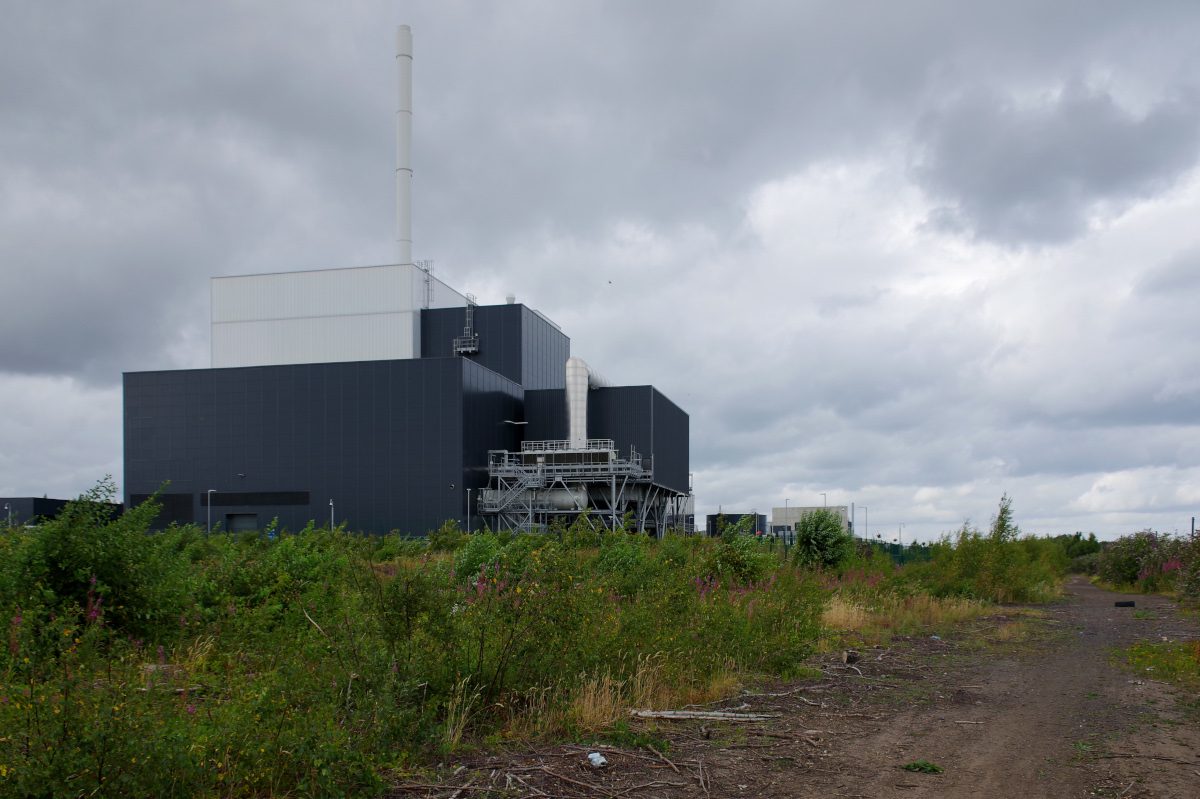





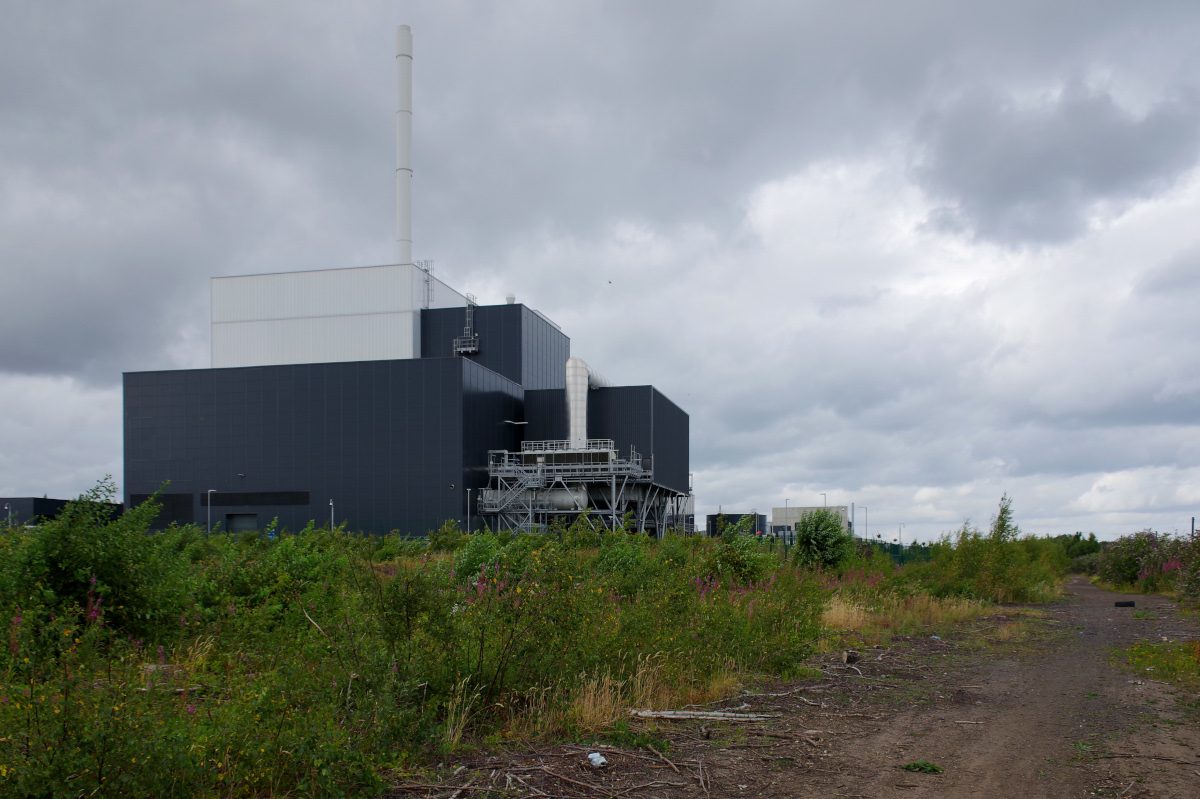
Waste incinerator at Danderhall, Lothian (image credit: Matt Buck, CC BY-SA 2.0 license).
Environmental Standards Scotland (ESS) has reached agreement with the Scottish Government on a series of actions that will bring clarity over Scotland’s future incineration capacity needs and ensure that consideration is given to them when determining applications for increasing incineration capacity in Scotland.
The environmental governance body said these actions will help ensure that Scotland does not become overly reliant on incineration as a means of waste management, known in the industry as, ‘incineration lock-in.’
While incineration is considered to have a lower climate impact than landfill, there is a concern that unregulated growth of the industry poses a risk to public health, threatens to undermine preferable waste management options such as recycling, and could hamper Scotland’s net zero ambitions.
More than 1.86 million tonnes of waste1 was burned in Scotland in 2024, an increase of 354% from 2011. The shift towards increased incineration has resulted in the construction of new incineration facilities. As of 2024, 18 permitted incineration sites were operating in Scotland.2 In addition, the available capacity at an existing facility has also increased. For example, in 2023, the waste facility in Dunbar expanded its capacity by 65,000 tonnes.
ESS undertook an investigation following concerns raised that the Scottish Government had failed to implement a key recommendation from a 2022 independent review of incineration.3 This recommendation concerned the development of an indicative residual waste management cap intended to prevent long-term incineration overcapacity and support Scotland’s transition to a circular economy. Although the Scottish Government accepted this recommendation at the time,4 it was never implemented.
Concerns had also been raised to ESS that the Scottish Government had failed to control incineration capacity effectively.
A new report published on 9 December by ESS, “The effectiveness of the Scottish Government’s Implementation and Application of Environmental Law in relation to Incineration Capacity in Scotland”, outlines the measures the Scottish Government has agreed to implement in response to the concerns raised by ESS’ investigation.
These measures include commitments to:
publish an updated forecast of incineration capacity in Scotland
develop an indicative residual waste treatment cap through the forthcoming Residual Waste Plan (due in 2027)
integrate the national indicative cap into the Scottish Environment Protection Agency’s permitting framework, ensuring that national capacity is considered when assessing all environmental authorisation applications for capacity changes.
Mark Roberts, Chief Executive of ESS, said: “While well-regulated incineration has a role in managing unavoidable residual waste, we must prevent the potential harm caused from over-reliance on this method of waste management.
“The Scottish Government’s commitment to develop an indicative cap and ensuring this is reflected in SEPA’s permitting regulations, will provide a strategic benchmark for decision making, reinforce the objectives of the waste hierarchy and prevent overcapacity that could undermine wider recycling and waste reduction efforts.
“We will continue to monitor the implementation of the new measures and provide updates to the public on progress.”
Notes
[1] Waste Incinerated in Scotland 2024
[2] ibid
[3] Scottish Government Response to: Stop, Sort, Burn, Bury? The Independent Review of the Role of Incineration in the Waste Hierarchy in Scotland
[4] ibid