








Study Of Military Meals Finds Low Nutrients, Concerning Contaminants
Authored by Ryan Morgan via The Epoch Times (emphasis ours),
America’s troops may be getting few of the nutrients they expect, and many harmful compounds they don’t, according to a new laboratory study of military rations and meals provided to troops on armed forces bases.
The nonprofit Moms Across America, working in collaboration with the military chapter of Children’s Health Defense and the Centner Academy, commissioned laboratory testing of 40 different military food samples to examine their nutritional value.
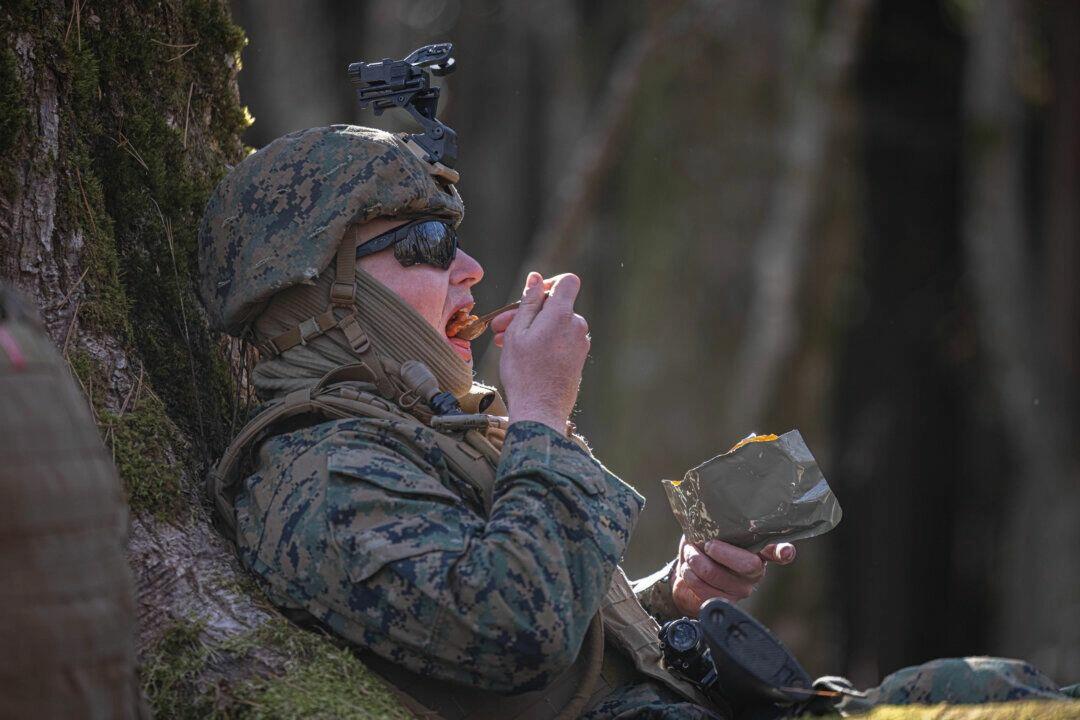
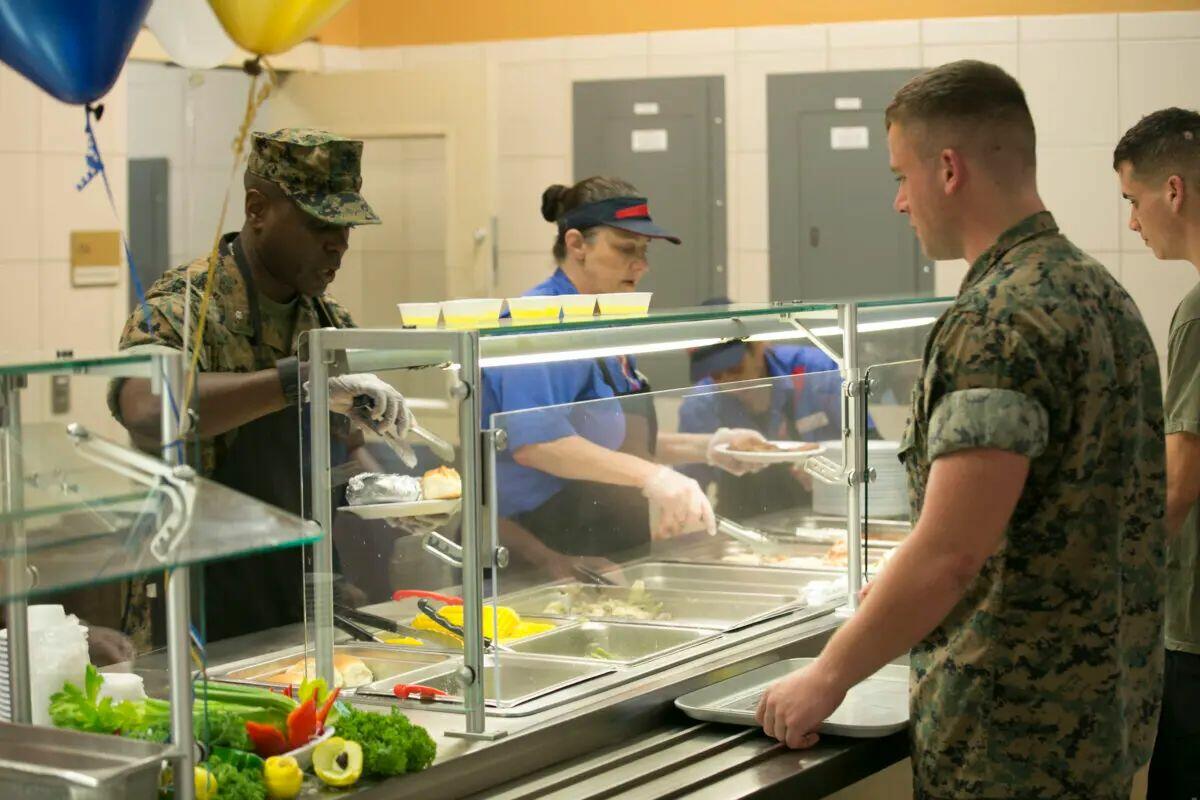
The study examined 16 cafeteria meal samples from six different military bases, as well as 24 different Meal, Ready-to-Eat (MRE) field rations that troops rely on when deployed in combat zones.
A report of the study findings published on Feb. 4 states that 100 percent of the food samples studied contained harmful pesticide residues.
One sample of teriyaki beef stick tested positive for nitroimidazole, a veterinary medication that the U.S. government banned for use in food-producing animals.
The study also found samples with high levels of heavy metals, including arsenic levels at 430 percent higher than the Environmental Protection Agency’s safe drinking water standards.
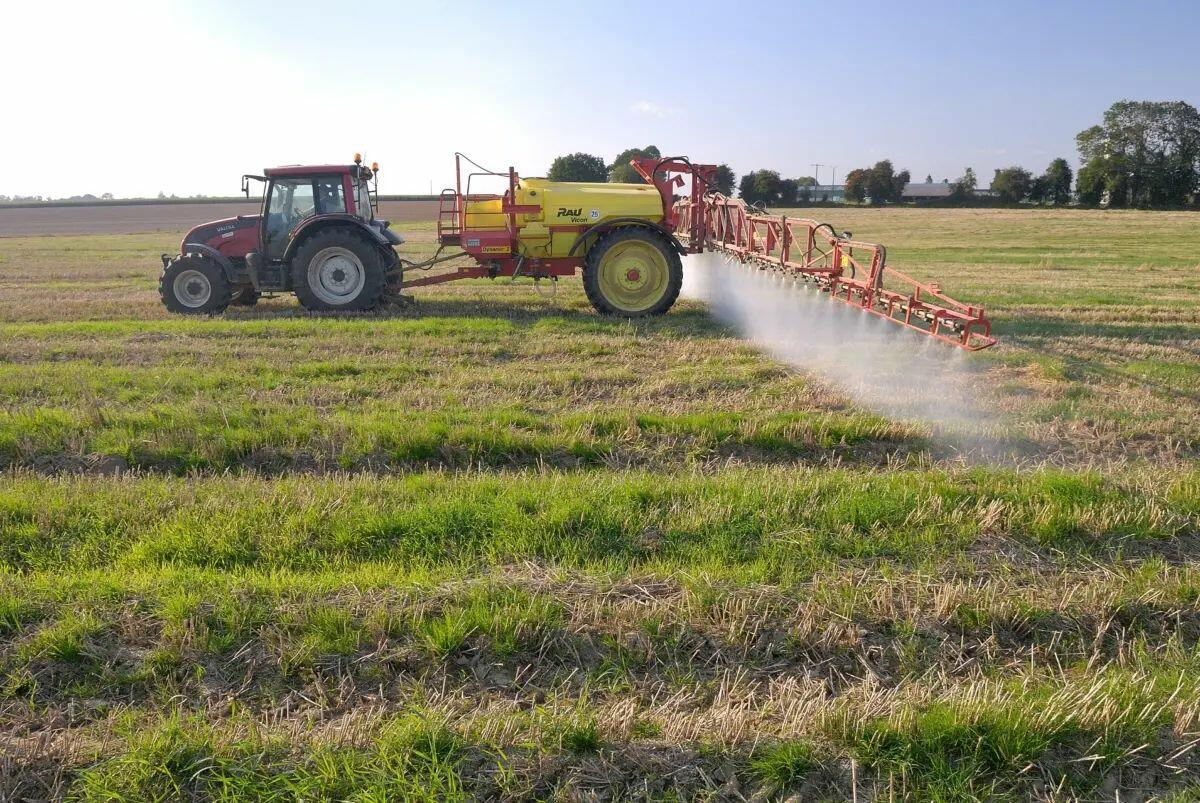
Laboratory testing detected glyphosate—a herbicide and crop desiccant—in 95 percent of the military meal samples.
The study also found the meal samples had nutrient levels far below U.S. Department of Agriculture (USDA) standards.
“America’s service members are trained to withstand extreme physical, mental, and environmental stress in defense of the nation,” said licensed nutritionist and Moms Across America board member Kendall Mackintosh. ”In return, the United States has a fundamental obligation to protect their health, safety, and well-being, especially when it comes to the food they are required to consume daily, often exclusively, during training, deployment, and combat operations.”
Controversial Herbicide Found in Military Rations
The authors of the new report on the nutritional value of military meals raised concerns about multiple potential harmful effects from glyphosate.
They described the compound as a carcinogen, meaning it can raise the risk of cancer. They added glyphosate is a chelating compound that can block the uptake of nutrients into food crops.
“I would say that the glyphosate and the pesticides were the two most concerning observations after the study was published,” Carolyn Rocco, the co-founder of the military chapter of Children’s Health Defense, said in an interview with The Epoch Times.
Glyphosate has been a subject of recent scrutiny in the medical community.
A frequently cited 2000 study had described glyphosate as not harmful. But in December, the journal that published the study retracted it, citing ethical concerns.
Groups like Moms Across America and Children’s Health Defense have associated with the Make America Healthy Again (MAHA) movement.
This movement has been at the forefront of efforts challenging glyphosate’s broad use across the U.S. agricultural industry.
Speaking with The Epoch Times, Moms Across America founder and executive director Zen Honeycutt said her organization began to investigate the herbicidal compound in 2013.
“We cannot MAHA without getting glyphosate out of our food system,” Honeycutt said.
Nutrition as a National Security Matter
Moms Across America has commissioned similar nutrition studies of lunches found at school cafeterias, as well as fast food restaurants.
As she spoke with The Epoch Times, Honeycutt acknowledged that the problems found in the recent study of military meals are not far out of step with the findings from these previous studies.
“We would imagine that all conventional standard American diet food would be the same as this,” she said.
On the other hand, Moms Across America and Children’s Health Defense are using their latest study findings to present America’s overall nutritional outlook as a national security concern.
The report on the lab results ends with several calls to action.
Honeycutt noted President Donald Trump’s recent calls for the U.S. military budget to grow by around 60 percent next year, to $1.5 trillion.
“We’re calling for President Trump to designate less than 2 percent of the military $1.5 trillion budget to go to supporting farmers, American farmers, to transition to regenerative, organic farming,” she said.
Through continuing investment in efforts to promote organic farming, Honeycutt hopes to see the U.S. military and then the broader general public gain increased access to more nutritious food.
U.S. Army Lt. Col. Theresa Long, who serves as a senior military adviser to Health and Human Services Secretary Robert F. Kennedy, Jr., elevated the recent study of military meals in a Jan. 15 letter to Kennedy and Secretary of War Pete Hegseth.
“Food safety and security is a national security issue,” Long wrote.
Likewise, Long called on Kennedy and Hegseth to collaborate on efforts to address food security.
The MAHA movement was a key plank of Kennedy’s 2024 presidential campaign.
Kennedy also worked as the chief legal counsel for Children’s Health Defense until joining the Trump administration as Health and Human Services secretary.
Since taking charge at the Pentagon, Hegseth has emphasized efforts to whip the military into shape.
At an unprecedented gathering of senior military officers at the Quantico Marine Base in Virginia in September, Hegseth expressed disdain at the sight of overweight troops.
The Pentagon did not respond by publication time to a request for comment on Long’s letter and the findings from the new nutritional study on military meals.
* * *
Please consider supporting ZeroHedge with the purchase of organic mangoes.
Tyler Durden
Thu, 02/05/2026 – 22:35