




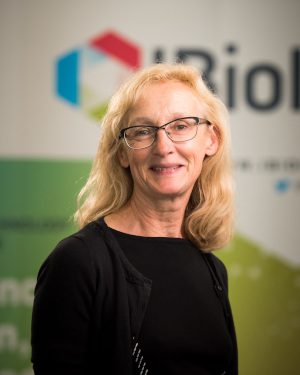
Liz Fletcher is director of impact and deputy CEO at the Industrial Biotechnology Innovation Centre.
By Liz Fletcher
Industrial biotechnology is often portrayed as something that happens solely within controlled lab environments, yet that view misses a significant opportunity. The bioeconomy is far broader than just the science that underpins it, stretching across supply chains, land use and sectors that have not traditionally been considered part of the biotechnology story. However, when attention shifts beyond the lab, a much wider landscape comes into focus, one that is filled with overlooked resources and underused potential, much of which is already being generated through everyday agricultural activity.
Recognising this broader picture, and the possibilities it opens, is the first step toward building a more resilient and regenerative economy for Scotland where biotechnology and agriculture work harmoniously alongside each other. Across the country, farms are already producing materials with the potential to fuel a new wave of sustainable industries, simply through the by‑products of food and fibre production. At the same time, interest is growing in planting new crops to supply bio‑based manufacturing, adding another layer of value to what Scotland’s land already delivers.
Much of what farmers produce has always had more than one purpose, yet systems have traditionally focused on the primary product and overlooked everything else. Industrial biotechnology shifts this perspective, highlighting significance in materials that have long been treated as low‑value while opening the door to new crops being planted on Scottish farmland.
This shift matters because reliance on petrochemicals touches almost every aspect of daily life, from household products to medicines. Industrial biotechnology offers a cleaner, more sustainable route to many of these essentials by using biomass and microbes to create similar chemicals and materials.
The biotechnology industry is expanding rapidly, and Scotland has the scientific capability, and natural assets, to play a leading role. Achieving that, however, requires stronger connections between those who understand the land and those who understand the technology. Farmers are already generating products with significant untapped value, and they are well placed to grow new crops that could supply high‑value markets. Joining a cooperative organisation, such as the Scottish Agricultural Organisation Society (SAOS), helps reduce the risks associated with new investments, unlocking access to emerging market opportunities while strengthening farmers’ bargaining power with buyers.
There is also a significant climate opportunity. Industrial biotechnology can support lower‑emission farming, improve soil health and reduce reliance on imported materials linked to deforestation. Crops that thrive in Scottish conditions can become both carbon sinks and sources of sustainable feedstock, giving farmers a practical route to contribute to climate targets while strengthening their own businesses.
However, this transition does not come without challenges. New markets require new infrastructure, knowledge and confidence. Farmers need clarity on buyers, pricing and quality standards, as well as assurance that any investments are worthwhile. These are real considerations but should not be insurmountable barriers. Scotland has a long tradition of cooperation and shared investment, and that model is well suited to supporting the growth of the bioeconomy. Government also has an important role to play in helping farmers participate fully in this emerging sector.
What is essential now is a shift in mindset and for industrial biotechnology to engage in a new conversation. Many of the possibilities within the bioeconomy are still unfamiliar to those working the land, simply because this is a new language for the sector. Yet the potential is already here, in what Scotland produces today and in what could be grown tomorrow. It is up to those working in industrial biotechnology to engage with farmers to explore new opportunities to work hand in hand to generate these high‑value opportunities. Real progress will come from shared ambition, shared investment, and a shared commitment to unlocking the value of Scotland’s land in new ways.