








IMF Urges Beijing To Curb Industrial Subsidies As Flood Of Chinese Goods Crushes Global Industrial Bases
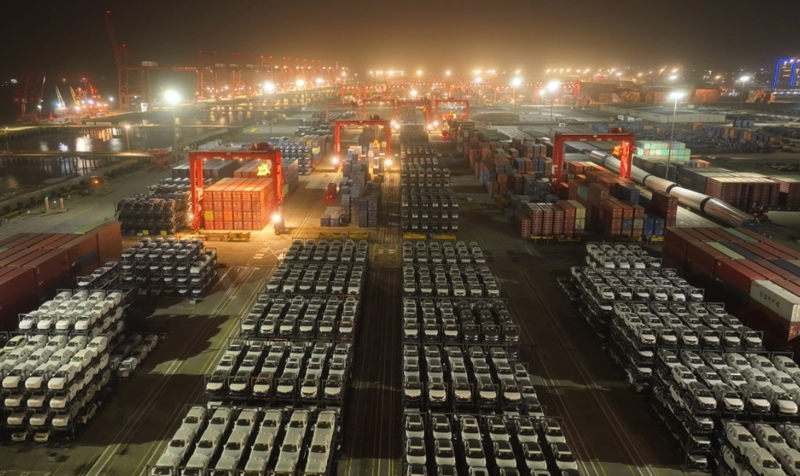
China’s factory overcapacity is the result of Beijing’s long-running industrial policies. Years of state support have built more factory capacity than domestic demand can absorb in the world’s second-largest economy, flooding global markets with low-priced goods, from EVs to TVs. The end result is a growing risk of hollowing out industrial bases worldwide, and our latest example this week has washed up on Europe’s shores in the form of EVs.
China has absolutely killed the European auto market pic.twitter.com/J2AD2zyRea
— zerohedge (@zerohedge) February 19, 2026
January registrations of Chinese EVs across Europe were certainly eye-opening, signaling the decline of Europe’s industrial base (read the note here). As Anduril Industries founder Palmer Luckey recently warned, “China would love to wipe out the American automotive industry, partly for economic reasons, because it also means we will never be able to fight a war against them…”
It appears the rest of the world is finally getting the memo after more than a decade of Chinese overcapacity flooding global markets and pressuring industrial bases worldwide into collapse.
The International Monetary Fund warned this week that Beijing should significantly scale back state support for industry, citing spillover risks that could undermine manufacturing bases abroad.
China’s industrial policies “are giving rise to international spillovers and pressures” and, compounded with soft domestic demand, are making the world’s second-largest economy “more reliant on manufacturing exports as a source of growth,” the IMF said.
“Industrial policy has enabled tech innovation in some sectors, but overall the impact on the economy has been negative,” said Sonali Jain-Chandra, mission chief at the IMF for China and Asia Pacific, who was quoted by the Financial Times. She pointed to “resource misallocation” and “overspending.”
IMF data show that China spends roughly 4% of GDP subsidizing companies in critical industries that, in turn, export goods worldwide. It stated that the figure should be reduced to about 2%.
At this point, China should be retooling its economy to boost domestic demand, yet Beijing is leaning heavily on supply-side measures to sustain its industrial dominance.
France’s Emmanuel Macron has bemoaned “unbearable imbalances” in trade, while other European leaders and industrial insiders warned last week that carbon costs are squeezing EU industrial competitiveness and need to be fixed urgently.
Meanwhile, the IMF has urged Beijing to move toward a “consumption-led growth” model for its economy, which would involve demand-side reforms to support household consumption.
If countries such as those in Europe fail to respond effectively to the flood of cheap Chinese goods, their industrial bases could suffer lasting damage, potentially proving disastrous in wartime. Under President Trump, the US began to reverse course and repair its industrial base as unipolarity gives way to a dangerous bipolar world.
Tyler Durden
Thu, 02/19/2026 – 23:00