







Supreme Court To Hear Lawsuits Over Americans’ Seized Assets In Cuba
Authored by Matthew Vadum via The Epoch Times,
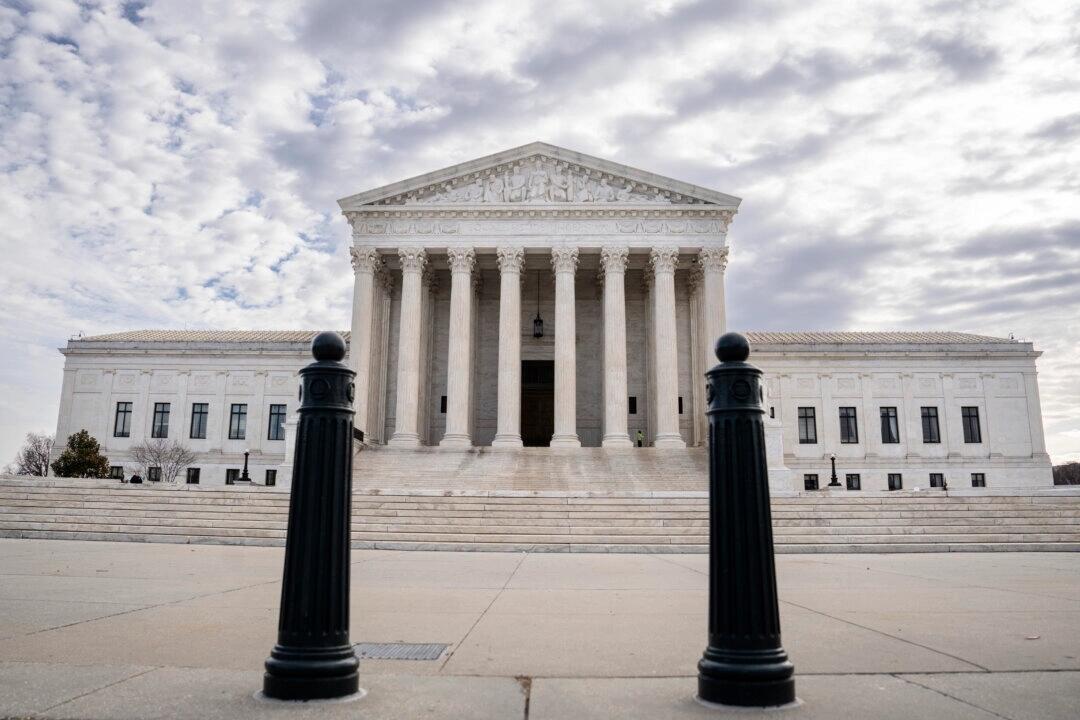
The U.S. Supreme Court is poised to hear two cases on Feb. 23 about U.S. business assets that Cuba’s communist government seized decades ago.
Both cases focus on the 1996 Cuban Liberty and Democratic Solidarity Act that was created to pressure Cuba by penalizing foreign companies “trafficking” in property that the Cuban regime seized from U.S. interests.
Also known as the Helms-Burton Act, the law allows U.S. citizens and companies to sue any person who traffics in or uses confiscated property. Trafficking in the statute includes using or profiting from the confiscated property.
The law defines “person” to include “any agency or instrumentality of a foreign state,” and contemplates civil judgments being obtained against “an agency or instrumentality of the Cuban Government.”
Cuba’s late dictator Fidel Castro overthrew the then-government in 1959 and turned Cuba into a one-party state in which socialist policies were implemented, including the nationalization of the assets of foreign businesses operating in Cuba at the time.
In Exxon Mobil v. Corporacion Cimex, Exxon Mobil seeks compensation from three Cuban government-owned companies for energy assets seized in 1960 after the communists took power. The company was previously known an Standard Oil Co.
Until recently, parties like Exxon were unable to pursue claims against Cuban government-owned enterprises under the Helms-Burton Act because President Bill Clinton suspended Title III—the part of the law allowing compensation lawsuits to be filed.
In his first term, President Donald Trump revoked the suspension on May 2, 2019, and Exxon Mobil filed its lawsuit the same day.
The legal issue in the case is whether the Helms-Burton Act “abrogates foreign sovereign immunity” in cases against Cuban entities, the company said in its petition.
Foreign sovereign immunity is a legal doctrine that prevents governments from being sued unless they agree to be sued. Abrogation is the act of formally annulling a law or legal provision.
In 2024, a divided U.S. Court of Appeals for the District of Columbia Circuit ruled that a separate federal statute poses an additional hurdle for lawsuits against Cuban entities. That court held that Title III claims may only proceed against Cuban entities if the lawsuit falls under an exception in the Foreign Sovereign Immunities Act, which generally forbids lawsuits against foreign governments but allows suits involving commercial activities or property seized in violation of international law.
The appeals court ruled that when the district court considered the case, it failed to properly analyze whether the commercial activities exception applied, and sent the case back to that court for further consideration.
Exxon Mobil argues the Foreign Sovereign Immunities Act shouldn’t be interpreted to deprive the company of the judicial remedies promised by Helms-Burton.
Exxon is seeking compensation upwards of $1 billion for assets seized by the Cuban government in 1960. At the time of the confiscation of the assets, then belonging to subsidiaries owned by Standard Oil, they were worth $70 million.
However, Exxon wants $1 billion in the current claim because interest has accrued and there is potential of enhanced damages.
Cuban government-owned company Corporacion Cimex argued in a brief that if Exxon’s legal argument prevails, it could open U.S. courts to a flood of lawsuits against foreign entities like itself, despite the Foreign Sovereign Immunities Act protections.
The other case, Havana Docks Corp. v. Royal Caribbean Cruises, involves U.S.-based company Havana Docks Corp., which, in its petition, described the case as “the most important case involving U.S. foreign policy toward Cuba to reach this Court in the past sixty years.”
Havana Docks Corp. built the port of Havana’s docks at its own expense in exchange for a concession to run those docks for 99 years. The Cuban government unilaterally ended the concession without compensation in 1960, which had 44 years left to run, along with the company’s property interest in the docks, according to the petition.
In October 2024, a divided U.S. Court of Appeals for the 11th Circuit overturned a more than $100 million judgment against various cruise lines for trafficking in confiscated property by using expropriated docks in Cuba.
The appeals court held that the cruise lines could not be held liable for using the port facilities because Havana Docks’s property interest “expired in 2004,” according to the provisions of the 99-year concession the company was originally granted.
The appeals court “effectively nullified” the right to sue under Title III, the company said in the petition.
The petition said the cruise lines used the confiscated docks even after the U.S. Department of Justice’s Foreign Claims Settlement Commission certified Havana Docks’s claim against Cuba for taking its property interest in the docks.
The cruise lines disembarked almost one million tourists on the docks from 2015 to 2019, paying Cuba at least $130 million and earning more than $1 billion from their Cuban cruises, the petition said.
The cruise lines argue that Havana Docks Corp. has no legal claim against them because even though that company once had permission to use the docks, it never actually owned the docks, which always remained the property of the Cuban government.
The Supreme Court is expected to rule on the two cases by the end of June.
Tyler Durden
Mon, 02/23/2026 – 14:05