






What The FBI Is Investigating In Criminal Probe Of 2020 Election
Authored by Petr Svab via The Epoch Times (emphasis ours),
After the election offices of Georgia’s most populous county were raided last month, the FBI has disclosed information indicating where its investigation is heading.
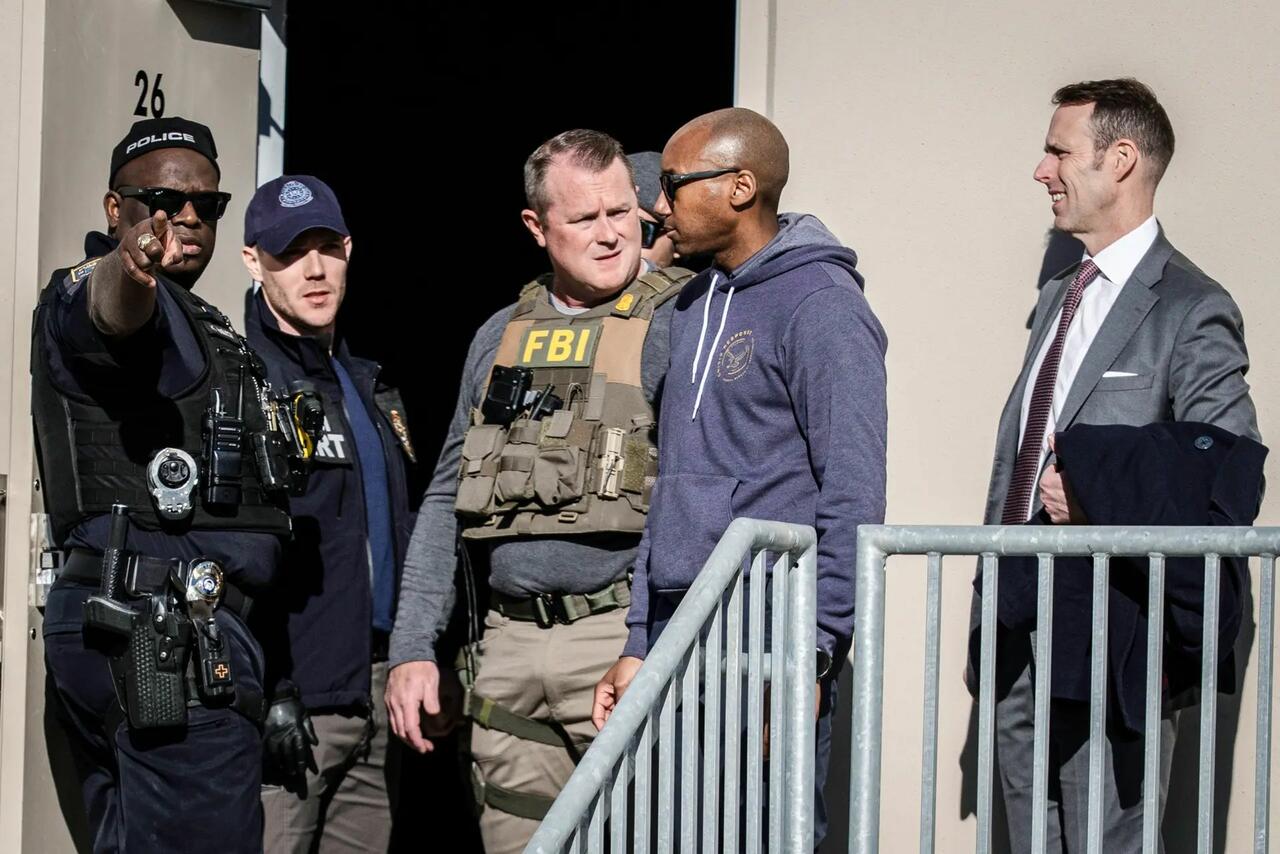
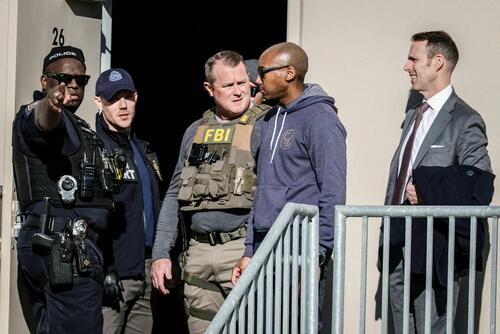
FBI agents are seen at the facility in Union City, Ga., on Jan. 28, 2026.
Federal laws may have been broken during the 2020 election according to the affidavit supporting the court-approved raid. Yet the breadth of the materials seized shows the FBI may be able to check the integrity of the ballots more broadly, uncovering further issues or putting speculation to bed.
President Donald Trump’s campaign challenged the Georgia election most vigorously, as he lost the state to President Joe Biden by fewer than 12,000 votes according to the official tally. The legal challenges failed. Instead, Trump was indicted based on rationale that his efforts to challenge the election results were allegedly executed with corrupt intent. The case was dismissed after he became president again in 2025.
The renewed investigation now targeting Fulton County, which covers the broader Atlanta area, uses a rationale analogous to the case against Trump. The affidavit states that if known irregularities in the election were intentional, such acts would be criminal.
On Jan. 28, agents seized some 700 boxes of election records, including physical ballots from the 2020 election. County officials have since filed a lawsuit seeking to have the materials returned.
The issues detailed in the affidavit were largely discovered years ago by concerned citizens using data obtained through freedom of information requests or litigation. Georgia Secretary of State Brad Raffensperger, who was responsible for overseeing the election and is running for governor of the state, has dismissed the issues as administrative and human errors too small to affect the election’s result.
The FBI, however, has a different perspective.
“If these deficiencies were the result of intentional action, it would be a violation of federal law regardless of whether the failure to retain records or the deprivation of a fair tabulation of a vote was outcome determinative for any particular election or race,” reads the affidavit signed by FBI Special Agent Hugh Evans.
Raffensperger has repeatedly stressed that the 2020 votes were counted three times, including a hand recount and a machine recount.
However, many of the deficiencies outlined in the affidavit happened during these recounts.
The Fulton County Election Hub and Operation Center is seen in Union City, Ga., on Jan. 28, 2026.
The Original Count
Vote counting in Georgia starts by law on election day. Fulton County had more than half a million ballots to tabulate—almost 90 percent cast early or by mail. The result was announced several days later: Biden won the county by 26-point margin.
One issue with the results was a lack of receipts. Each tabulator machine should be “closed” at polls closing and tabulator tape should be printed out to show how many ballots and votes for each candidate were counted. Then, the tape should be signed by the poll manager and two witnesses.
Yet tabulator tapes for more than 300,000 votes weren’t signed, and some were missing altogether, wrote Evans, referring to an analysis by Clay Parikh, a voting machine security expert.
Raffensperger said that was merely administrative oversight, as the vote tallies aren’t recorded on the tape alone. They are also preserved on memory cards in the machines.
But Parikh’s analysis went deeper.
“Parikh identified one tabulator that was used to close out 15 tabulator machines from 12 different locations. In addition, the poll closing time and report printed times on several closing tabulator tapes were close enough in time that Parikh believed someone had to have manipulated the times on the reports,” Evans wrote.
“Parikh believed this showed that the memory cards were removed from the original tabulator and put in another tabulator to print out the closing tabulator tapes.”
The tabulators also have “protective counters” that track how many ballots have been scanned on them over their lifetime.
“The protective counters on at least five tabulator tapes from the same unit were identical,” Parikh found, according to Evans. “Some of the reported ballots scanned exceeded the protective counter number.”
“This indicated to Parikh that no ballots were ever scanned on these machines and that the numbers generated from those ballots were done so by placing an unencrypted memory card into the unit to generate the closing tape,” Evans wrote.
“This would have allowed an opportunity for the tabulation to be tampered with.”
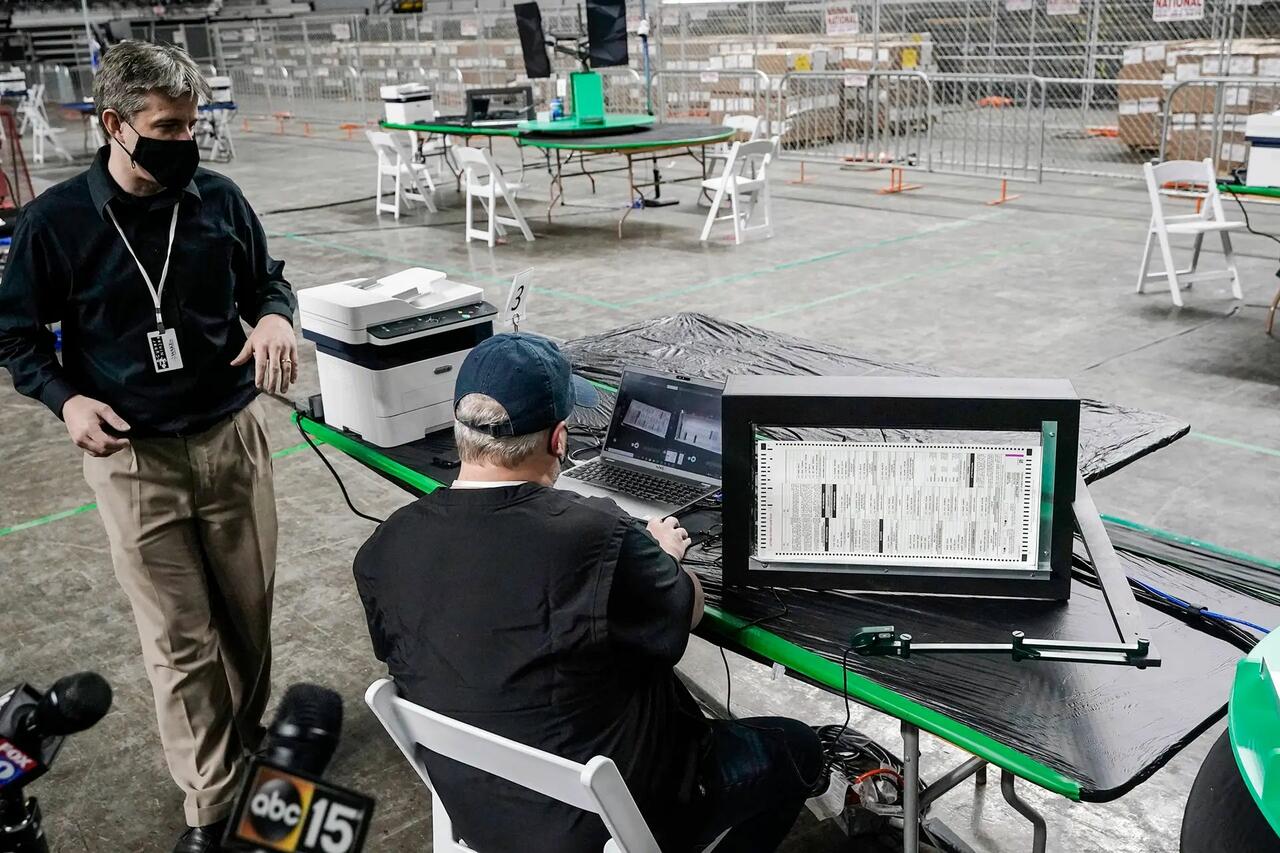
The tabulators are supposed to scan each ballot, creating a digital record. But the majority of the images from the original in-person voting count have not been preserved by the county, Evans said. At the time, the county was not legally required to preserve them, but it’s not clear why they were discarded to begin with.
“This is another impediment to ruling out non-criminal explanations for the activities during the election,” the affidavit said.
Hand Recount
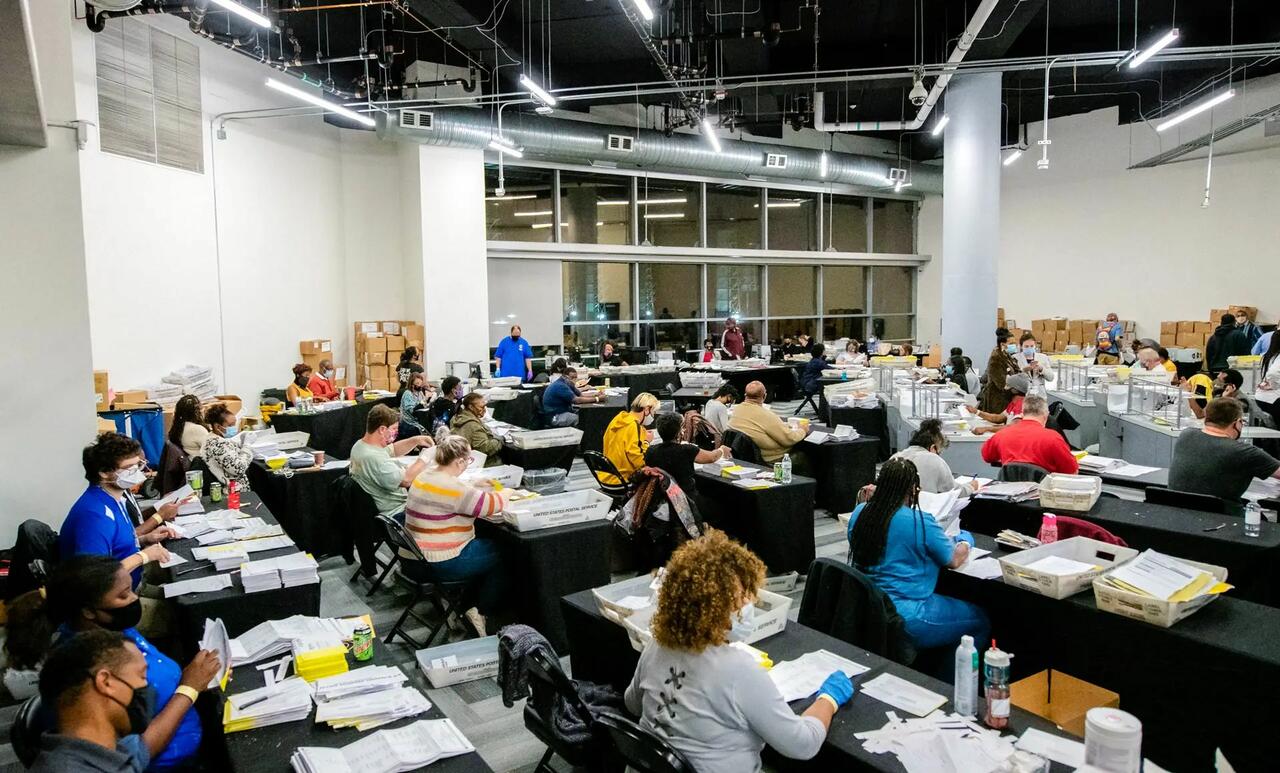
On Nov. 11, 2020, Raffensperger announced a Risk Limiting Audit. Because the race was so close, it meant recounting all the ballots by hand, according to state law. The ballots were counted in batches and the final tally for each batch was supposed to be put into an electronic auditing system called “Arlo.”
Several people who participated in the audit said they witnessed suspicious occurrences, including a batch of 110 ballots that contained 107 featuring votes for exactly the same candidates. The bubbles on them were filled exactly the same and the paper felt different from other ballots, the participants said. The ballots were marked as absentee but lacked creases from being folded in a return envelope.
It’s possible such “pristine” ballots can be created by duplication, where a damaged ballot is copied on a new one. But those should be clearly marked as “duplicate,” and the original needs to be preserved, Evans said.
One of the witnesses, who had been a poll manager for 25 years, also remembered a batch of about 60 ballots marked as coming from a senior living center. She “believed these ballots should have been folded as well but were not,” the affidavit said.
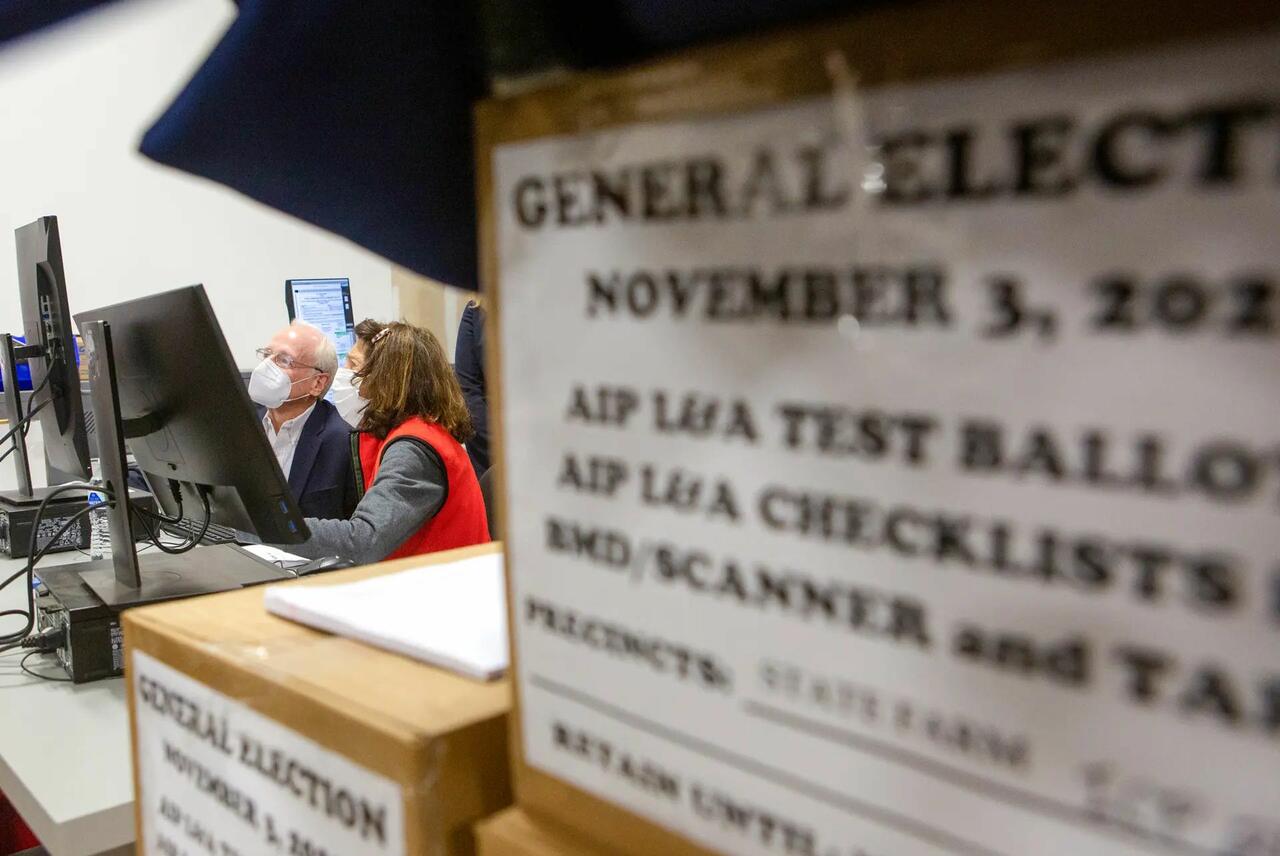
Yet another witness, one of the Fulton County Commissioners, was a poll worker at the time. When helping test the voting machines prior to the election, she saw a pile of unsecured papers used to print testing ballots.
“She stated she could have printed any ballot she wanted,” Evans wrote.
She also saw some people “printing random ballots” and managed to rip some up, according to Evans
“She was not sure the reason they were printing ballots as all the test ballots had already been printed.”
None of the witnesses in the affidavit were identified by name.
Evans also mentioned a complaint submitted to Georgia Governor Brian Kemp by chemical engineer Joseph Rossi, alleging inconsistencies in the hand recounts results for dozens of ballot batches. Kemp’s office independently verified the allegations, concluded they were factual, and passed them on to the State Election Board for an investigation, which was eventually conducted by Raffensperger’s office.
Raffensperger dismissed those as human errors during data entry. But some of them raise the question of how such a specific error could have been made.
For example, one batch was reported as 200 votes for Biden and zero for any other candidate. But when Kemp’s office checked the ballot images for that batch, it showed 85 votes for Biden, 12 for Trump, and three for other candidates.
Another batch was reported as 150 votes for Biden and zero for other candidates. In fact, the batch contained 97 votes for Biden, eight for Trump, and one for a third-party candidate.
There were two more batches reported each as 100 votes for Biden and zero for others. In fact, one had 87 votes for Biden and 10 for Trump; the other had 74 for Biden and 25 for Trump.
Read the rest here…
Tyler Durden
Mon, 02/23/2026 – 18:25