









Satellite-based IoT in a training-farm context signals a shift from pilots toward operational, skills-building deployments in underserved rural markets. Embedding LoRaWAN-over-satellite into agribusiness education creates a future user base familiar with non-terrestrial networks, accelerating downstream demand for sensors, platforms, and analytics. It also strengthens the business case for hybrid terrestrial–satellite architectures that bypass patchy cellular grids in emerging economies. This move reflects a broader IoT trend toward resilient, climate-aware monitoring in sectors where connectivity gaps have historically limited digital transformation.
SES and partners are collaborating to bring satellite-enabled IoT technology to South Africa’s next generation of farmers.
SES, a leading space solutions company, along with IoT technology provider Advannotech and additional service providers are collaborating to bring technology to South Africa’s next generation of farmers.
The project would enable young farmers to get a feel for data-driven agribusiness while participating in the Enterprising Africa Regional Network (EARN), a hands-on program combining practical farming, business skills and innovation for success.
The program aims to leverage technology to tackle food insecurity and economic growth through a climate-smart training farm in Centurion, South Africa and has successfully completed a three-month proof-of-concept trial.
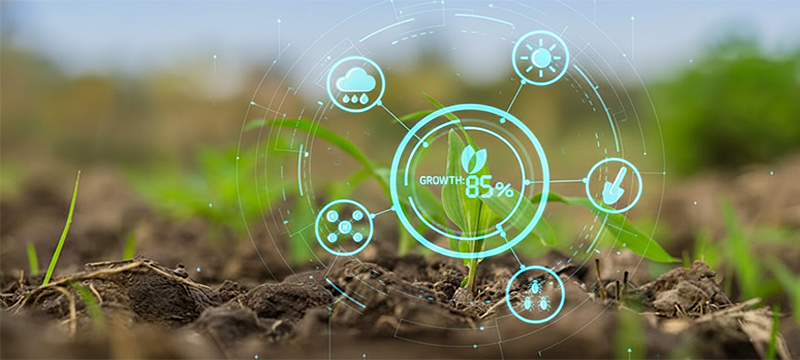
Using IoT over satellite and LoRaWAN (Long Range Wide Area Network) sensors, the project monitors soil moisture and temperature, water levels, and environmental factors such as light, CO₂, humidity and air temperature. Connected through SES satellites to a cloud-based backend, this system bypasses cellular networks to deliver consistent, real-time data even in remote locations.
“Before these IoT devices were put in the field, everything was guesswork,” said Joshua Ngoma, Founder & Chief Enabler of Enterprising Africa Regional Network (Pty) Ltd (EARN), the holding company of African Greeneurs, EARN’s youth agribusiness training subsidiary. “We used to water three times a day. But with the information you get on your phone or computer, you know exactly when to water. That saves power and conserves water, a very limited resource.”
In the past, the farm faced tech challenges due to inconsistent cellular connectivity, hindering effective monitoring of growing conditions, water management and timely response to climate shifts. But satellite connectivity has been a gamechanger. Now sensors provide alerts when conditions fall outside optimal ranges, enabling immediate action.
Hans Geldenhuys, Director, Africa, SES, said:
“Through this project we have demonstrated that satellite-enabled IoT in agriculture will assist farmers in making data-driven decisions for higher yields and sustainability, irrespective of location.”
The post Satellite IoT Empowers Data-Driven Farming in Africa appeared first on IoT Business News.