



Dozens Of Oil Tankers Divert To Red Sea As Saudis Reroute Crude Flows From Hormuz Chokepoint
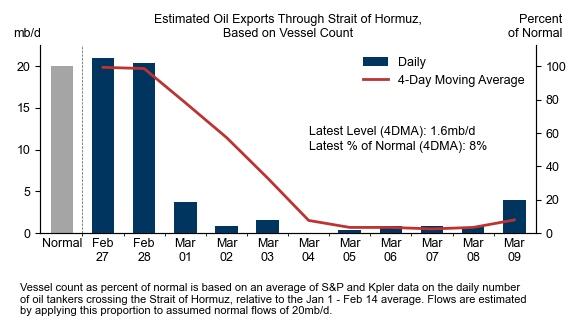
Despite continued disruption at the Strait of Hormuz chokepoint, maritime traffic has not fully collapsed.
More ships transiting the Strait with transponders turned off https://t.co/PpEsenCVCE
— zerohedge (@zerohedge) March 10, 2026
On Tuesday afternoon, reports that a U.S. warship had escorted an oil tanker through the critical chokepoint helped push Brent crude futures down toward $81/bbl, reinforcing the view that paralysis on the waterway has, for now, begun to ease.
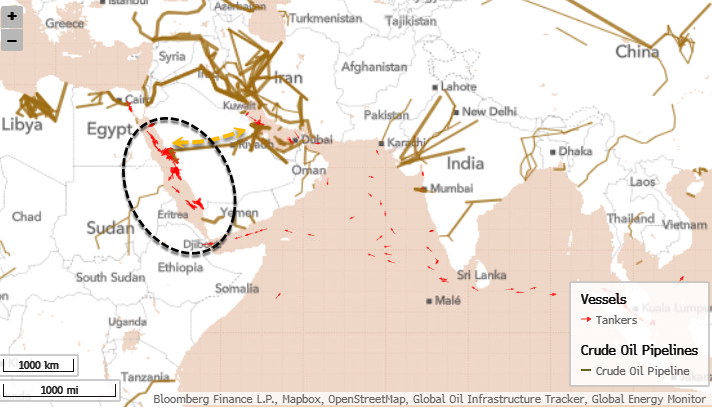
But even with signs that the critical maritime chokepoint is seeing a modest pickup in activity, this does not imply that normalcy will return this week. In fact, Bloomberg cites ship-tracking data showing uncertainty remains high, with at least 25 tankers diverted toward Saudi Arabia’s Red Sea export hub at Yanbu.
Saudi Aramco is maxing out its east-west pipeline to Yanbu, which can carry 7 million barrels per day. CEO Amin Nasser said flows should reach capacity within days as tankers divert to the energy export hub in the Red Sea. The UAE is implementing a similar workaround in Fujairah, where exports have jumped to about 1.6 million bpd this month from a recent average of about 1.1 million bpd.
“We should reach capacity in a couple of days,” Nasser said. “It’s all building on the repositioning of tankers from the east to the west.”
Bloomberg notes the conflict has already knocked about 6% off global oil output as traditional Hormuz transits remain disrupted.
Earlier, Ali Larijani, the secretary of Iran’s Supreme National Security Council, warned that the Hormuz chokepoint will “either be a strait of peace and prosperity for all” or a “strait of defeat and suffering for warmongers” as President Trump threatens retaliation against Tehran for disrupting the flow of oil.
Tyler Durden
Wed, 03/11/2026 – 02:45