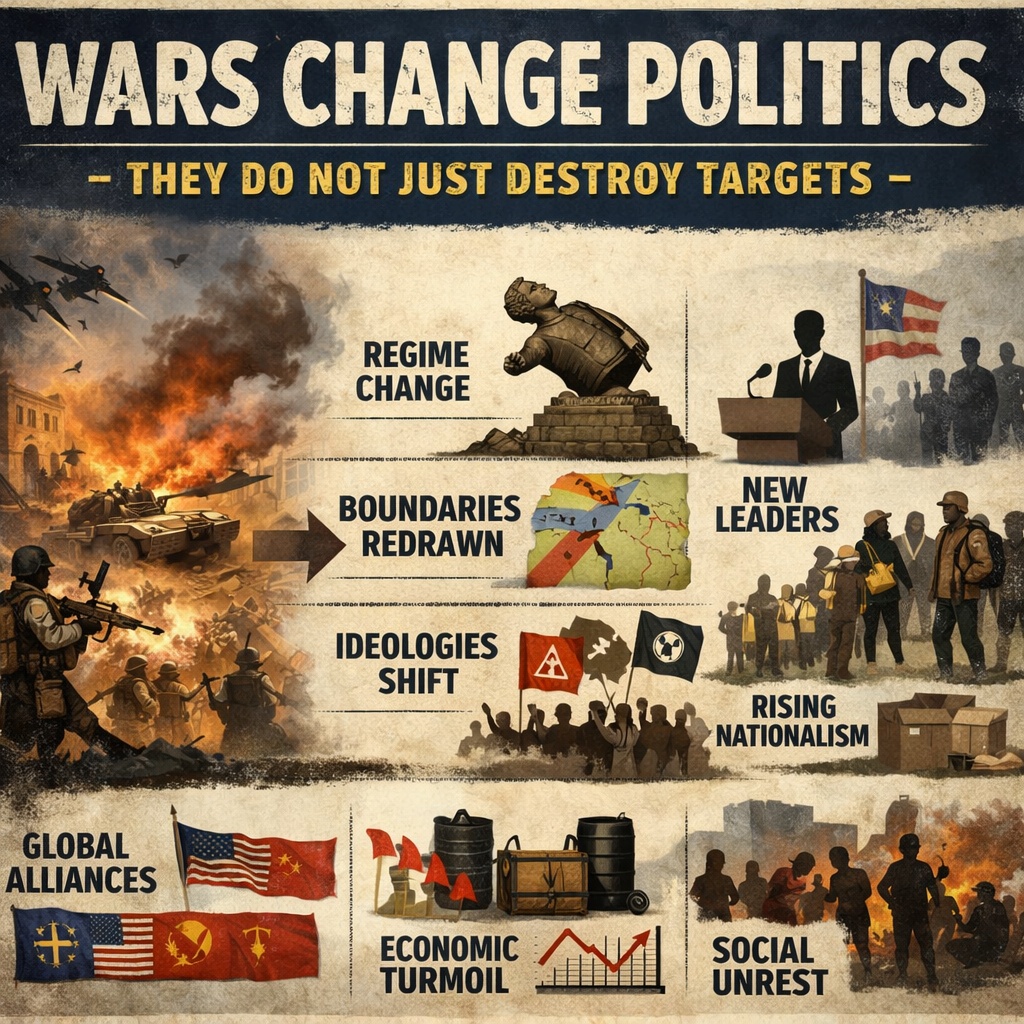







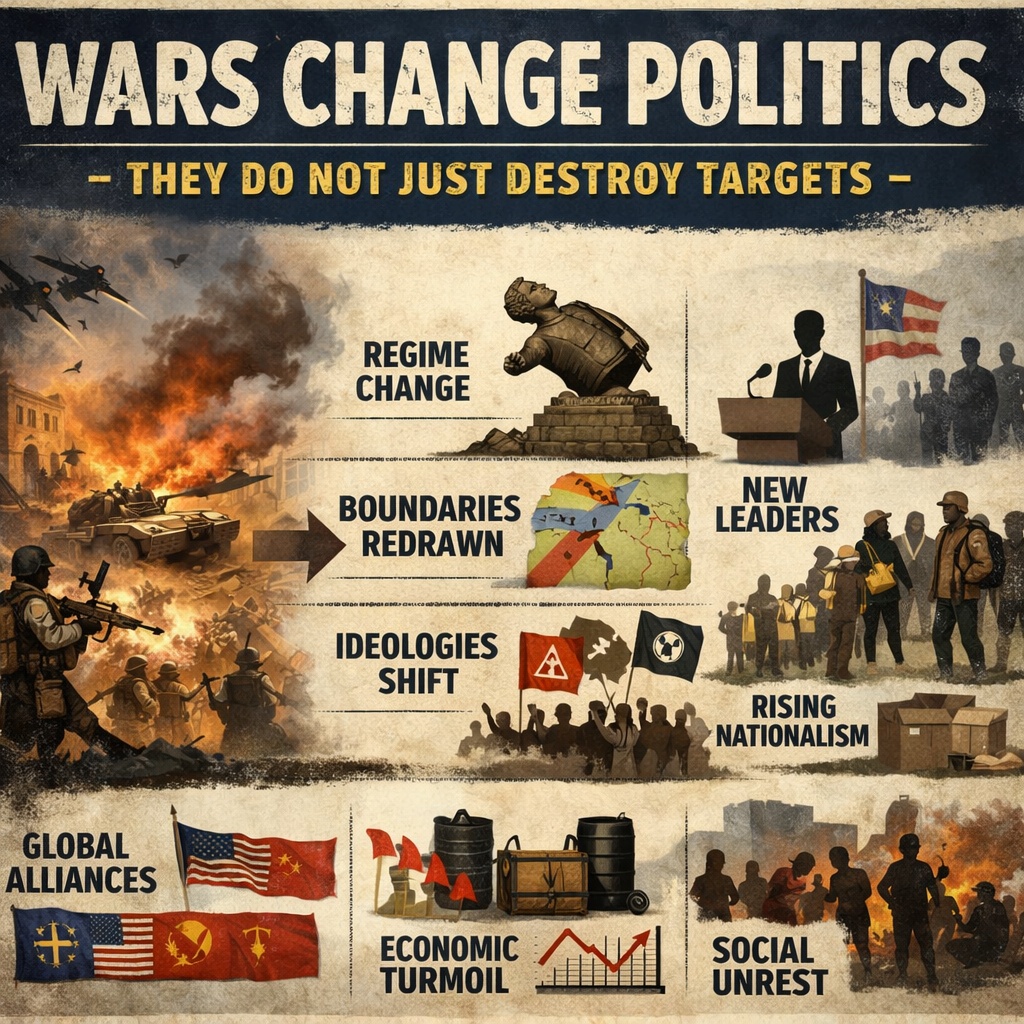
Perhaps the greatest misunderstood reality of war is that people may focus on the tactical victory of eliminating a target, but there is far more to war than merely blowing up buildings or defeating an army on the battlefield. War always results in political change in both the victor and the vanquished. What is taking place right now in the Middle East will reshape the entire region and will forever cement the image of the United States as the imperial empire. President Donald Trump stated that the next supreme leader of Iran “is not going to last long” without his approval. He emphasized that the new leader must gain approval from the United States to ensure stability and prevent future threats. That is an image of an arrogant imperialist invader from colonial days.
Wars definitively reshape politics on both sides. It may embolden the victor to believe they are invincible, but it forever instills hatred and resentment in the minds and souls of the vanquished. Netanyahu’s wish list to destroy Iran will NOT secure some sort of magical long-term victory. It will only secured a deeper and more formidable enemy for centuries. The computer is warning of a serious Directional Change in 2027 and this may all explode in 2028.
Iran’s newly appointed supreme leader, Ayatollah Mojtaba Khamenei, said on March 12 that closing the Strait of Hormuz must remain an option and vowed retaliation for Iranians killed in the conflict, according to Iran’s state news agency Islamic Republic News Agency (IRNA). Mojtaba Khamenei did not appear on camera during the broadcast. Israeli claim he may have suffered a leg injury during attacks targeting his father’s bunker. He is said to be more hardline than his father, who was against nuclear weapons. These attacks have flipped the table and increased the chance for nuclear war. The new supreme leader signaled that Iran would pursue a prolonged campaign of retaliation. He wrote:
“I assure everyone that we will not refrain from avenging the blood of your martyrs,” he added that each civilian killed by Iran’s enemies constituted a separate case for revenge.
The killing of a family member in a war is one of the most powerful and personal forces that can instill a deep, lasting hatred for the perceived enemy.
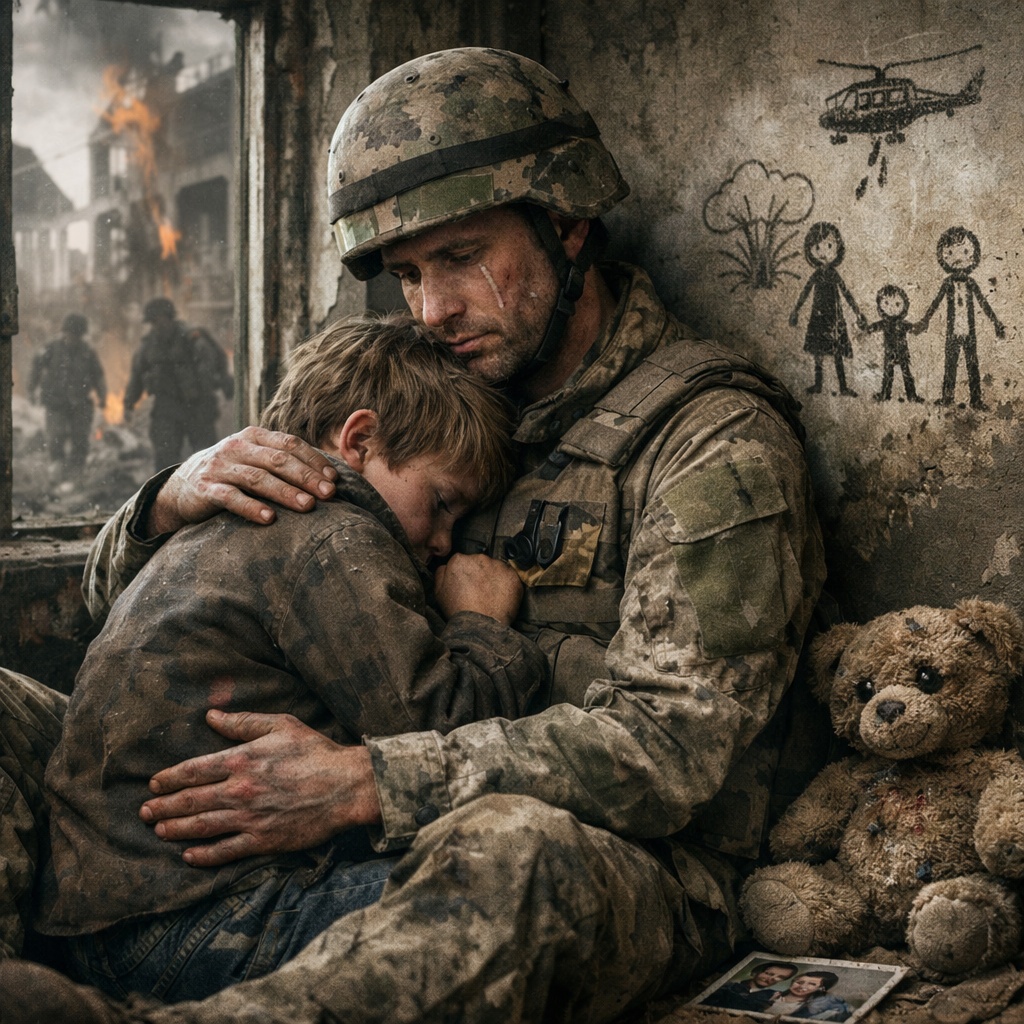
The warmongers never look at the human cost of war. The death of every civilian creates a personalization of the conflict. For most people, war is an abstract concept discussed in the news or history books. But when a family member is killed, the war becomes brutally personal. The abstract “enemy” is no longer a faceless soldier or a foreign government; they become the specific people who murdered my son/daughter/father/mother.
Grief is an overwhelming emotion that needs an outlet. Anger is often the most accessible and powerful form that grief takes, especially in the context of a violent death. Hatred for the enemy provides a clear, focused target for that rage and pain. It can feel better to hate someone than to be consumed by bottomless sorrow.
When a loved one dies in a seemingly senseless act of violence, the human mind struggles to find meaning. Believing that they died fighting a monstrous, hateful enemy can be a way to make sense of the senseless. It elevates their death from a random tragedy to a sacrifice in a just cause against evil – a martyr.
Perikles began the funeral oration for the first fallen in the Peloponnesian War.
“I shall begin with our ancestors: it is both just and proper that they should have the honour of the first mention on an occasion like the present. They dwelt in the country without break in the succession from generation to generation, and handed it down free to the present time by their valour. And if our more remote ancestors deserve praise, much more do our own fathers, who added to their inheritance the empire which we now possess, and spared no pains to be able to leave their acquisitions to us of the present generation. Lastly, there are few parts of our dominions that have not been augmented by those of us here, who are still more or less in the vigour of life; while the mother country has been furnished by us with everything that can enable her to depend on her own resources whether for war or for peace.”
Perikles invoked the ancestors and we are witnessing the same in Iran, which they prefer to call Persia. This individual hatred is often reinforced by the broader society at war. Propaganda, national narratives, and community mourning all work to channel personal grief into collective anger against the enemy. Funerals for soldiers become patriotic events, explicitly linking personal loss to national duty and framing the enemy as deserving of that hatred.
This is perhaps the most tragic aspect. A death in the family creates a powerful desire for vengeance—an eye for an eye. This desire can be passed down through generations, fueling conflicts that last for decades or even centuries. The loss becomes a family story, a sacred wound that justifies continued animosity.
Just as in the West Bank or Gaza, when a Palestinian child whose home is destroyed and whose parent is killed by Israeli forces, undoubtedly grows up with a profound hatred for Israelis. This is taking place in Iran right now. War is far more profound than merely bombing buildings and destroying targets.
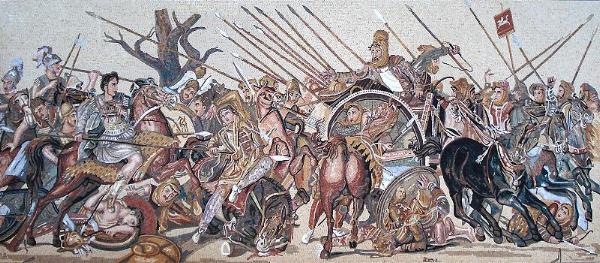
In the case of Iran, Persia was conquered three times in history. First by Alexander the Great 334–330 BC The Macedonian king defeated the Achaemenid Empire, ending Persian rule for a time. Secondly, by Arab Muslims 636–651 AD Islamic armies conquered the Sassanian Empire, incorporating Persia into the Caliphate. The third times was by the Mongol Empire 13th Century Genghis Khan and later Hulagu Khan’s invasions devastated Persia. These are events that were not forgotton.
Wars don’t just leave behind physical destruction and political changes; they leave behind deep, lasting, and often invisible emotional and psychological scars on individuals, families, and entire societies for generations. These emotional wounds are often categorized under the umbrella of trauma. The most well-known diagnosis is PTSD (Post-Traumatic Stress Disorder) , but the scars are broader and more complex.
There are deep emotional and psychological distress that results from committing, witnessing, or failing to prevent acts that violate a person’s core moral or ethical beliefs. A soldier may feel profound shame and guilt for actions they were ordered to take in war.
I know people who have worked with veterans. What they have witnessed is that those who returned from Vietnam are angry compared to those from World War II. They are angry for what they now see was an unjust war.
This is one of the most profound and heartbreaking aspects. The emotional scars of war are not confined to those who experienced it directly. They can be transmitted to children and even grandchildren. The children and grandchildren of Holocaust survivors have been extensively studied for the effects of intergenerational trauma.
In the United States, we see the legacy of trauma in the families of veterans from the Vietnam, Iraq, and Afghanistan wars.
In countless communities around the world—from Rwanda to the Balkans to the Middle East—the trauma of past conflicts continues to shape politics and personal identities decades later.
In short, the emotional scars of war are a hidden but remain as a powerful legacy. They can turn personal grief into generational hatred. They are a reminder that the cost of war is counted not only in lives lost but in lives forever changed. This profoundly changes the politics on both sides.
Based on current statements and analyses from Israeli Prime Minister Benjamin Netanyahu and other officials, Israel’s goal is not to “destroy Iran” in the sense of annihilating its land or people. Instead, their stated objective is far more specific: to bring about the downfall of the current Islamic Republic regime in Tehran – Regime Change.
Both the Italian and Russian Mafia are afraid of the Albanian Mafia. Why? It comes back to culture. Albanian criminal groups, their primary goal is not always to kill family members to prevent future retaliation. However, they absolutely target family members as a key tactic in their conflicts. This often has the effect of creating cycles of vengeance that can span generations. They are famous for Albania’s ancient tradition of the blood feud, known as the Kanun, for their own purposes.
This has been a cultural system to deter violence through fear of reciprocal revenge; an “early version of a mutually assured destruction pact.” Family members are seen as legitimate targets, especially when the primary target cannot be found. Strict rules, e.g., you cannot take revenge for a family member killed while committing an immoral act (like a crime). The Kanun is “misused” to justify any killing, including murdering a rival’s family to force them into hiding or to retaliate.
The Russian and Italian Mafia often comment on the Albanians and they will kill you, the wife, children, and the dog to prevent a blood feud. This does address the similar results from war, which the Neocons and warmongers never consider.
EXAMPLES:
The story of Wasil Ahmad during the War in Afghanistan (Taliban insurgency) is a classic example of intergenerational rage. At age 8, his father and uncles were killed by the Taliban. He trained to fight and, as a young teen, fought against the Taliban, becoming a legendary commander in his valley before being killed. There are many other examples that the warmongers pay no attention to the human cost of war.
Napoleon’s defeat at Waterloo didn’t just score a victory for the English; it created a whole new political paradigm in France. It temporarily restored the Bourbon monarchy under Louis XVIII, who had been waiting in exile with British support. This wasn’t a revolutionary transformation—it was a counter-revolution.
Nevertheless, even after the monarchy was restored, there was deep-seated resentment of the English. That came rushing to the forefront with Charles De Gaulle. The language became a symbol of that defeat, as the view became that Napoleon had won, the world would be speaking French instead of English. De Gaulle even attempted to borrow English words from the French language.
Language was incorporated into de Gaulle’s nationalism. He assumed that, had Napoleon won at Waterloo, the world would have been speaking French instead of English. As the Associated Press reported back in April 1967, when de Gaulle ordered all 440 NATO installations and troops to be removed from France, he was very much against any American words entering the French language.
De Gaulle established institutions like the *Délégation générale à la langue française (General Delegation for the French Language) to combat the spread of English terms. While many ‘Americanisms’ remained in everyday French vernacular, his efforts reflected a broader resistance to U.S. cultural hegemony. De Gaulle and his government promoted policies to preserve the purity of French, leading to measures such as the Loi Bas-Lauriol (1975), which later evolved into the Toubon Law (1994), mandating the use of French in official contexts. Some of the main American-adopted words he most opposed included:
De Gaulle’s nationalism and hatred of Americans and British led to his first assault on the United States, which took place on February 4th, 1965, where he expressed doubts about the dollar’s impartiality and suitability as an international trade medium. It was De Gaulle who attacked the dollar, demanding gold to drain the reserves and eventually forcing the collapse of Bretton Woods in 1971. He also disliked the British and supposedly said, “Belgium is a country invented by the British to annoy the French.”
The loss of Germany in World War I and the harsh reparation payments were the primary reasons for the rise of Hitler in 1933. All of that was set in motion when the French surrendered to the Germans
The first Treaty of Versailles was signed on February 26, 1871, ending the Franco-Prussian War and directly linked to the formation of the German Empire.
To be precise, the German Empire was proclaimed on January 18, 1871, at the first Treaty of Versailles, which was signed shortly after to formally end the war that made its unification possible. This was why the French insisted on a second Treaty of Versailles at the end of World War II.
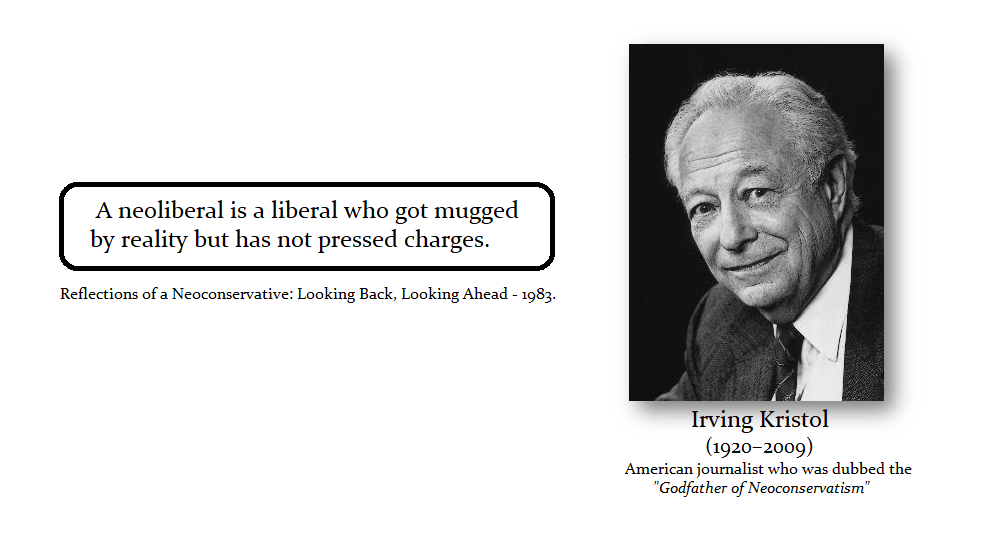
During the 1940-1950s, this was the beginning of the rise of the Neocons. The future founders of neoconservatism were still left-wing anti-communist liberals. Thinkers like Irving Kristol and Daniel Bell were intellectuals in New York, but they were part of the liberal anti-communist tradition rather than a separate conservative movement. The Red Scare faded after McCarthy’s censure in 1954.
This is the formative period for neoconservatism. Disturbed by the New Left, the counterculture, and what they saw as the Democratic Party’s move away from a robust anti-communist foreign policy, these intellectuals began to define their own path. They coalesced around magazines like Commentary and The Public Interest.
During the 1970s into the early 1980s, the Neoconservatives gained political power. Disillusioned with the Carter administration’s foreign policy, many neoconservatives, such as Jeane Kirkpatrick and Elliott Abrams, moved to the Republican Party and became influential in the Reagan administration, shaping its Cold War strategy.