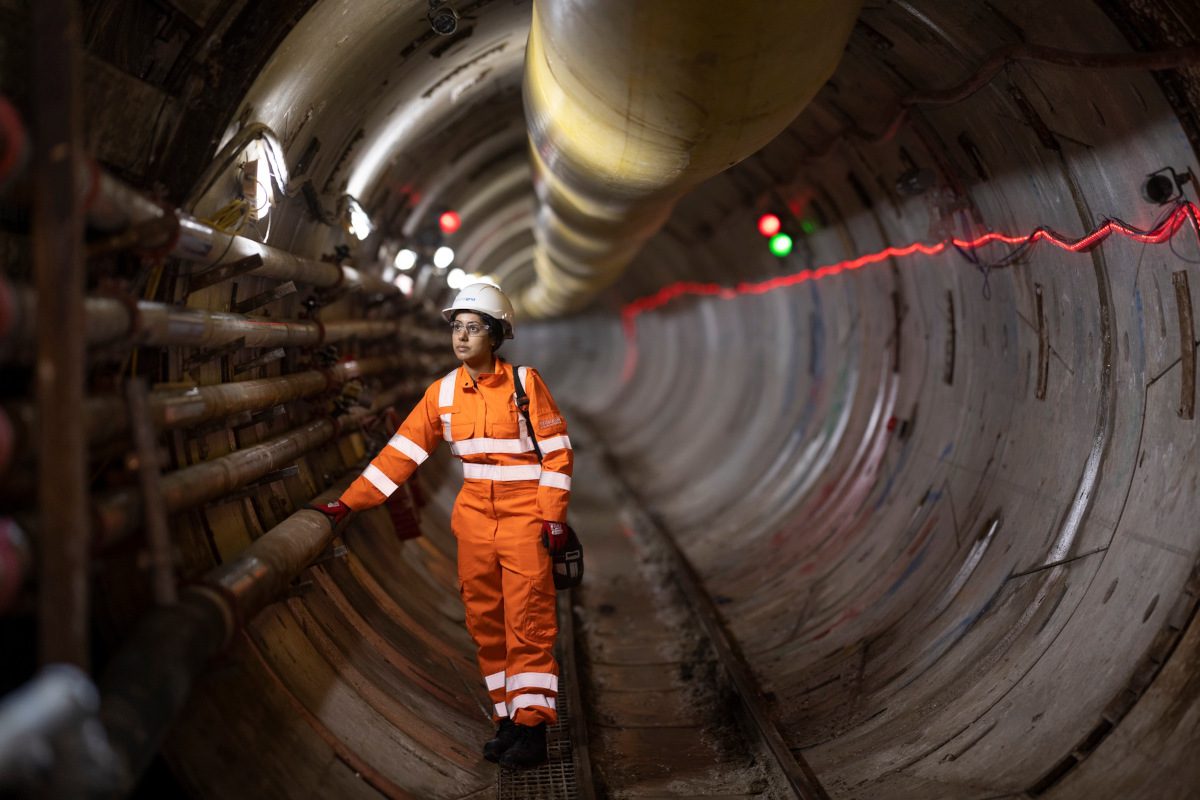





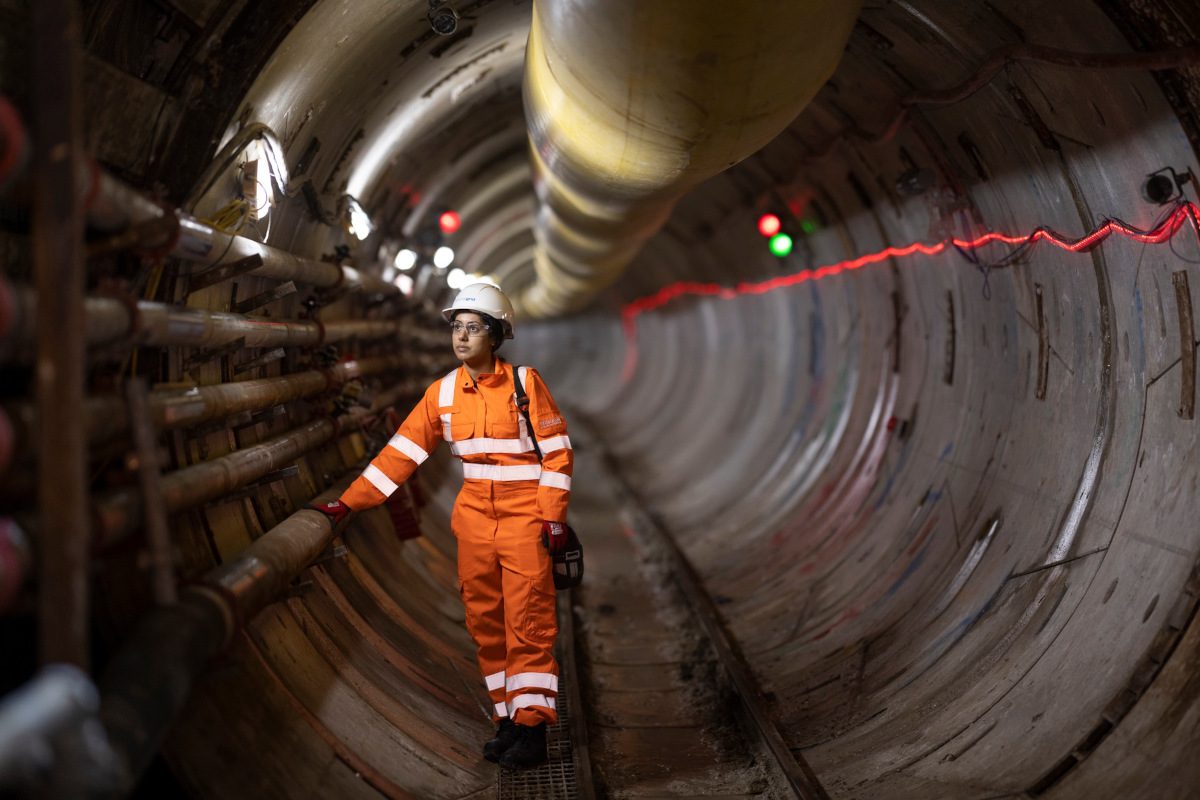
Interior of a cable tunnel from National Grid’s London Power Tunnels 2 project, illustrating the type of underground infrastructure used to transmit electricity (image credit: National Grid)
A major new phase in the upgrade of Britain’s electricity network has begun, with a 271.5-tonne tunnel boring machine (TBM) launched to construct a 2.2km tunnel beneath the River Thames.
The machine, named Caroline, will be used to excavate a cable tunnel between Grain in Kent and Tilbury in Essex as part of a new project for National Grid. The scheme is intended to replace the existing Thames Cable Tunnel, which has been in operation since 1969.
Weighing the equivalent of a fully loaded Boeing 777 aircraft, the TBM was launched by Energy Minister Michael Shanks, marking a key milestone in what National Grid describes as a nationally significant infrastructure project.
The new tunnel forms a central part of efforts to modernise the electricity network and support the transition to lower-carbon energy sources, while maintaining reliability as demand increases.
Energy Minister Michael Shanks said:
“Since 1969 the Thames Cable Tunnel has transported electricity under the river between Essex and Kent. But after more than half a century, it now needs replacing.
“This major engineering project is part of the biggest upgrade in Great Britain’s electricity network in a generation. Not only will this boost jobs and growth, but it will help get lower cost homegrown clean power to homes and businesses and get us off the rollercoaster of fossil fuel markets.”
The project is also positioned as delivering regional economic benefits, with local employment, supply chain participation and skills development forming part of its delivery.
According to National Grid, 76 people from the local area are currently working on the project, alongside 15 local businesses contributing to the supply chain. Plans include 22 apprenticeships, graduate roles and work experience placements aimed at supporting entry into the energy sector.
Jen Craft said:
“Today’s event was another step forward in this exciting project for the Thames Estuary region.
“I’m really pleased that Thurrock is at the centre of these vital upgrades to the network, playing our role in the transition to secure, home-grown energy.
“Through strengthening our local electricity network, and providing training and development opportunities for residents, this project is delivering real benefits for my constituents in Thurrock.”
Engineering milestone
The launch of the TBM marks the start of tunnelling works delivered by a joint venture between Ferrovial and BEMO, with the machine supplied by Herrenknecht.
Mark Farmer, Project Director, National Grid, said:
“The arrival of the tunnel boring machine is a significant milestone for the Grain to Tilbury project and a major step forward in strengthening the electricity network in this area for years to come. This important project will help ensure secure, cleaner, home-grown energy can continue to flow across the network as demand increases.
Borja Trashorras, Project Director, Ferrovial BEMO JV, said:
“The launch of TBM Caroline marks a major achievement for our integrated JV, highlighting the strength of our teamwork, technical expertise and our capability to deliver world-class engineering for National Grid.
“As tunnelling begins, my thanks and congratulations go to everyone whose hard work has achieved this milestone so swiftly with efficiency and excellence.”
Ulrich Schaffhauser, Member of the Board of Management, Herrenknecht AG, said:
“River crossings are key in grid construction, and safety comes first in shaft and tunnel works. In addition to the VSM, which has safely sunk the launch shaft, we are proud to deliver a tailor-made Mixshield TBM for the cable tunnel.
“My best wishes to the team of our partners Ferrovial BEMO JV and National Grid on the launch of the TBM.”
STEM and skills legacy
The TBM was named following a competition involving local schools, in honour of electrical engineer Caroline Haslett, a founding member of the Women’s Engineering Society and a prominent advocate for women in engineering.
Project partners are also working with schools to promote science, technology, engineering and maths (STEM) education, alongside wider initiatives aimed at supporting local skills and employment pathways.
Tim Self, Careers Leader, St John’s Catholic Comprehensive, said:
“We’re really pleased to be working with National Grid and Ferrovial BEMO, and to see such a strong commitment to engaging with our students. The team have provided wonderful support and direction, challenging our students with real-world issues that strengthens their confidence and determination to succeed.
“Opportunities like this help bring learning to life, give young people insight into the world of work, and show them the range of careers that could be open to them in the future. As an educator, it’s a delight to see students enthusiastic about the projects they are doing and keen to engage further, and to hear how they reflect on their future pathways through such experiences.”
Once completed, the new tunnel is expected to play a key role in maintaining electricity flows across the Thames corridor, supporting both network resilience and the integration of cleaner energy sources.
The Grain to Tilbury project forms part of a wider programme of investment aimed at upgrading Great Britain’s electricity infrastructure to meet future demand and decarbonisation targets.