

“Not Our War”: ‘Allies’ Shun Trump Coalition; Iran Security Chief Allegedly Killed As Oil Infrastructure Attacks Escalate
Summary:
Israel claims major decapitation strike: Says Ali Larijani and Basij chief Gholamreza Soleimani were killed, but Iran disputes.
Iran rejects ceasefire, vows escalation: Leadership says it’s not “the right time for peace” until the US and Israel are “brought to their knees,” while denying any negotiations.
New oil targeting phase as Tehran pledges to be gatekeeper of Hormuz: Ships pass only “in coordination” with Tehran – talk of separate deal-making with BRICS capitals.
Iraq is in contact with Iran to persuade Tehran to allow some Iraqi oil tankers to pass through the Strait of Hormuz
Allies hesitate as Trump issues contradictory rhetoric: Key NATO states are refusing to join US efforts to secure Hormuz, amid lack of confidence in Trump’s often shifting articulation of operation.
* * *
Israel Claims Big Decapitation Strike: Larijani & Basij Chief
Israel is making another big ‘decapitation strike’ claim, saying it has taken out Iran’s top security believed to be effectively running the country and the war, Ali Larijani. Israel further announced early Tuesday the longtime head of the Basij militia, Gholamreza Soleimani, was also killed.
If true it would mark one of the most significant blows to Tehran’s leadership since the war began. But in classic fog-of-war fashion, Tehran is pushing back against Israeli statements. Tehran has presented a handwritten message attributed to him, though not exactly what passes for proof of life.
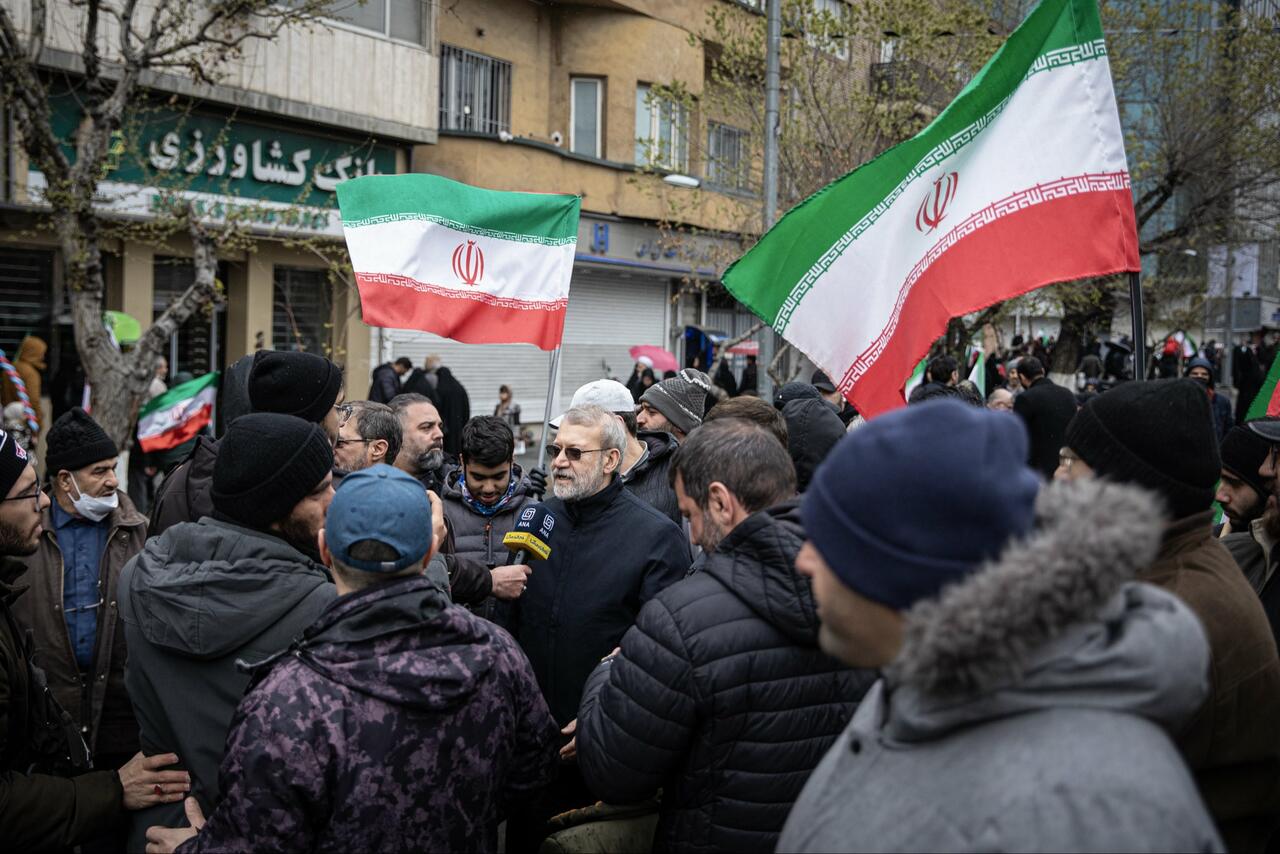
The note was released ahead of funeral ceremonies for Iranian sailors killed in a recent US strike, and urges citizens to show support for the national ‘martyrs’ – but in the end does little to clarify whether Larijani is alive or dead. Just days ago he was seen marching defiantly in the streets of Tehran with other high-ranking officials as US-Israeli bombs fell not too far away.
The IDF announcement proclaiming his alleged death:
🔴Ali Larijani, Secretary of Iran’s Supreme National Security Council and the regime’s effective leader, has been eliminated.
Throughout the years, Larijani was considered one of the most veteran and senior figures within the Iranian regime leadership, and was a close associate… pic.twitter.com/kBIgSSGBm0
— Israel Defense Forces (@IDF) March 17, 2026
“The martyrdom of the brave members of the Navy of the Army of the Islamic Republic in Dena is part of the sacrifices of the proud nation that has emerged in this time of struggle against international oppressors,” Larijani wrote, in what could prove to be his last message. If he is deceased, he is likely to quickly be replaced.
No Peace Yet: Must Be ‘Brought to Their Knees’
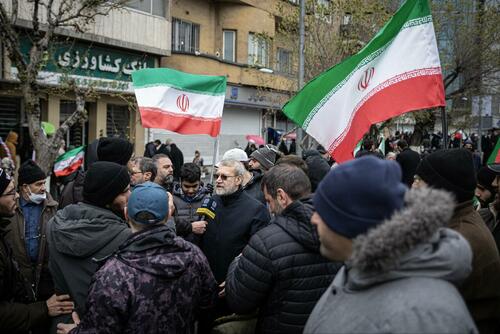
Iranian President Masoud Pezeshkian is calling on citizens to flood the streets for mass funerals of sailors killed when the IRIS Dena was sunk off the coast of Sri Lanka. Enemies “should know that in the shadow of the name of each of these high-ranking martyrs, thousands of other brave men will rise,” he said.
Most importantly, he announced that Islamic Republic leadership is rejecting any talk of de-escalation. Iran will exact a steep cost against its aggressors, he vowed. It is not “the right time for peace until the United States and Israel are brought to their knees, accept defeat, and pay compensation,” a senior official was quoted in Al Jazeera as saying, describing the position as “very tough and serious.”
Iran’s messaging here has been consistent. On Monday when President Trump claimed Tehran was “talking” – and later there were reports of text messages between Iran’s FM Araghchi and White House envoy Steve Witkoff, Iran’s government was quick to call this fake news.
“We don’t ask for ceasefire, but this war must end, in a way that our enemies never again think about repeating such attacks,” Araghchi has said. Central Israel has also continued to see inbound projectiles, also from Hezbollah in Lebanon.
Iran: Hormuz Isn’t Officially Shut, But it Controls Who Gets Through
Foreign Ministry spokesman Esmail Baghaei pushed back on blockade claims, while signaling Tehran is effectively managing traffic through the critical chokepoint – as it tries to play nice with its BRICS allies but tries to keep the leverage on Washington, its allies, and the global economy.
“Ships from some countries passed through the Strait of Hormuz in coordination with the Islamic Republic of Iran,” he said, framing Iran’s position as ultimately as the gatekeeper of the world’s most important oil artery. “Iran has always been the guardian of the Strait of Hormuz and the safe passage of ships.”
⚡️CENTCOM publishes new footage of strikes in Iran pic.twitter.com/xU1kGunLtA
— War Monitor (@WarMonitors) March 17, 2026
This could include pledges for Indian, Chinese, and Russian safe passage – and there’s been evidence of some of these getting through, just as in the Houthis Red Sea crisis of last year.
On Tuesday, Iranian parliamentary speaker Mohammad Baqer Qalibaf said: “The Strait of Hormuz cannot be the same as before and return to its previous conditions,” adding that “there is no longer any security.”
Bombardment of US Bases, Embassy, Oil Sites
“We have no hostility toward regional countries,” Baghad also said. “What we target are American bases and assets.” This after a likely Iranian-made drone hit the US Embassy in Baghad to start of this week, and also a drone slammed into the central Al-Rasheed Hotel in Baghdad’s highly protected Green Zone.
Air defenses in the Green Zone engaged incoming threats, but to no avail – the drones still got through. At the same time, energy infrastructure is increasingly in the crosshairs.
⚡️C-RAM fireworks over Baghdad continue pic.twitter.com/laf1QXOS56
— War Monitor (@WarMonitors) March 16, 2026
A drone attack forced the shutdown of a gas field in Abu Dhabi, while a tanker was reportedly hit by an “unknown projectile” near a UAE oil port – only adding more pressure to already volatile markets and pushing oil prices higher.
C-RAM System reportedly seen in action, but is Green Zone’s defense crumbling?
An Iranian-backed militia successfully used a (likely fiber optic) FPV drone to carry out a reconnaissance mission through the U.S. Embassy in Baghdad yesterday.
Seen here, the drone flies unchallenged through the embassy complex for nearly two minutes. pic.twitter.com/S1Ky3eVUv0
— OSINTtechnical (@Osinttechnical) March 17, 2026
“Nor Our War”: NATO Allies
Still, amid all this, NATO allies are holding back – perhaps confused and lacking confidence in President Trump’s daily shifting rhetoric, and as sometimes Trump issues contradictory messaging on the same day, or even in the very same presser.
“What does … Donald Trump expect a handful or two handfuls of European frigates to do in the Strait of Hormuz that the powerful US Navy cannot do?” German Defense Minister Boris Pistorius told reporters on Monday. “This is not our war, we have not started it.“
What the Western allies see…
CNN airs compilation of Trump’s contradictions from his afternoon event pic.twitter.com/hzMWWRuSW4
— Headquarters (@HQNewsNow) March 16, 2026
Some leading NATO powers have made clear they won’t directly support any military effort to unblock the strait – including Germany, Italy, and Spain.
President Trump himself has conceded this week of Western partners: “Some are very enthusiastic about it, and some aren’t. Some are countries that we’ve helped for many, many years. We’ve protected them from horrible outside sources, and they weren’t that enthusiastic. And the level of enthusiasm matters to me.” Naturally they might be looking back only to last year and the Gaza War, when the major US-led naval coalition in the Red Sea struggled to halt Houthi attacks on global shipping, resulting in a stalemate and uneasy status quo where the Iran-linked Houthis built a lot of leverage.
Iran’s “New Phase Of Oil War”
Bloomberg Opinion and commodities columnist Javier Blas has written on X. “Further ominous developments today. For the first time, Iran successfully targeted oil and gas production facilities, rather than refining, terminals, and storage,”
Blas listed the IRGC’s attacks on Gulf oil and gas facilities:
Oil and gas field in the UAE (Shah) hit
Oil field in Iraq (Majnoon) attacked
Plus Saudi Arabia saw large drone swarms
He explained that these attacks suggest “Iran has started a new phase of its oil war” against Gulf states aligned with the US. “Tehran is clearly going after the Strait of Hormuz bypass route, with Fujairah (UAE) coming under attack. But so far, the Saudi pipeline bypass hasn’t been attacked, and neither the Yemeni Houthis have tried to close the Red Sea,” Blas said. Brent crude has jumped more than 40% since the start of Operation Epic Fury in late February, but out-of-control spikes in crude markets have largely been capped so far by the IEA’s 32-nation “historic” emergency SPR release. Read our fuller analysis here.
Iraq Negotiates With Iran To Reopen Vital Oil Shipping Route
The federal Iraqi government is in contact with Iran to persuade Tehran to allow some Iraqi oil tankers to pass through the Strait of Hormuz, Iraq’s Oil Minister Hayyan Abdul Ghani said on Tuesday.
“There is communication with Iran regarding allowing the passage of some Iraqi oil tankers,” the minister said in statements carried by the Iraqi News Agency (INA).
Iraq, unlike Saudi Arabia and the United Arab Emirates (UAE), doesn’t have any options – even partial – to bypass the Strait of Hormuz, which has been closed for over two weeks now, forcing Baghdad to slash oil production as storage sites and tankers available in the Gulf filled up.
Iraq was the first to announce more than a week ago it was slashing crude oil production amid the de facto blockade of the Strait of Hormuz.
Tyler Durden
Tue, 03/17/2026 – 08:20