





Russia Halts Ammonium Nitrate Exports As Global Fertilizer Crisis Set To Worsen
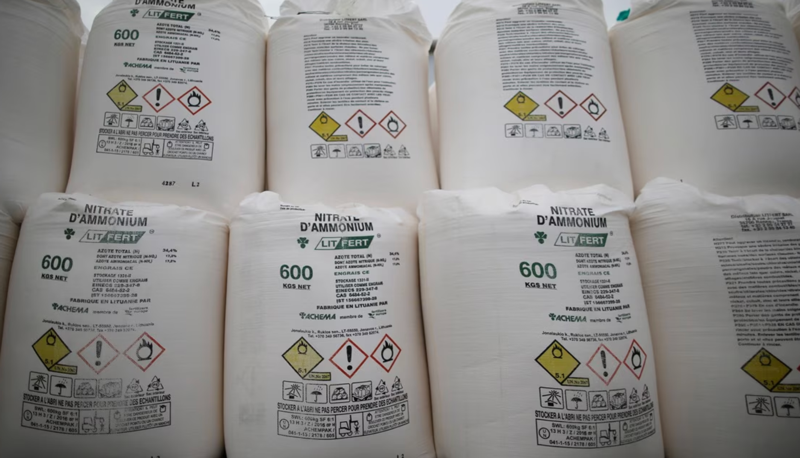
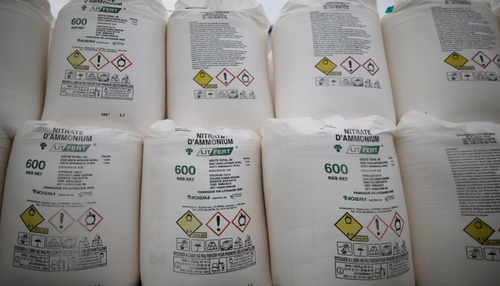
The fertilizer crisis appears to be worsening just as the Northern Hemisphere planting season, in some areas, is about to begin, with top ammonium nitrate supplier Russia announcing on Tuesday via state media that exports of the critical crop nutrient will be halted.
Russia’s state-run news agency TASS said Russia will suspend ammonium nitrate exports from March 21 through April 21. The report cited a statement from the Agriculture Ministry.
The temporary restriction is intended to secure domestic fertilizer supplies during the spring planting season. Exports made under intergovernmental agreements are exempt.
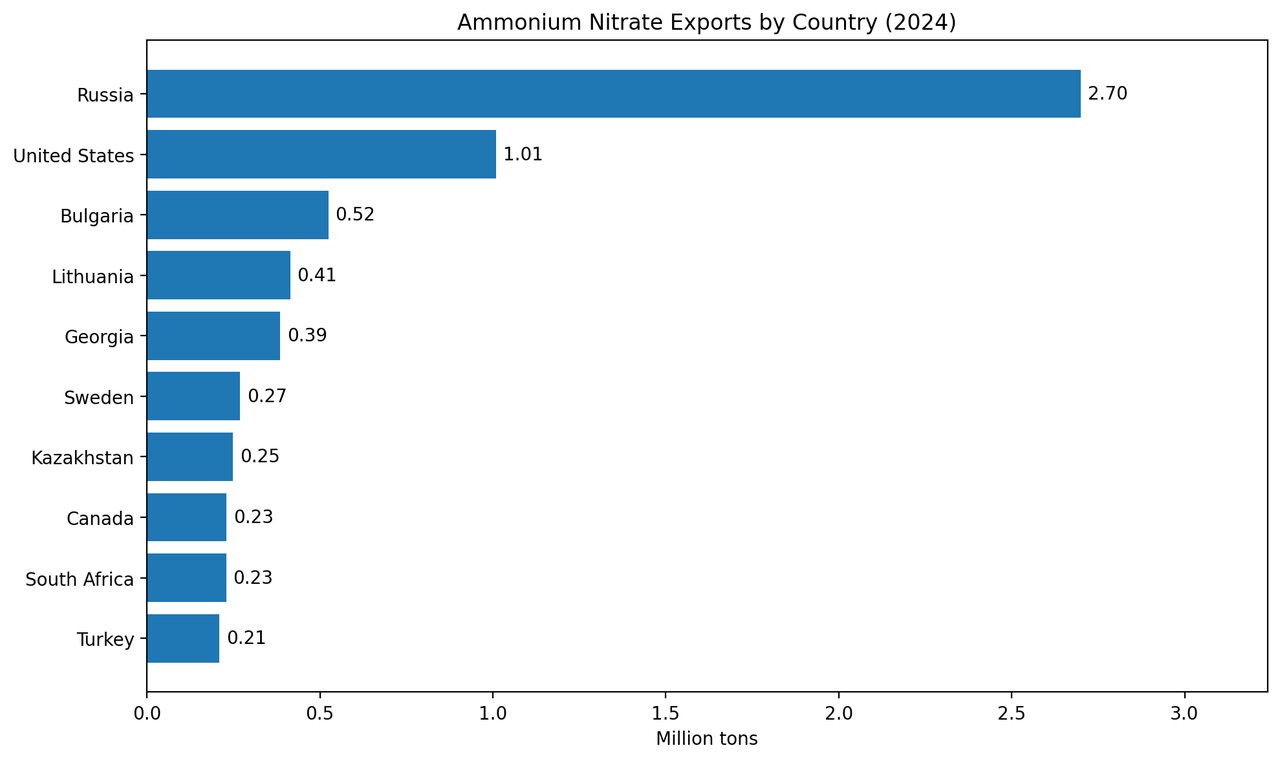
Russia is the world’s largest producer of ammonium nitrate. In 2024, the country produced about 12 million tons, roughly 47% of the global output of the plant nutrient. It was also the largest exporter at about 2.7 million tons, around 37% of global export volume and 40% of export value.
Data based on IndexBox’s ammonium nitrate world market overview
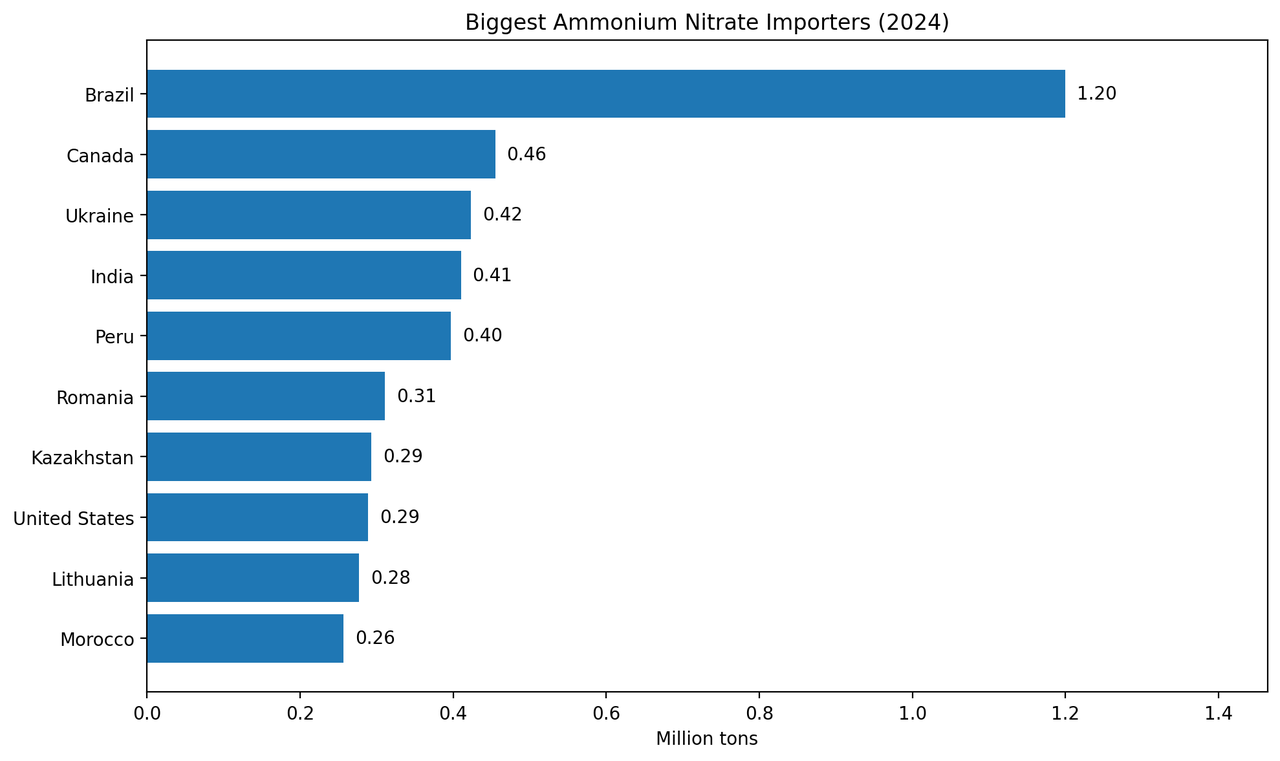
Export disruptions of the critical crop nutrient can hit import-dependent buyers hard, especially in markets such as Brazil, Canada, India, Peru, and Ukraine.
Data based on IndexBox’s ammonium nitrate world market overview
Russia’s temporary export comes at the worst possible timing as the Northern Hemisphere planting season begins in some regions.
The risk now is that, as the Middle East conflict enters its fourth week, a global energy shock is also spreading to fertlizer markets and may only suggest a delayed food price shock later this year.
“The speed of the move [energy shock] pushed volatility sharply higher, with energy once again becoming the primary transmission channel for geopolitical risk into broader macro pricing,” UBS analyst Claudio Martucci warned clients earlier this month.
Claudio pointed out, “Agricultural markets reacted more indirectly to the energy shock via higher fertilizer costs, and higher input and biofuel costs lifted soybean oil to two-year highs, while wheat experienced elevated volatility and some profit-taking late in the week despite an otherwise supportive commodity backdrop.”
Last week, former central banker advisor Alexandra Prokopenko warned on X that the near-shutdown of the Strait of Hormuz has triggered an energy shock that risks morphing into a “slower, more consequential story”: fertilizers.
“A near-shutdown of the Strait of Hormuz is triggering a supply shock that will show up in food prices 6–9 months from now,” Prokopenko wrote on X, adding, “Putin’s gains here may be more long-term than simply lining his pockets with petrodollars.”
The Iran war coverage focuses on oil. The slower, more consequential story is fertilizers. A near-shutdown of the Strait of Hormuz is triggering a supply shock that will show up in food prices 6-9 months from now. Putin’s gains here may be more long-term than simply lining his…
— Alexandra Prokopenko (@amenka) March 19, 2026
Bloomberg macro strategist Simon White recently warned, “But food prices are likely to be as troublesome for second-round inflationary effects. Less well known is that the shock to food prices was worse than the oil price shocks of the 1970s, following the Arab oil embargo and the Iranian revolution. Food inflation in the US was already rising before both shocks, and contributed more to headline CPI than energy through almost all of the 70s.”
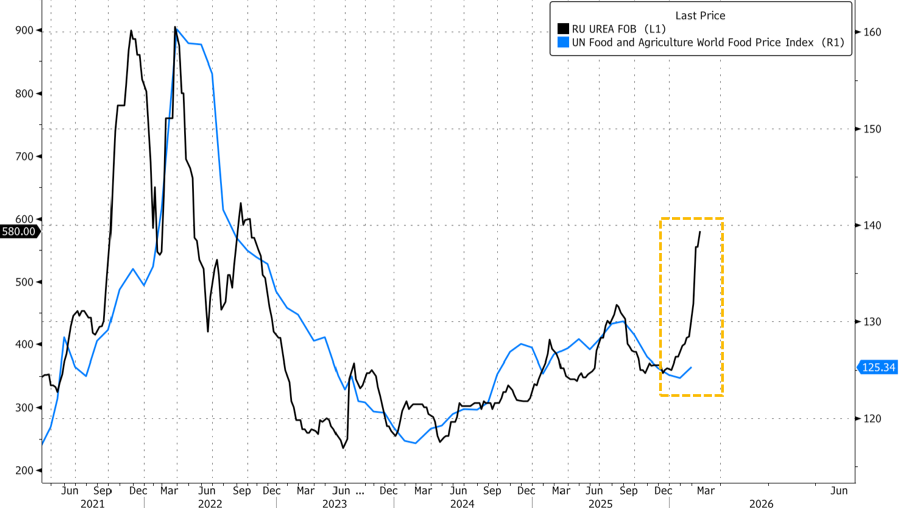
Prokopenko pointed out, “Consequences already material. Urea up 25-30% since Feb. 28. Gulf producers have declared force majeure on contracts to South America and Asia. ~1 million metric tons of fertilizer physically stranded in the Gulf. Force majeure means contracts are legally severed, not delayed. Buyers must find alternatives now.”
The shock in energy markets has already driven crude prices into triple digits and sent gasoline and diesel prices surging worldwide. In countries heavily dependent on Gulf imports, shortages have already developed…
And fertilizer disruption could be the next wave. It may not hit all at once, but the effects could show up later this year as lower crop yields, tighter food supplies, and higher prices.
So the real-world hedge right now, ahead of the growing season in the Lower 48, is to start small with a backyard garden. Then build a chicken coop (we advise buying one) and use this global energy shock as an excuse to control your own food supply.
* * *
We offer a “Seed Vault” of 39 different varieties of hand-selected non-hybrid, non-GMO, open-pollinated heirloom vegetable seeds.
Tyler Durden
Tue, 03/24/2026 – 10:55