

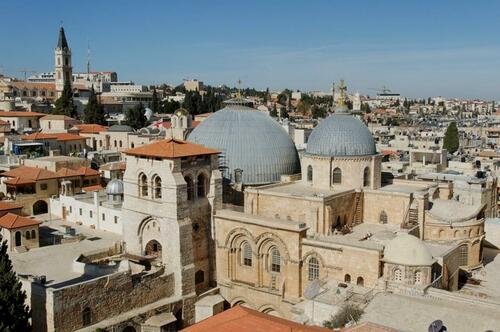
White House Intervenes After Israel Closed Church Of The Holy Sepulchre Ahead Of Easter
Jerusalem’s Church of the Holy Sepulchre was closed by Israeli authorities earlier this month after Iranian missile fragments hit Jerusalem, with restrictions also being placed on who can enter the walled old city – home to all of the most sacred religious sites.
This has resulted in outrage among Christians, however, Israeli officials have said that Al Aqsa Mosque was also closed, and limitations were placed numbers of people visiting the Western Wall – and claimed that all of this was being done as a safety precaution.
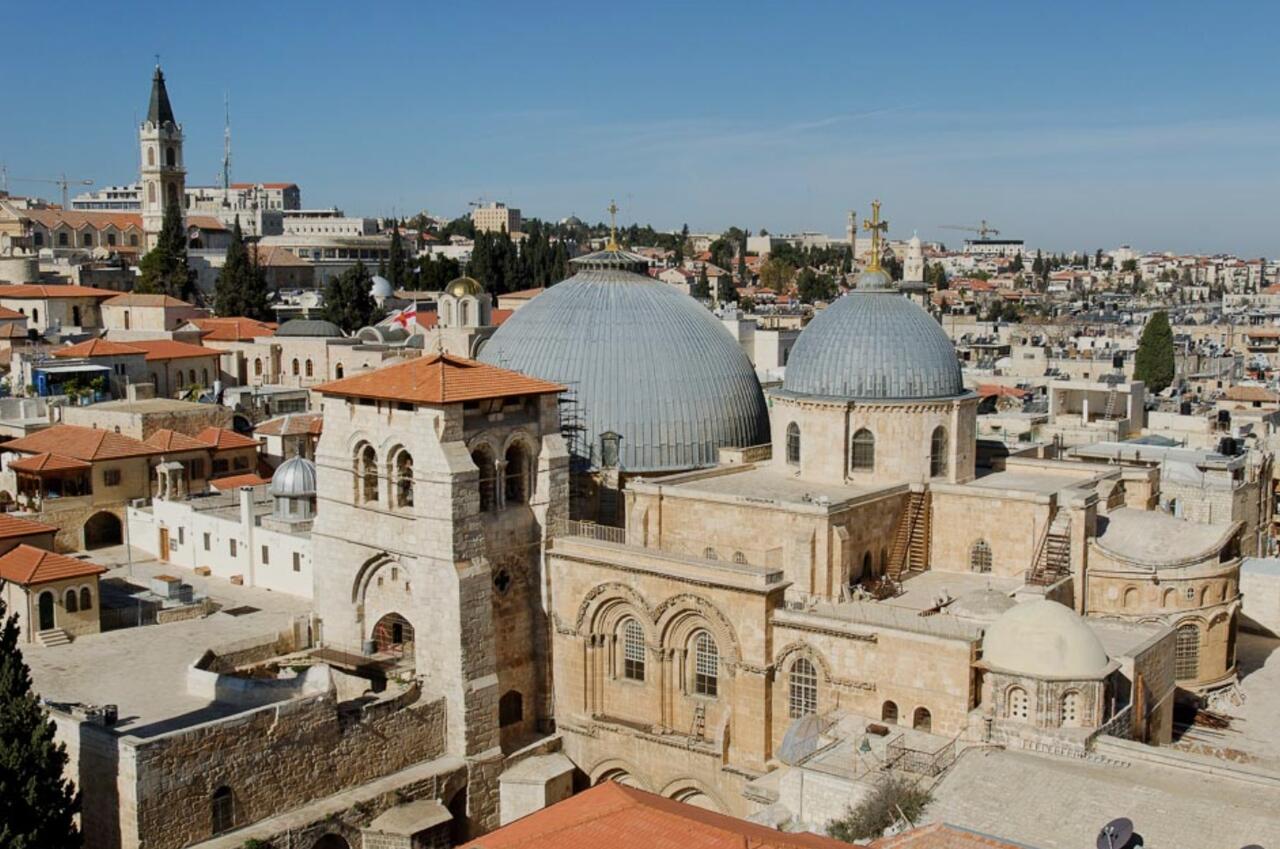
But closure of the Holy Sepulchre for Lent and Easter is basically unprecedented in recent history, and Church leaders say it violates the church’s historic autonomy under an arrangement called the ‘status quo’.
Things have come to a head after on Palm Sunday, two Catholic leaders were prevented from praying at the Holy Sepulchre by Israeli police. The Vatican was quick to rebuke the police decision as “a manifestly unreasonable and grossly disproportionate measure.”
Cardinal Pierbattista Pizzaballa was the top official kept from entering the church, and his name has previously been in the news over the course of the Gaza war, where he called out Israel’s military for shelling Christian sites, including a couple of deadly airstrikes on Palestinian churches.
Somewhat surprisingly, the Trump White House has gotten involved, exerting some rare direct pressure on the Israeli government over the church closure.
“We did express our concerns with Israel with respect to these holy sites being shut down,” White House press secretary Karoline Leavitt says during a briefing – as cited in Israeli press reports.
“We want worshipers to be able to access these holy sites. Of course, safety is a top priority, but we understand Israel is working on the security measures to reopen the sites throughout Holy Week, and that’s something that we’re appreciative of,” she added.
It seems the White House intervention may have worked, with Times of Israel reporting that “Catholic officials in Jerusalem announced that prayer arrangements for Holy Week, which culminates with Easter on Sunday, April 5, had been resolved with Israeli authorities, ending a diplomatic spat over the issue.”
The majority local church in the Holy Land, among Palestinians and Greeks, is the Orthodox Church of Jerusalem – part of the worldwide Eastern Orthodox communion. There are typically large throngs of Orthodox Christians descending on Jerusalem during this period. While the Western confessions – or rather the Roman Catholic and Protestant churches – will celebrate Easter on April 5, Orthodox Easter, also known as Pascha, takes place on April 16 this year.
JERUSALEM — Israeli authorities announced on March 29, 2026, a special plan allowing Christian leaders to resume services at the Church of the Holy Sepulchre, following international backlash over the obstruction of Catholic clergy on Palm Sunday.
The decision by the office of… pic.twitter.com/iW0G6ZgtuX
— UOJ – America (@UOJ_America) March 30, 2026
It’s as yet unclear the degree to which Israeli police and military will actually allow Christians to access the Church of the Holy Sephulchre before and during these dates. And the reality is that it is unlikely that the crowds will be huge or overwhelming this year, given the ongoing war and current difficulty of travel in the region.
Tyler Durden
Mon, 03/30/2026 – 22:40