









Abu Dhabi Halts Operations At Main Gas Plant After “Falling Debris” From Iranian Strike
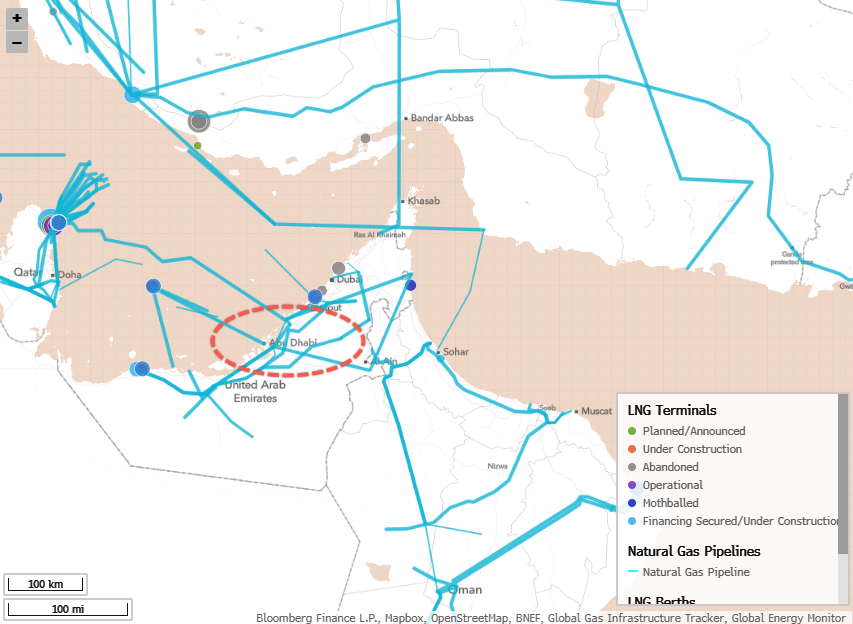
Operations at Habshan, the UAE’s massive onshore gas-processing hub operated by ADNOC Gas in Abu Dhabi, were halted on Friday after local authorities said a fire broke out at the facility due to “falling debris” from a “successful interception by air defense systems” of an Iranian air-delivered munition.
“Abu Dhabi authorities are responding to an incident of falling debris at the Habshan gas facilities following a successful interception by air defense systems,” the UAE’s Emergency, Crisis, and Disaster Management Center wrote on X.
The UAE’s emergency crisis center continued, “Operations have been suspended while authorities respond to a fire. No injuries have been reported.”
Abu Dhabi authorities are responding to an incident of falling debris at the Habshan gas facilities, following successful interception by air defence systems. Operations have been suspended while authorities respond to a fire. No injuries have been reported.
The public is…
— مركز إدارة الطوارئ والأزمات والكوارث (@Adcmc_ae) April 3, 2026
Habshan is at the core of the process by which raw natural gas from Abu Dhabi’s upstream energy assets is cleaned, treated, and split into usable products for domestic use. The facility produces gas for domestic use, along with NGLs, condensate, and sulfur. It’s also the starting point of ADNOC’s crude pipeline to Fujairah, the world’s second-largest bunkering hub and a critical energy export terminal that bypasses the Hormuz chokepoint.
ADNOC states on its website that Habshan serves utilities and industrial customers across the UAE, including desalination and steel, and that it supplies about 60% of the country’s natural gas requirements.
Habshan ranks among the world’s top gas-processing complexes and comes weeks after Iranian strikes on QatarEnergy’s massive LNG complex, which will require $20 billion in repairs and years to fix and will curb about 12.8 million tons per year of LNG.
Last week, QatarEnergy declared force majeure on some of its long-term LNG contracts, including those for customers in Italy, Belgium, South Korea, and China, effectively canceling contractual obligations.
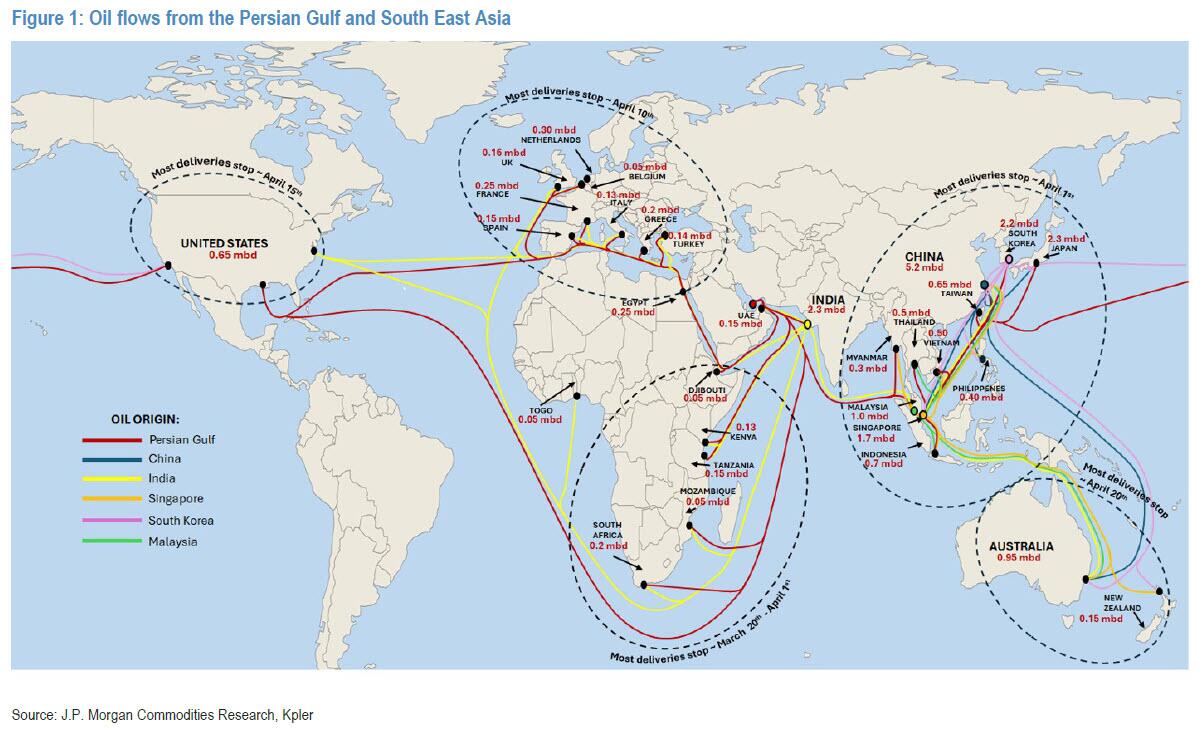
On top of LNG supplies being disrupted across the Gulf region, the Hormuz chokepoint remains clogged, and as JPMorgan’s top commodities expert warned days ago, the energy shock is first hitting Asia, then Africa and Europe, before settling in the U.S., but mostly California.
The Gulf energy shock is also forcing countries across Asia and Europe to switch power plants to coal to avert soaring power prices. The LNG disruption is also sparking fertilizer shortages across critical agricultural belts worldwide, which could crimp harvests later in the year.
Gas research firm Criterion Research’s early read is that, once the fog of war clears across the Gulf energy complex, the clearest beneficiaries may be LNG exporters along the Gulf of America for years to come.
Tyler Durden
Fri, 04/03/2026 – 07:15