

Key Takeaways
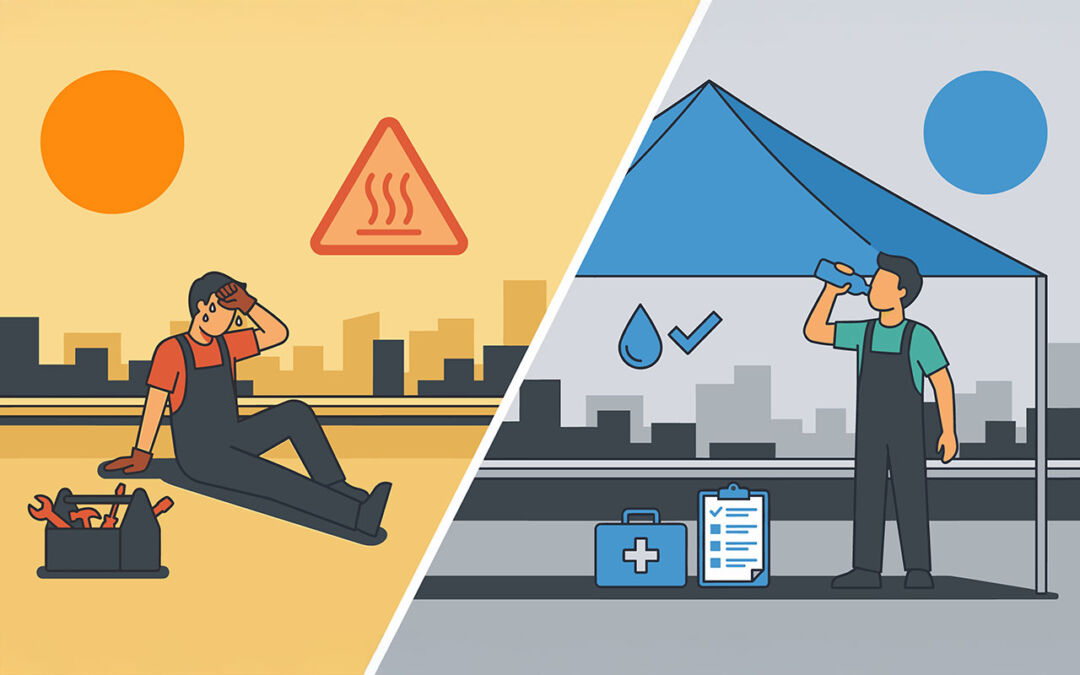
Climate change is driving record-breaking heat waves across the United States, which affect both indoor and outdoor workers as well as the broader economy.As the Trump administration debates whether to roll back a Biden-era federal workplace heat standard that protects workers from extreme temperatures, some states have begun implementing such rules on their own.Studies show that certain approaches to heat standards protect workers better than others, so state and federal policymakers should learn from prior experiences to ensure these protections are reaching those who need them most.
Overview
This year’s Earth Day follows a record-breaking heat wave across much of the East Coast, which followed a record-breaking heat wave that took hold in much of the West and Southwest in March. As climate change continues to worsen these kinds of weather events in the United States and around the world, knowing how heat and other effects of global warming impact U.S. workers—and the broader U.S. economy—is essential.
Indeed, the accumulating evidence of workplace dangers from extreme heat faced by laborers working outdoors, such as in agriculture and construction, underscores why policymakers should address these issues sooner rather than later. New research finds, for example, that extreme heat exposure in outdoor workplaces is linked to 28,000 U.S. worker injuries every year. And deaths on the job in outside professions are averaging between 10 and 20 workers a year per 100,000 workers, according to the AFL-CIO. These deaths have more than doubled between 1999 and 2023, according to recent academic research.
Research also indicates that outdoor workers are not alone in needing protection from heat. Indoor workers, including warehouse and kitchen workers and factory employees, are likewise impacted by climate change and rising temperatures. In fact, studies show that hot weather can impair cognitive ability and decision-making, leading to accidents that are seemingly unrelated to heat, such as falling from heights or mishandling machinery.
Amid a lack of federal action to protect workers, as the second Trump administration debates whether to roll back a proposed Biden administration rule implementing nationwide heat standards, several states are taking the lead in improving workers’ safety while laboring during extreme heat outdoors. These states’ policies can shed light on how a federal workplace heat standard could be enforced and what lessons federal—and, in the meantime, state-level—policymakers can learn from those states that already have protected their workers in this way.
Research published late last year demonstrates how one state’s effort to protect workers from heat could be emulated by other states. California first implemented heat standards for outdoor workers in 2005, but the way they were crafted enabled employers to actually avoid improving working conditions—a result only made worse because the California Division of Occupational Safety and Health did not actively enforce the standards. In 2010, California responded with a statewide initiative to educate workers about their rights, improve compliance among employers, and increase inspections and enforcement. And then, in 2015, California revised the standard to close loopholes related to rest, water, shade, and enforcement. In 2024, the state also extended these protections to indoor workers.
Upon reviewing the state’s heat standards and their evolution over the years, the study’s authors found no decrease in workers’ deaths associated with the new heat standards between 2005 and 2010 but then found a 33 percent decrease in heat-related deaths among outdoor workers over the next 5 years and a 51 percent decrease between 2015 and 2020. In other words, California’s increasingly comprehensive approach to strengthening heat protections significantly reduced worker deaths relative to states without such policies.
California’s experience demonstrates that heat standards can reduce heat-related deaths among outdoor workers, but also that such policies may have little impact unless they are carefully designed and effectively enforced amid increases in extreme heat. Currently, seven states including California have workplace health and safety standards that specifically protect workers from extreme heat, but some of these policies are more thoughtfully designed than others—including, for instance, protecting both indoor and outdoor workers and setting a temperature trigger for when the standards must be followed.
In addition to protecting workers at risk of injury and death, heat standards also offer indirect but essential protections for the overall U.S. economy. Health shocks, including those caused by heat-related illness and injury, can be devastating for individuals’ financial well-being as they often come with prolonged periods of absence from work, which reduces earnings, and high health care bills. In fact, one study finds that nonelderly Americans who are hospitalized experience average earnings losses of as much as 20 percent over the ensuing years—even when they have health insurance. For those who do not have insurance, these health shocks can significantly increase their risk of bankruptcy.
These financial setbacks have ripple effects on the broader economy. Households that suffer from these kinds of losses have less disposable income to spend in their local economies, reducing economic activity and harming businesses and their employees. They also may be more likely to rely on government social insurance programs such as Unemployment Insurance and nutrition assistance—programs that are already being forced to absorb spending cuts from recent congressional budget bills and are even facing further threats to funding.
Beyond these economic consequences, and amid rising and prolonged heat waves across the country, workers need to be kept safe while laboring in extreme heat. As heat protections are developed and considered at the state level—and potentially at the federal level, too—it is vital to think through the pitfalls and lessons learned of existing state-level heat standards meant to protect outdoor workers. Policymakers should keep in mind the economic and physical well-being of the workers who actually experience the effects of climate change at their jobs—and the effects on their local economies and the broader U.S. economy.
Did you find this content informative and engaging?
Get updates and stay in tune with U.S. economic inequality and growth!
Stay updated on our latest research
The post Research on climate change’s impact on U.S. workers underscores the benefits of workplace heat standards appeared first on Equitable Growth.