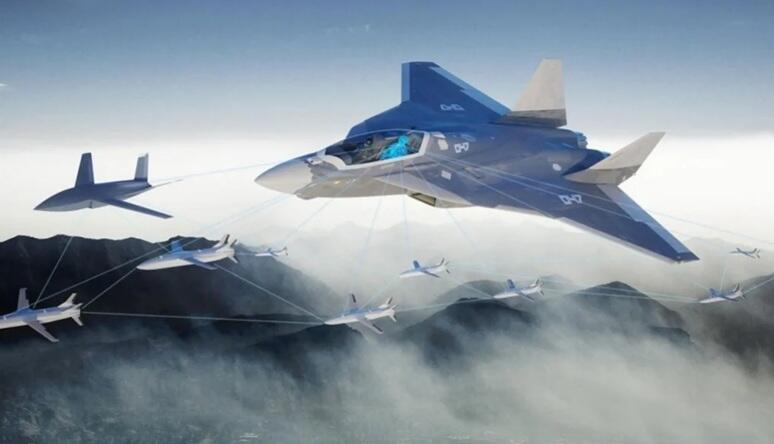








Ambitious France-Germany Next-Gen Fighter Faces Crash Landing Amid EU Infighting
Europe’s flagship sixth-generation fighter project is unraveling fast. Politico Europe days ago observed that the Franco-German-Spanish Future Combat Air System (FCAS) is now “on the verge of collapse” after Dassault and Airbus failed to meet critical deadlines for agreeing on work-sharing arrangements.
The warnings have been building for months, with loud public signaling coming from German Chancellor Friedrich Merz, who already conceded that the project is stalled, bluntly admitting there is “no progress” – while French officials also sound increasingly pessimistic, with some privately warning that the manned fighter element of FCAS may already be “dead”.
Some of the key quotes in the Politico piece attempt to strike hopeful note, but sound anything but reassuring: “We are doing everything we can to try and save this program. We’ll see how we can land,” the head of the French arms procurement agency, Patrick Pailloux, was cited in the report as telling the press.
Prior understandings have already broken down, with the report explaining: “The manned fighter has been at the core of the bitter industrial disputes between Dassault and Airbus over leadership, technology, and work-sharing, with little sign of a resolution. Dassault is looking for more control over the development of the Next Generation Fighter (NGF), a key component of the FCAS project.”
And a December deadline to resolve the dispute has come and gone with no resolution. “In Berlin, German officials insist Germany still wants to preserve parts of the project – particularly the joint combat cloud and other shared systems – even if the fighter itself splits into two separate jets,” the Politico report added.
So the ultra-ambitious project could all ultimately break down over control and intellectual property questions – and shared workflow issues – given Paris is accusing Berlin of trying to “steal know-how” while German officials have grumbled about the project being little more than a costly bailout for France’s defense industry.
Last year Merz acknowledged, “We are not making any progress with this project. Things cannot continue as they are.” But nothing appears to have changed since then till now.
Most recently, Bloomberg has reported that “FCAS is meant to be operational around 2040, but that deadline may be hard to meet.”
The same report noted another blackeye for EU and inter-NATO unity and cooperation: “The program’s difficulties call into question Europe’s broader ability to form wartime alliances as the region comes under increasing US pressure to spend more on defense and become more self-reliant.”
US Ambassador to NATO Matthew Whitaker referenced this theme of the Trump administration, namely European disunity, in comments in Germany just ahead of the annual Munich Security Conference. Europe must grow up, he explained, and Washington can’t provide the unity and self-reliance it needs. “When your kids are young, they’re dependent on you. But eventually you expect them to get a job. And so to me, that’s where we are. We still love them. You’re still allies,” Amb. Whitaker said.
The FCAS story so far…
Left: plucky France with Macron and Dassault just trying to build a European fighter jet that can launch from an aircraft carrier.
Right: cold-hearted, untrustworthy Germans with their insistence on shared workloads and design decisions destroying FCAS. pic.twitter.com/i80fLUSGUp
— Georg ‘Dr. Maverick’ Löfflmann (@gloefflmann) February 10, 2026
While praising allies’ willingness boost military spending to 5%, he assessed that they are being too sluggish in turning this extra defense investment and expenditure into actual military capabilities.
“One of the things that I’ve noticed in my time here in Europe is there is a lot of discussion and not a lot of action,” he emphasized. The faltering FCAS sixth-generation fighter project could in the end prove yet another costly example of bickering that doesn’t produce tangible results.
Tyler Durden
Wed, 02/11/2026 – 02:45