

Fed Chair Nominee Kevin Warsh Reveals Assets Worth Over $190 Million
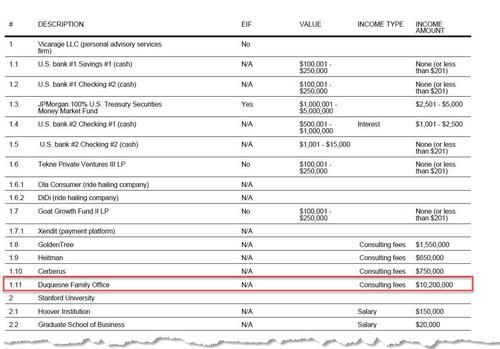
Trump’s nominee for next Fed Chair, Kevin Warsh, disclosed assets with his wife, heiress Jane Lauder, that total at least $192 million, though – according to Bloomberg – “the actual figure for their holdings is certainly much higher”, underscoring the extent of his close ties to Wall Street through personal investments and advisory positions. Warsh, who was chosen in January by President Donald Trump to succeed Jay Powell, received more than $13 million in consulting fees last year, including $10.2 million from billionaire hedge fund manager Stanley Druckenmiller’s family office, Duquesne.
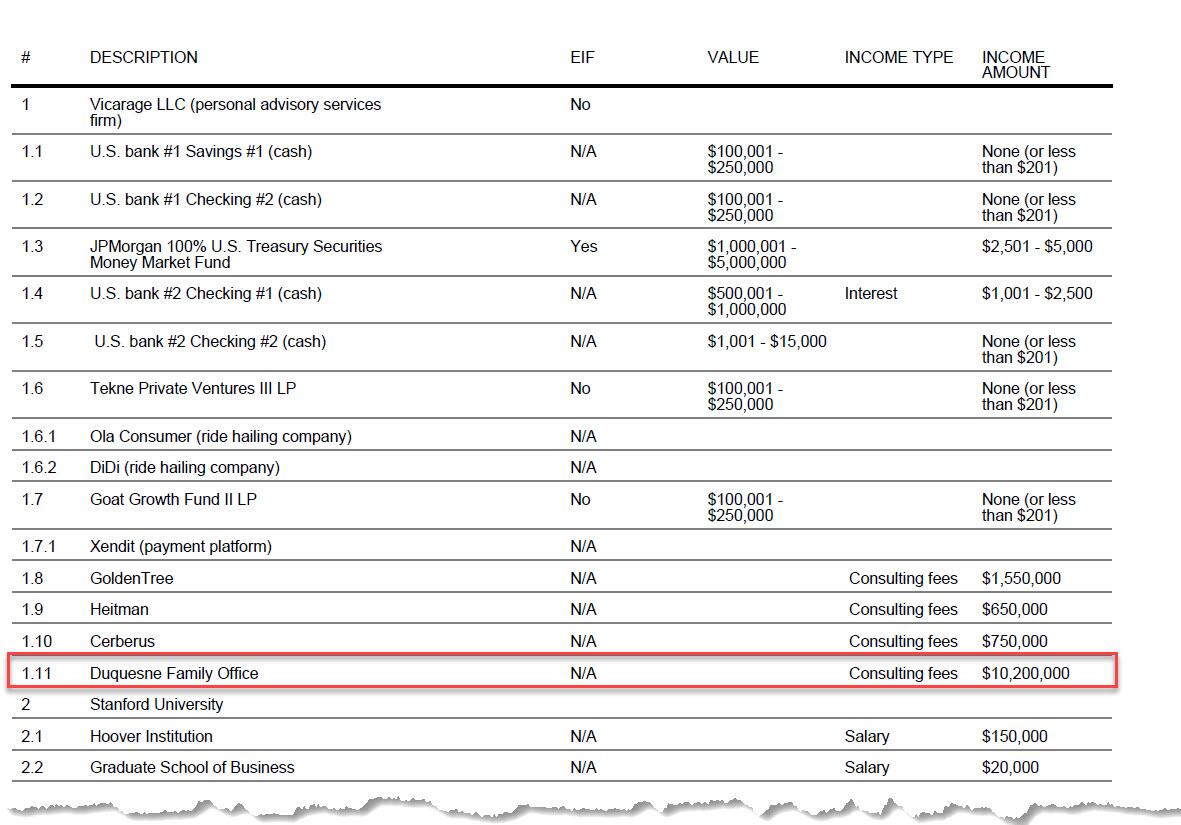
The figures are part of financial disclosures submitted by Warsh ahead of his confirmation hearing for Fed Chair that is scheduled for next week. They underscore that Warsh, who previously served on the US central bank’s Board of Governors from 2006 to 2011, will be among the wealthiest to hold the Fed chair position.
His 69-page filing, published by the Office of Government Ethics on Tuesday, also reveals hundreds of millions of dollars in assets held by himself and his wife, Estée Lauder heir Jane Lauder.
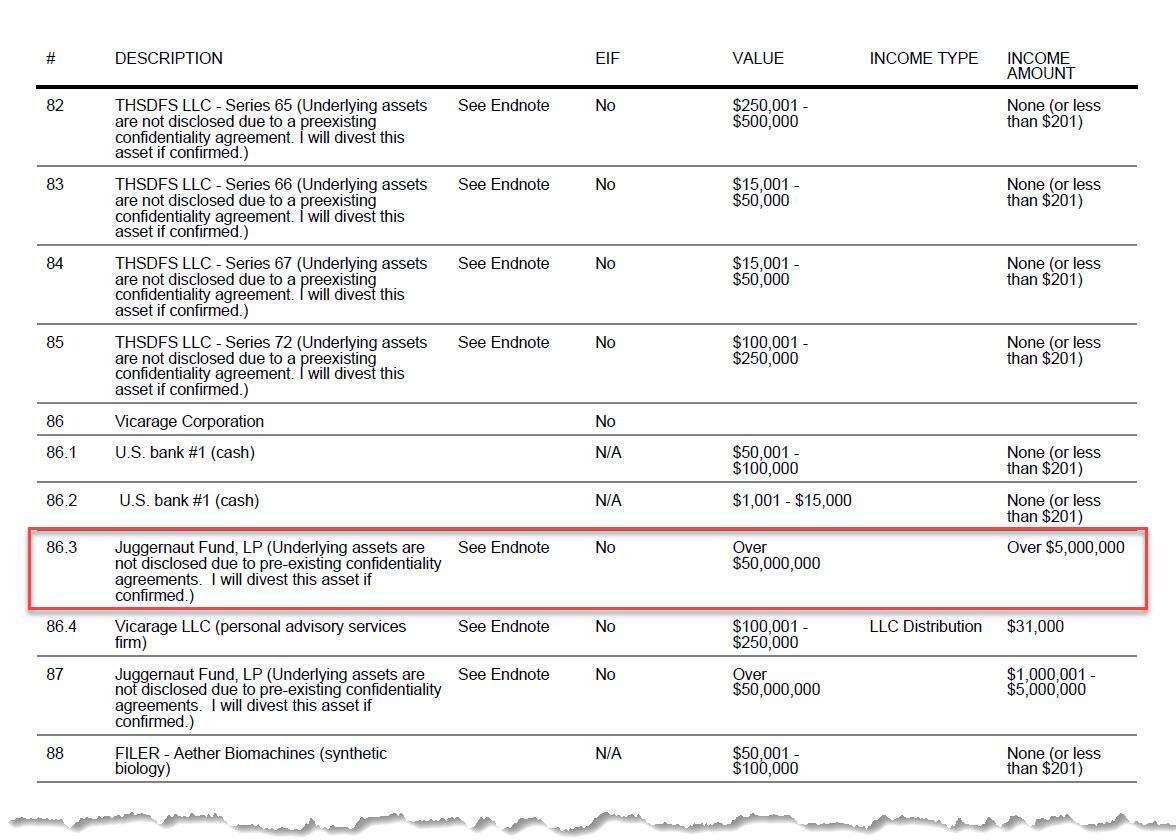
Warsh has more than $100 million invested in multiple funds run by Duquesne, including $50 million in a fund called Juggernaut. Its underlying assets were not disclosed because of a confidentiality agreement.
The Fed chair nominee’s disclosures reveal a constellation of advisory work for financial institutions, including the hedge fund GoldenTree Asset Management, for which he received $1.6mn, and private equity firm Cerberus Capital Management, for which he received $750,000.
Warsh received more than $1.5 million for what the disclosures refer to as honoraria, primarily for speaking engagements, including $750,000 from hedge fund Brevan Howard for three different occasions.
He also has assets tied to dozens of start-up companies, especially ones related to AI, and several with a focus on crypto. About 60 holdings could not be disclosed because of confidentiality agreements but will be divested if he is confirmed as Fed chair, according to the disclosure.
In his ethics agreement submitted with the disclosures, Warsh has promised to divest from certain holdings and to resign from board positions and other roles, including as a director at United Parcel Service. Warsh is married to Lauder, the daughter of prominent Republican donor Ronald Lauder – the son of makeup scion Estee Lauder.
As Bloomberg notes, while nominees disclose the value of their assets in broad ranges, with the higher end peaking at $50 million, their spouses use different ranges, topping out at those listed as over $1 million. Two of Warsh’s assets – titled the Juggernaut Fund – each were valued at more than $50 million, while his wife listed more than 30 assets in the $1 million plus category, including her shares in Estee Lauder Cos.
Other public data on Jane Lauder’s holdings illustrate how vague the government disclosures can be. Lauder currently holds $1.5 billion in Estee Lauder stock directly and through two family trusts, according to the Bloomberg Billionaires Index. She’s also collected more than $450 million in lifetime dividends on those holdings and has sold more than $83 million in stock since 2003, according to the index.
Warsh pledged in his paperwork to recuse himself from policy decisions that might affect Estee Lauder.
“I will not participate personally and substantially in any particular matter that to my knowledge has a direct and predictable effect on the financial interests of the Estee Lauder Companies unless I first obtain a written waiver,” Warsh wrote.
The extent of Warsh’s wealth – which is substantially bigger than current Fed Chair Jerome Powell whose assets were estimated at more than $100 million when he was nominated for his first term in 2017, and who worked for the private equity firm Carlyle before joining the Fed, and which would easily make him the richest Fed chair in history – is expected to attract scrutiny from Democratic members of the Senate banking committee.Trump’s second administration has multiple independently wealthy members, including the president himself, Treasury secretary Scott Bessent, who previously worked as a hedge fund manager, and commerce secretary Howard Lutnick, the former chief executive of Cantor Fitzgerald.
Warsh is required to list his and his close family members’ investments as part of congressional rules that mean all appointees for Senate-confirmed roles must publish financial disclosures ahead of confirmation hearings.
Warsh will face the banking committee for his nomination hearing next week, chair Tim Scott, Republican senator for South Carolina, said on Fox Business on Tuesday. A vote on the Senate floor, where he needs a majority of 51, is expected to be delayed as senators insist the Department of Justice drop a criminal investigation into Powell.
As the FT notes, several of Congress’s 53 Republican senators, led by North Carolina’s Thom Tillis, have expressed concerns about an investigation they believe represents an attempt by Trump to rein in the Fed’s capacity to set interest rates free from political pressure.
Powell’s second term as Fed chair officially ends in mid-May, but the Fed chair could stay on past that date should Warsh’s nomination fail to reach the Senate floor before then due to the probe.
Since stepping down as Fed governor in 2011, Warsh has worked as a partner at the family office of Druckenmiller, the famed macro investor who has kept a low profile since converting his hedge fund into a family office.
Warsh said in a letter that accompanied the release of his disclosure that he would divest any interest in Duquesne and related outfits between his confirmation and assuming the duties of Fed chair. Heather Jones, an OGE official, said Warsh would be in compliance with government rules once he divests the assets specified in the letter.
Warsh would also resign from many of his other positions and divest his interests in other firms before taking the helm of the world’s most important central bank. While he would also resign from his advisory company Vicarage Stable, he said he would “continue to have a financial interest in this entity” and receive passive investment income from it.
The Fed also has its own rules on what investments officials are allowed to hold, with interests in financial institutions limited. Fed officials are also banned from holding certain financial instruments. Its regulations stipulate that officials cannot buy or sell assets around monetary policy meetings.
Warsh was independently wealthy before joining the Fed as its youngest-ever governor in 2006. He worked at Morgan Stanley from 1995 to 2002, rising to Executive Director of Mergers and Acquisitions, followed by a role as Special Assistant to President George W. Bush for Economic Policy and Executive Secretary of the National Economic Council
Since leaving the Fed, he has also worked for Stanford University’s Hoover Institution, an organisation renowned for hawkish views on monetary policy. Hoover paid Warsh a salary of $150,000 last year — a figure dwarfed by consulting fees and honoraria from dozens of financial firms.
His full filing is below (pdf link)
Kevin Warsh Federal Reserve Financial Discloure 2026 by Zerohedge
Tyler Durden
Tue, 04/14/2026 – 15:45