




Federal Judge Won’t Block White House Ballroom Construction
Authored by Matthew Vadum via The Epoch Times,
A federal district judge on Dec. 17 allowed the ongoing ballroom construction project at the White House to continue, turning away a preservation organization’s request to halt it, at least for the time being.
The litigation is still underway, and a court hearing is scheduled for January.
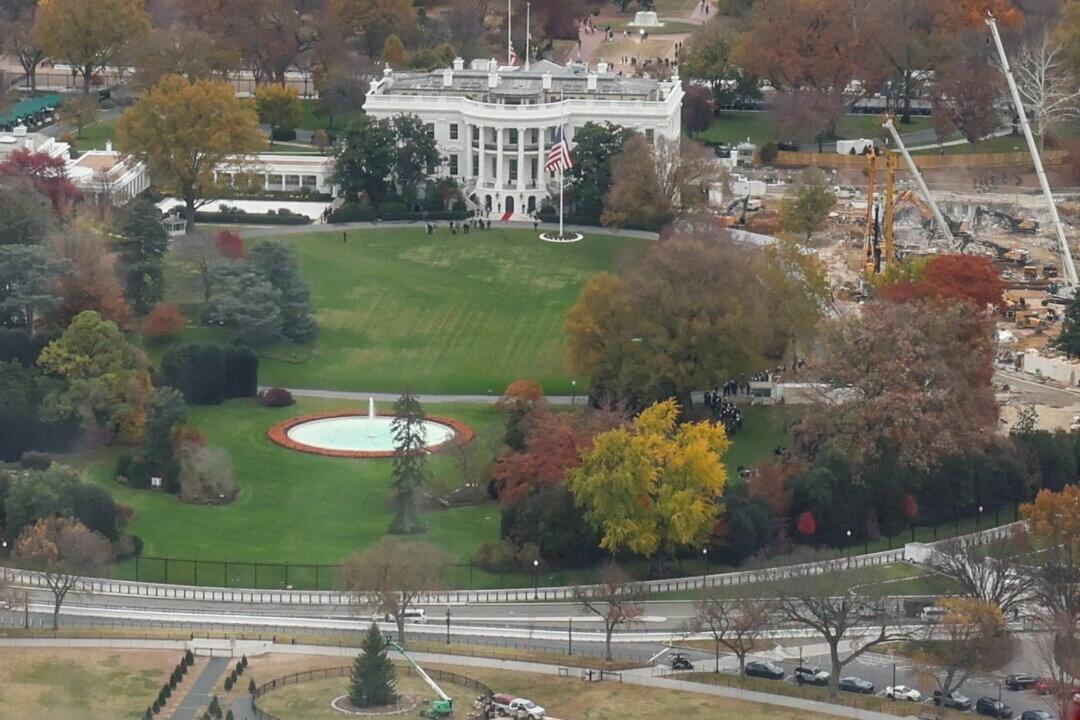
Construction on the project, which involves demolishing part of the executive mansion and building a 90,000-square-foot ballroom, began in September. The project is expected to cost about $300 million, all of which is expected to be funded by private donors, including President Donald Trump himself. The Trump administration released a list of the private donors in October.
Trump has said the ballroom project is necessary because the East Room—the largest room for gatherings in the White House—is too small and in poor shape. A government official said in a declaration filed with the court that the facilities at the White House are inadequate for large-scale events, which are instead held on the lawn, under tents.
The National Trust for Historic Preservation filed a lawsuit against Trump and federal agencies on Dec. 12 over the project. The National Trust is a private, charitable, educational nonprofit corporation that Congress chartered in 1949.
The legal complaint, filed with the U.S. District Court for the District of Columbia, sought a judicial declaration that the project violates several federal statutes.
The National Trust also asked for an injunction to pause work on the project “until the necessary federal commissions have reviewed and approved the project’s plans; adequate environmental review has been conducted; and Congress has authorized the Ballroom’s construction,” according to the complaint.
In his new order, U.S. District Judge Richard Leon denied the group’s request for a temporary restraining order, but deferred his ruling on the request for a preliminary injunction until after the court conducts a hearing in January.
Leon said he was rejecting the plaintiff’s argument that he should stop the project because the group believes it would be harmed by not being allowed to participate “in the review process for the proposed ballroom.”
The judge noted in his order that the federal government has said it would begin “consultation processes with the National Capital Planning Commission and the Commission of Fine Arts by the end of the month.”
“The Court will hold the Government to its word,” he added.
Leon also rejected the plaintiff’s claim of “aesthetic harm,” noting that such a claim could not be evaluated because plans for the ballroom have not been finalized.
Aesthetic harm takes place when an unpleasing alteration to property diminishes its value or the extent to which people enjoy it. Courts have recognized aesthetic harm as a legitimate basis for standing in lawsuits. Standing refers to the right of someone to sue in court. The parties must show a strong enough connection to the claim to justify their participation in a lawsuit.
Although below-grade demolition and excavation at the East Wing are underway, the government has said below-grade structural work will not commence “until January 2026 for the colonnade and February 2026 for the ballroom,” the judge said.
The judge said that at the court’s Dec. 16 hearing, the government indicated that “nothing about the ballroom has been finalized, including its size and scale.” Based on those representations, “there is no sufficiently imminent risk of irreparable aesthetic harm warranting a temporary restraining order halting construction,” he added.
The court “takes seriously” the government’s representations that the building plans are not yet final, that it will consult with the National Capital Planning Commission and Commission of Fine Arts by month’s end, and that “no above-grade construction will take place before April 2016,” the judge said.
At the hearing on Dec. 16, Leon previewed how he would rule, saying he was unlikely to block the construction project for now.
He said at that time that any violation of the plaintiff’s procedural right to comment on the plans before the project got underway was probably not enough to show irreparable harm, and did not justify the National Trust’s request for a temporary emergency block.
Tyler Durden
Thu, 12/18/2025 – 13:40