


Global Plastics Supply Chains Further Pressured As Abu Dhabi Petrochemicals Plant “Suspended” After Attack
One of the UAE’s key petrochemical hubs halted operations early Sunday after falling debris from an air-defense interception sparked multiple fires. The incident adds to a growing list of disruptions across Gulf petrochemical infrastructure, highlighting major risks and potential incoming disruptions to the global supply chain for critical inputs used to make plastics.
Abu Dhabi authorities are responding to multiple fires in Borouge petrochemicals plant, caused by falling debris following successful interceptions by air defence systems.
Operations at the facility have been immediately suspended while damage is assessed. No injuries have been…
— مكتب أبوظبي الإعلامي (@ADMediaOffice) April 5, 2026
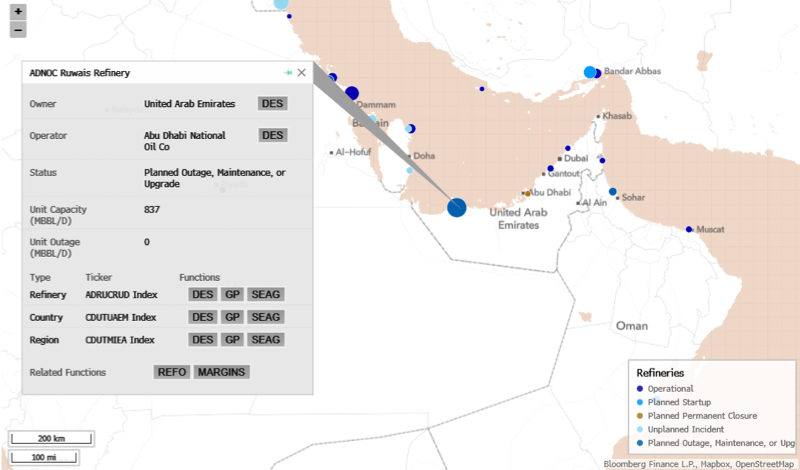
Borouge’s Abu Dhabi petrochemicals operations at Al Ruwais Industrial City in the Al Dhafra region halted operations after an attack sparked multiple fires across the plant. The plant produces polyethylene and polypropylene, which are building blocks for plastic manufacturing.
Polyethylene is widely used in packaging films, shrink wrap, heavy-duty sacks, liners, caps and closures, and infrastructure applications such as pipes, as well as in some healthcare packaging. Polypropylene is used in rigid packaging, including food and beverage containers, bottle caps, and housewares, as well as in medical products such as masks, gowns, syringes, catheters, inhalers, and pharmaceutical packaging.
Bloomberg first reported the incident at the petrochemicals plant earlier but provided no details on when the facility would restart operations or whether any critical components were damaged.
There were troubling reports last week that key players in the global plastics manufacturing supply chain declared force majeure due to the limited supply of monoethylene glycol and purified terephthalic acid caused by the heavily disrupted Hormuz chokepoint.
Disruptions reported last week, courtesy of Bloomberg:
Oriental Union Chemical Corp. warned US customers it would temporarily suspend MEG shipments for early March. The suspensions would persist until conditions stabilize, the Taipei-based company wrote in a customer letter. After March 11, shipments to customers continued as normal, with monthly pricing adjusted to reflect higher crude costs, spokesperson Daniel Yu said. Ethylene oxide and ethylene glycol sales are mainly for customers on long-term contracts, he added. As disruptions mount across the industry, Taiwan has moved to boost capacity for ethylene output, according to a report by the semi-official Central News Agency.
Hainan Yisheng Petrochemical Co. declared force majeure “for affected contracts/orders/delivery obligations,” according to a letter sent to US customers. The Chinese maker of PET and PTA flagged disruptions stemming from the Hormuz shutdown.
Indorama Ventures said in an early-March letter from its US and Canada regional sales team that it would raise prices on PET resin by 10 cents a pound across all businesses, citing higher feedstock costs and supply-chain disruptions linked to the Middle East conflict. The company said in a letter sent the following week that it would add an additional temporary 5-cent war surcharge. The company has also declared force majeure on shipments from two PET units in Europe, S&P Global’s Chemweek reported.
Saudi Basic Industries Corp. last week told customers it would invoke force majeure for MEG and diethylene glycol. The duration of the disruptions “cannot be reasonably determined given the evolving nature of the circumstances,” the company said, citing “unforeseen supply chain disruptions in the Strait of Hormuz.”
Last week, Dow CEO Jim Fitterling warned that Gulf petrochemical flows could take upwards of nine months to normalize if the Hormuz chokepoint were to reopen in the near term.
Let’s remind readers that China is the world’s largest producer and consumer of plastics, according to OECD data. Any supply disruption would ripple through the industrial base of the world’s second-largest economy.
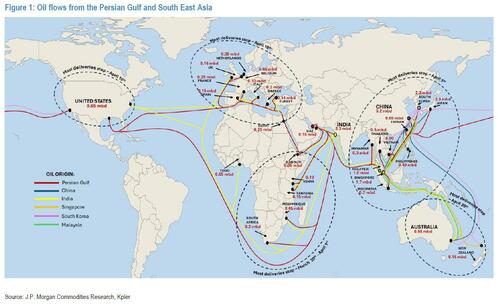
Read the key JPMorgan note on how the energy shockwave travels across the world like falling dominoes (read).
Tyler Durden
Sun, 04/05/2026 – 10:30