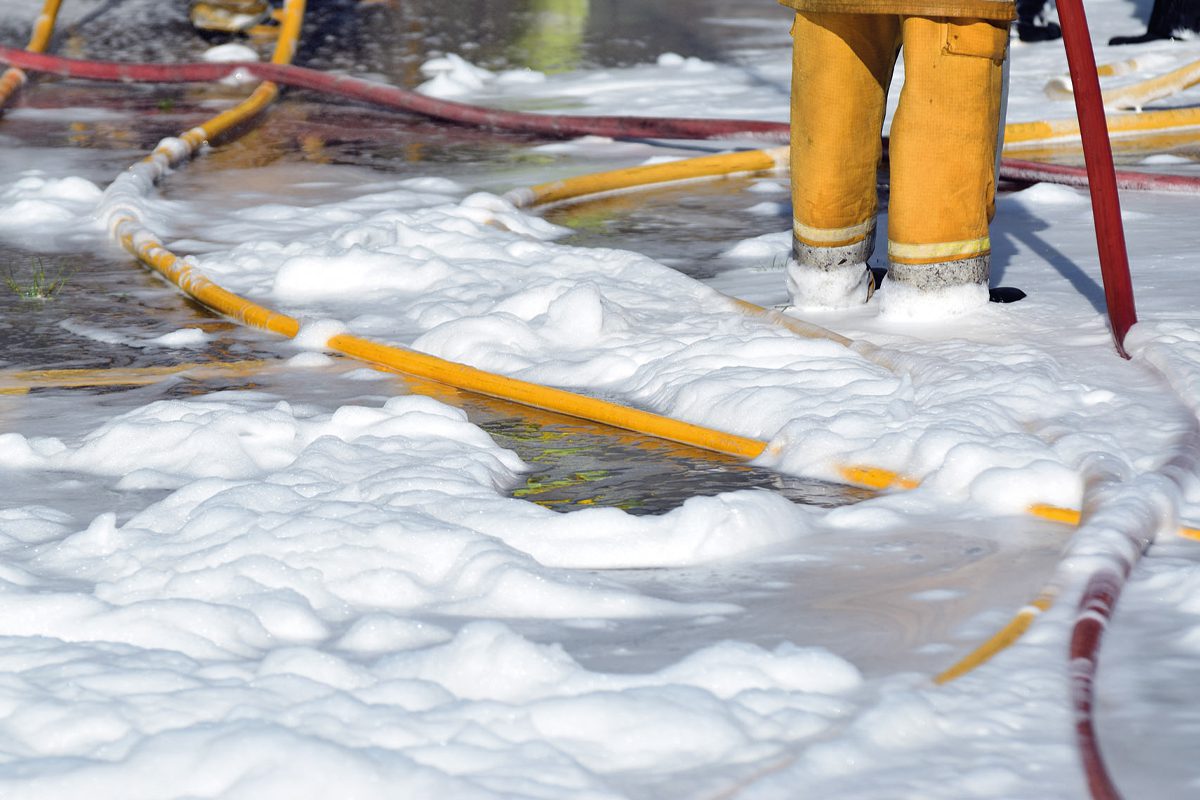

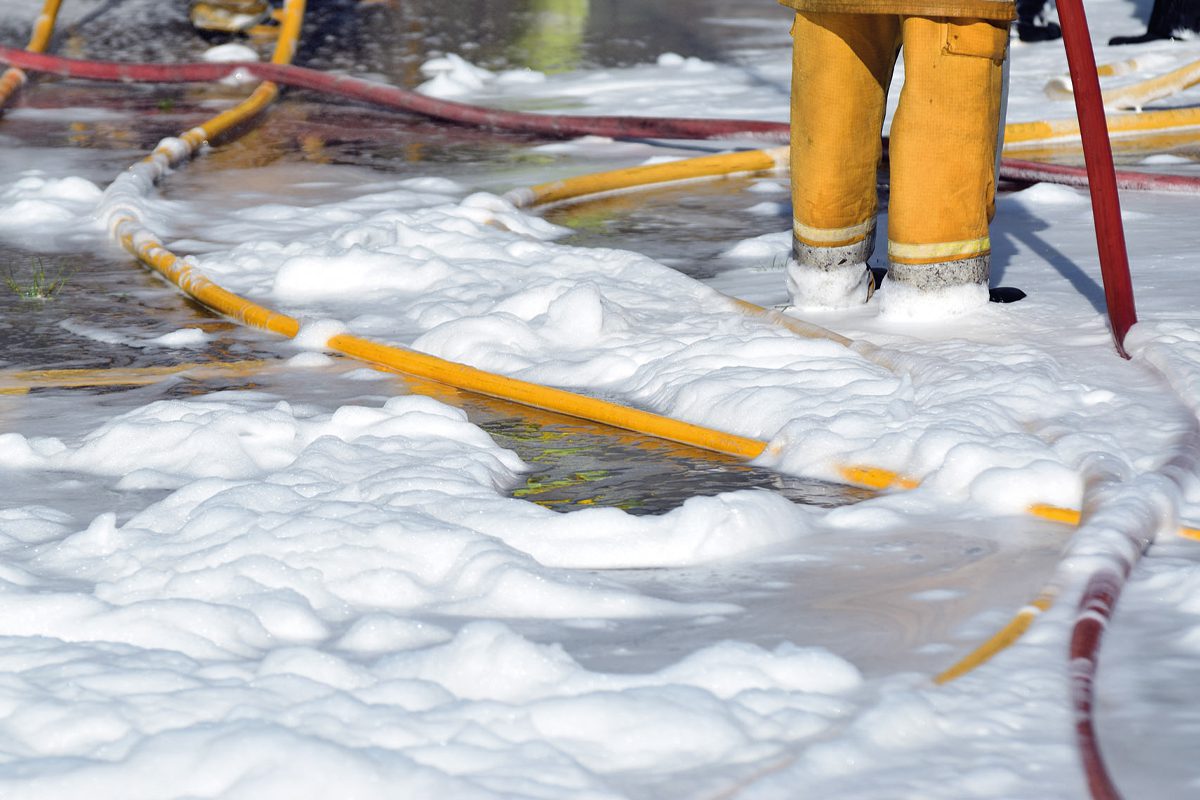






The method utilises PFAS taken from firefighting foam samples.
A group at Rice University in Houston, Texas have developed a process to use PFAS to extract lithium from high-salinity brine pools, in a study recently published in Nature Water.
“Extracting lithium from brine can be less environmentally damaging than conventional mining, but it still faces challenges such as selectivity, cost and water use,” said the group’s Yi Cheng, the first author on this study. “We saw an opportunity to use the fluorine locked in PFAS to recover the lithium in a fast, lower-impact process.”
The method does not depend on PFAS in the environment but on PFAS that has been removed from the field-collected firefighting foam samples using granular activated carbon (GAC), which absorbs and retains the PFAS found in the foam. While an effective method to remove PFAS, PFAS-laden GAC, once spent, creates another waste stream.
Rather than treating this spent material as an end point, the Rice team used it as an input. The researchers took the spent PFAS-laden GAC and added it to a high-salinity brine containing multiple salts. Each salt is formed from a positively charged cation, like lithium or calcium, bound to a negatively charged anion, like chlorine or fluorine.
“Here,” Cheng explained, “there was valuable cation, lithium, found in a salt in the brine. The used carbon contains fluorine, an anion, locked inside PFAS molecules. We wanted to free that fluorine and pair it with freed lithium, so we could collect the resulting salt, lithium fluoride.”
To do this, the team applied electrothermal heating to the mixture, rapidly heating it to greater than 1,000°C then rapidly cooling it. These extreme, transient conditions allowed the fluoride from the PFAS to break its bonds and react with metal cations, like lithium, in the brine. The brine mixture now included a mix of salts — including lithium fluoride, calcium fluoride and magnesium fluoride — as well as nontoxic waste created from the PFAS-laden GAC, which had now lost its fluorine.
A wash step removed unreacted impurities such as salts like sodium chloride and potassium chloride. To separate out the lithium fluoride from the rest of the fluoride salts, the researchers took advantage of lithium fluoride’s boiling point, 1,676°C, which was easily accessible by the same electrothermal apparatus. By using controlled electrothermal conditions to heat the mixture to between 1,676 and 2,260°C, lithium fluoride is distilled in seconds, while magnesium fluoride and calcium fluoride, which have much higher boiling points of 2,260 and 2,533°C, respectively, remain as solids in the mixture. The researchers then collected the volatile stream containing lithium fluoride, which resulted in recovering 82% of the available lithium fluoride at 99% purity.
To examine real-world usefulness, the extracted lithium fluoride was incorporated into lithium-ion battery electrolytes and tested for stability and impact on battery performance. The electrolytes with the recovered lithium fluoride showed increased stability and performance, confirming that the process produced a useful battery-grade lithium source.
Since there are other brine-based lithium-extraction methods, the final step was to compare this new process to currently used commercial brine extractions. An environmental analysis showed the PFAS-based method used less water and energy and contributed less to global warming than the two most common methods used to extract lithium from brine. It was also projected to have lower operating costs and a shorter operating time, requiring only minutes.
“By thinking about waste as a potentially useful compound, we were able to convert the problematic GAC-sorbed PFAS into a valuable metal that can be used in batteries, for example,” said James Tour, the corresponding author on this study. “This promises significant environmental, economic and efficiency benefits.”