




Gulf Energy Shock Spreads To Global Plastics As War Sparks Force Majeure Wave
Building on our earlier “Global Demand Destruction” note, which mapped how the Gulf energy shock is spreading globally and the immediate effects of rationing, price controls, and fuel shortages, another second-order disruption is quickly emerging: supply chain disruptions in critical plastic feedstocks.
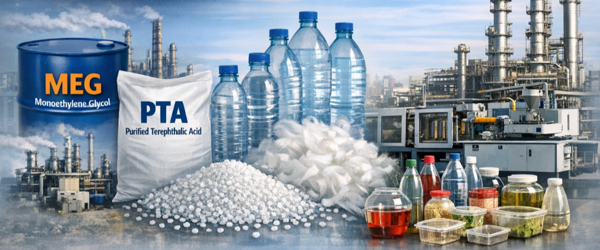
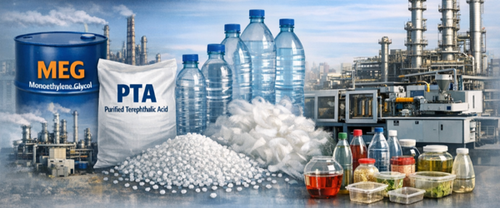
Plastics are core to the modern economy, and a troubling new Bloomberg report indicates that several producers of monoethylene glycol (MEG) and purified terephthalic acid (PTA) have declared force majeure, as tanker flows through the Strait of Hormuz remain heavily disrupted.
For context, MEG and PTA are the two primary feedstocks used to produce polyethylene terephthalate (PET) and polyester fibers. These petrochemicals are critical to the production of everyday consumer goods that make life in the developed world convenient, including plastic bottles, food packaging, clothing, home furnishings, and a wide range of consumer and industrial goods.
More specifically, MEG is used in the production of polyester yarn, polyester staple fiber, PET resin, and PET film. It also plays a critical role in antifreeze, coolants, adhesives, coatings, and enamels.
In other words, MEG and PTA are foundational petrochemical building blocks for the modern economy. Any sustained disruption to these flows would be detrimental to the global economy.
Which brings us to the supply alarm bells already beginning to ring, courtesy of Bloomberg:
Oriental Union Chemical Corp. warned US customers it would temporarily suspend MEG shipments for early March. The suspensions would persist until conditions stabilize, the Taipei-based company wrote in a customer letter. After March 11, shipments to customers continued as normal, with monthly pricing adjusted to reflect higher crude costs: Spokesperson Daniel Yu Ethylene oxide and ethylene glycol sales are mainly for customers on long-term contracts, he added. As disruptions mount across the industry, Taiwan has moved to boost capacity for ethylene output, according to a report by the semi-official Central News Agency.
Hainan Yisheng Petrochemical Co. declared force majeure “for affected contracts/orders/delivery obligations,” according to a letter sent to US customers. The Chinese maker of PET and PTA flagged disruptions stemming from the Hormuz shutdown.
Indorama Ventures said in an early-March letter from its US and Canada regional sales team that it would raise prices on PET resin by 10 cents a pound across all businesses, citing higher feedstock costs and supply-chain disruptions linked to the Middle East conflict. The company said in a letter sent the following week that it would add an additional temporary 5-cent war surcharge. The company has also declared forces majeures on shipments from two PET units in Europe, S&P Global’s Chemweek reported.
Saudi Basic Industries Corp. last week told customers it would invoke force majeure for MEG and diethylene glycol. The duration of the disruptions “cannot be reasonably determined given the evolving nature of the circumstances,” the company said, citing “unforeseen supply chain disruptions in the Strait of Hormuz.”
The market response has already seen a surge in US spot prices for ethylene, methanol, and polymer-grade propylene. This will likely translate into higher prices for everyday consumer goods, including trash bags, cleaning products, tires, food containers, and more.
Last week, Dow CEO Jim Fitterling warned that Gulf petrochemical flows could take upwards of nine months to normalize if the Hormuz chokepoint were to open up in the near term.
“Snacks, frozen foods and fresh protein products will be impacted first,” EGC Consulting CEO Jonathan Quinn warned, adding, “The potato chip bag — that alone is going to see an increase of a nickel, a dime. Everything you buy is going to be impacted.”
Let’s remind readers that China is the world’s largest plastics consumer and producer, as per OECD data. Any supply disruption would ripple through the industrial base of the world’s second-largest economy.
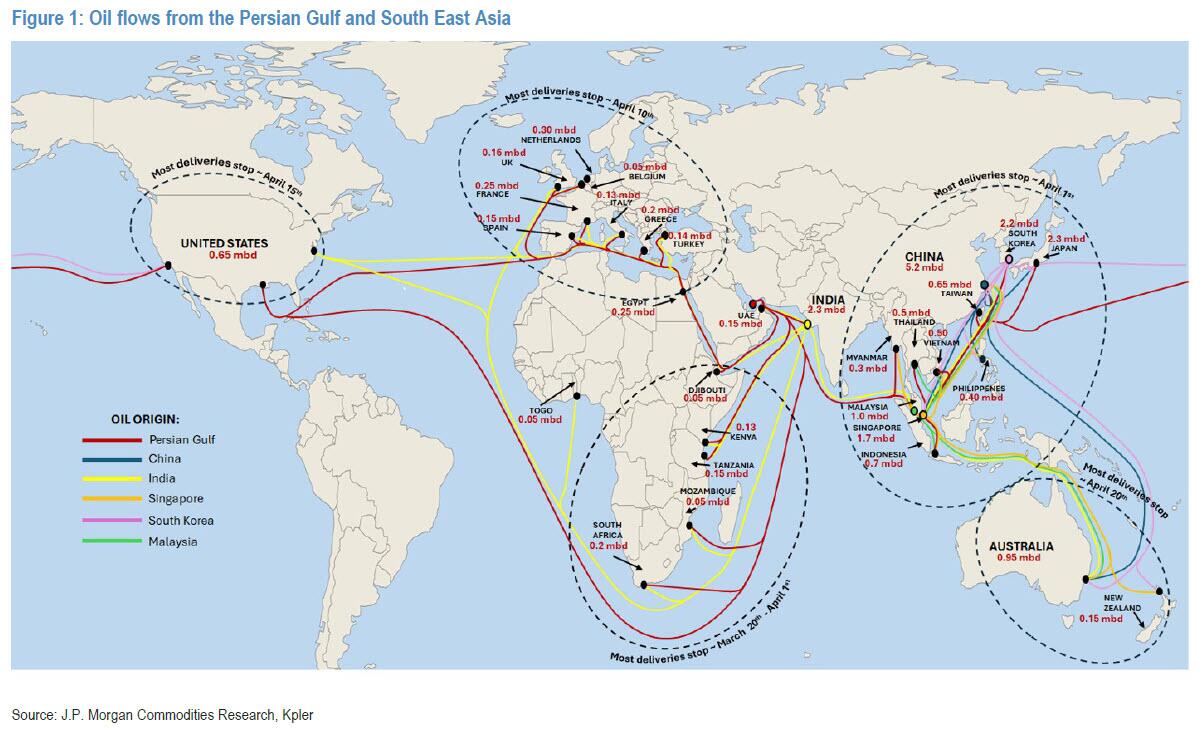
Separately, JPMorgan analysts mapped out how the energy shockwave from the Iran war spreads across the world, hitting Asia first, then Africa and Europe, before settling on the US – primarily California.
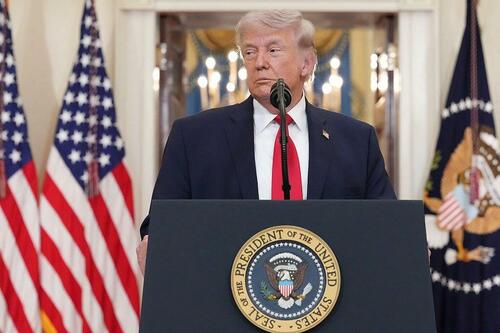
President Trump’s speech on Wednesday night sparked a global risk-off move because, as Goldman analyst Peter Bartlett explained, the president “was more escalatory than not.” This suggests the global energy shock is likely to worsen (unless Iran capitulates) in the weeks ahead, with plastics emerging as the next major problem facing the global economy.
Tyler Durden
Thu, 04/02/2026 – 11:30