



Homebuilders Working On Massive Program To Build Up To 1 Million “Trump Homes” To Boost Affordability
Last October, Dubai-based billionaire and Emaar Properties founder Mohammed Alabbar unveiled an audacious $400 billion proposal to help solve America’s worsening housing shortage by building millions of housing units, describing it as both a humanitarian and economic opportunity that could “reshape the U.S. market” and create up to 20 million jobs.
According to Alabbar, the United States is experiencing a significant housing-supply shortfall, which has led to a crushing lack of affordable housing. Analysts estimate a gap of about 4.7 million to nearly 5 million housing units currently exists in the US. This shortage is the result of many years of underconstruction, soaring costs, regulatory and labor constraints. The effects are broad: higher home and rent prices, fewer first-time buyers, and mobility barriers for workers. In short: a weak supply side has become a drag on affordability, economic growth and inflation control. In response, Alabbar – who now runs the largest real estate developer in the UAE – proposed a $400 billion “fix” at the Reuters NEXT Gulf Summit in Abu Dhabi, capital which he claimed could be raised in as little as one week if the right partners are assembled.
But while Alabbar’s proposal was unlikely to be taken seriously – as it benefits his company as much as it does US homebuyers – the logic behind it is sound – build much more housing – and has seemingly impressed the Trump admin.
It does explains why, as Bloomberg reports, US homebuilders are working on a plan for a massive program to develop up to a million “Trump Homes” that would address the US affordability crisis while allowing private capital to deploy many billions of dollars.
Lennar and Taylor Morrison are among the firms that have worked on the proposal, which calls for builders to sell entry-level homes into a pathway-to-ownership program funded by private investors.
The size of the program would depend on how many builders decide to participate, though a person involved in the plan said that builders have discussed aiming for as many as 1 million homes. At that number, the program would likely deliver more than $250 billion worth of housing, not to mentions hundreds of thousands of new jobs.
According to one version of the plan, the investors would rent out the homes to tenants, whose monthly payments would, after three years, be counted toward a down payment if they wished to purchase the home. The drawback is that such a program would be complicated to implement, according to one of BBG’s sources, and it’s possible that it won’t gain enough support to move forward. Even so, it demonstrates builders’ desire to gain the favor – or at a minimum, avoid the ire – of an unusually transactional White House.
The proposal, which some in the industry are colloquially calling “Trump Homes”, could help meet that demand while giving the president a signature program – along the lines of TrumpRx, for addressing the cost of prescription medication, or wealth-building Trump Accounts – that he can use to motivate voters in the coming midterm elections. To that end, Trump has promoted a variety of initiatives, including a plan to drive down mortgage rates by directing Fannie Mae and Freddie Mac to purchase mortgage-backed securities, and a push to ban institutional investors from acquiring single-family rental homes.
The Trump Homes proposal takes a different approach: increasing housing supply through a business model commonly known as rent-to-own. In past iterations, the model has resembled a standard lease that includes an option to buy, allowing families to move into a home they’d like to purchase before they have saved a down payment.
A federally backed rent-to-own program could offer solutions to those problems by coordinating the efforts of housing market players, including builders, rental companies, banks and government-sponsored entities. In January, Pretium Co-President Stephen Scherr sketched out a framework for a federally-backed rent-to-own program in an interview with Bloomberg Television.
“Imagine a scenario in which rent is paid; money is held back to provide against a deposit account for a down payment,” said Scherr, whose firm is among the largest owners of single-family rentals. “Imagine where we were to link arms with homebuilders who could build smaller, more affordable homes.”
For its part, Lennar has signaled its readiness to increase production once the market improves for buyers.
“We’re very well positioned to provide the affordable supply that the market needs when demand is ultimately activated by either lower interest rates or government-sponsored programs to enable affordability,” Lennar Chief Executive Officer Stuart Miller said on a conference call with investors in December.
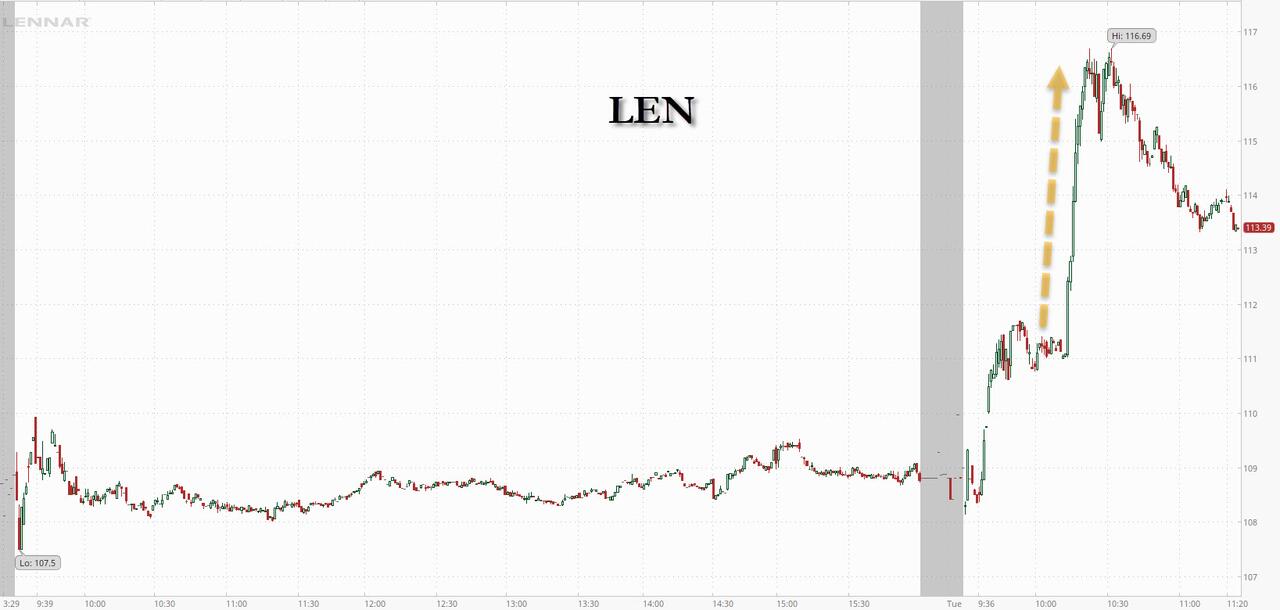
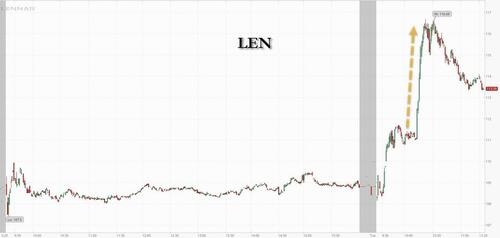
The newst sent shares of Lennar stocks and its peer homebuilders sharply higher.
While many details of the program have yet to be determined, including the role that federally-backed mortgages should play, the private investors would bear any initial losses. Industry players initially pitched the plan last year to the administration and are continuing to refine the details.
“We are encouraged by the thoughtful discussions between home builders and the administration that could help more Americans step into home ownership,” a Taylor Morrison spokesperson said, adding that it’s “too early to understand any details.”
Responding to Bloomberg, the administration is not actively considering the plan, a White House official said, speaking on condition of anonymity.
Ultimately, if domestic builders fail to step up, we are confident that the UAE’s developers will be more than happy to take their place.
Tyler Durden
Tue, 02/03/2026 – 11:40