

Homeward Bound: Artemis II Leaves Lunar Space, Reveals ‘Earthset’ Photos
Authored by T.J. Muscaro via The Epoch Times,
The Artemis II astronauts are on their way home from the moon.
NASA’s Reid Wiseman, Victor Glover, and Christina Koch, and the Canadian Space Agency’s Jeremy Hansen left lunar space just before 1:30 p.m. ET on April 7.
After carrying humanity’s representatives to the farthest point in space ever ventured—where they witnessed cosmic wonders never before seen by mankind—the Orion spacecraft Integrity will return its crew to Earth’s gravity, targeting a splashdown in the Pacific.
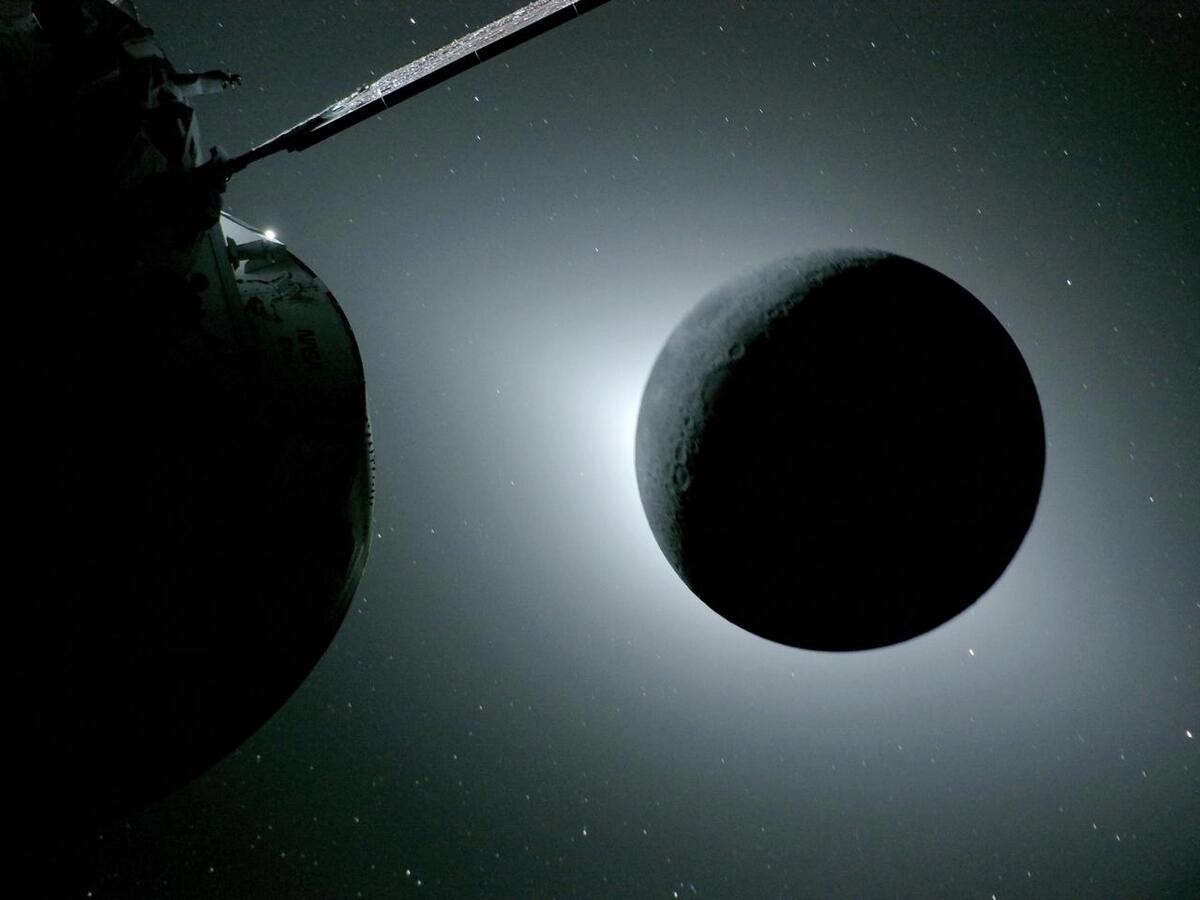
But it was the moon that ultimately sent them home. Integrity swung around the farside of the moon, essentially using its gravitational pull to make the necessary U-turn to start the nearly four-day journey home.
The ship reached a peak altitude of 252,756 statute miles above the Earth just after 7 p.m. on April 6 as the moon blocked communications. It was around this point that the crew was at their closest point to the moon, a little more than 4,000 miles above the lunar surface.
Once the crew re-emerged from behind the moon and reacquired communication with mission control, their distance to Earth only became closer and closer. But they started home with confidence of a successful return very soon.
“We will explore. We will build ships. We will visit again,” Koch said.
“We will construct science outposts. We will drive rovers. We will do radio astronomy. We will found companies. We will bolster industry. We will inspire.
“But ultimately, we will always choose Earth. We will always choose each other.”
Artemis Ii is scheduled to splashdown in the Pacific Ocean off the coast of San Diego just after 8 p.m. ET on April 10.
Flight director Rick Henfling told reporters during a daily mission briefing at Johnson Space Center on April 7 that the mission’s recovery ship, the USS John P Murtha, has left port in anticipation for Integrity’s return.
Gigabytes of Data
Henfling was joined by NASA administrator Jared Isaacman, who said that as Artemis II continues its journey home, approximately 175 gigabytes of data collected during its seven-hour lunar flyby will be beamed down ahead of it.
Kelsey Young, the mission’s lunar science lead, said that NASA scientists will spend the next six months after splashdown studying all of the images and data and releasing two reports for the public. One report will focus on NASA’s operational structure during the flyby, analyzing how lunar science worked seamlessly with flight operations and the crew during the event. The second will be a preliminary science report that will demonstrate the results of each objective. Young emphasized that the science report will be structured in a way that is transparent and empowers the scientific community to help further expand understanding of the material themselves.
But some photos that made it back to Earth have already been released.
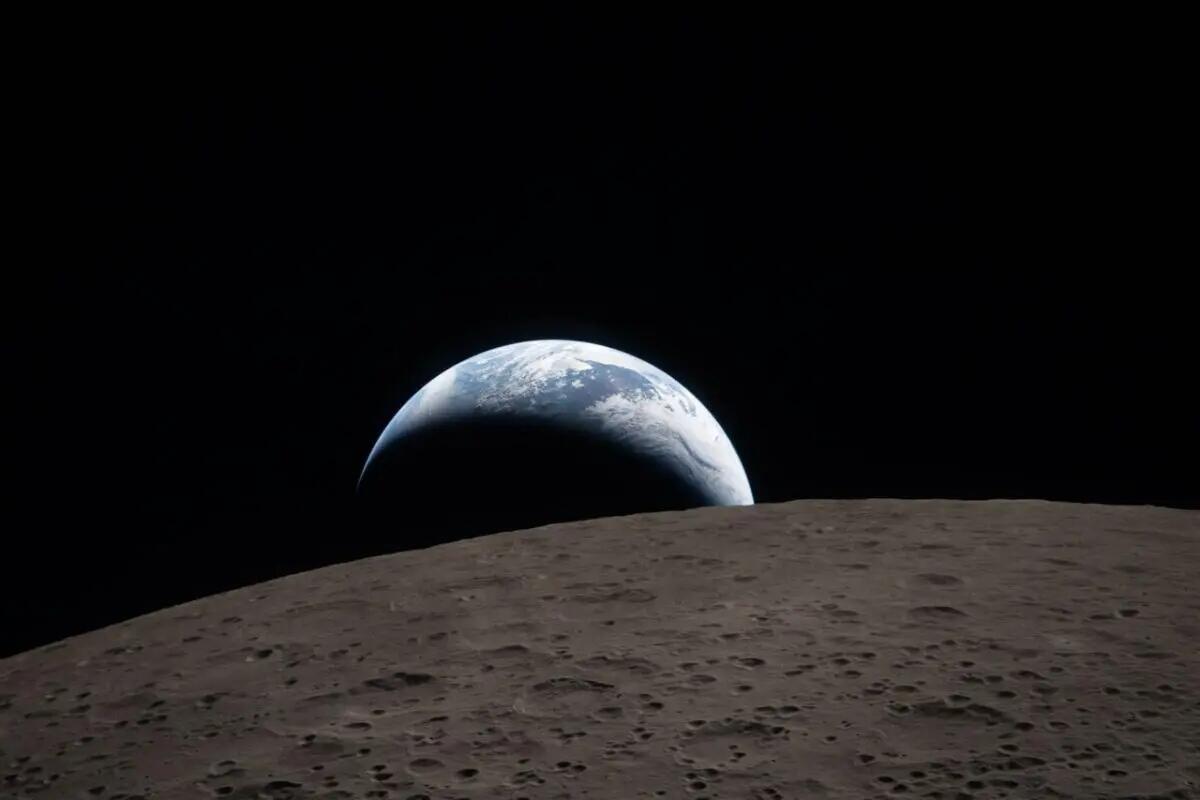
One of them is “Earthset.” Like Apollo 8’s historic “Earthrise” picture taken in December 1968, Artemis II’s striking image displays humanity’s home planet partially lit just above the lunar horizon. But Apollo 8 photographed the Earth after coming around the farside of the moon when the Earth appeared to rise in the lunar sky.
Earthset captured through the Orion spacecraft window at 6:41 p.m. ET on April 6, 2026, during the Artemis II crew’s flyby of the Moon. Courtesy of NASA
Artemis II took its picture of a crescent Earth just before it appeared to set below the horizon as Integrity flew around the farside of the moon.
The space agency has also shared pictures of the visible farside of the moon that include pictures of the entire Orientale Basin, parts of the lunar South Pole-Aitken Basin, and the two craters that the Artemis II crew hopes to officially name. They proposed that one crater be named Integrity, after their spaceship, and another be named Carroll in honor of Wiseman’s late wife, who passed away in 2020 of cancer.
As Wiseman, Glover, Koch, and Hansen watch the Earth get bigger and bigger in the window, they continue to perform mission objectives, including another manual test flight and course correction burn. They also had a ship-to-ship communication with NASA astronauts Jessica Meir, Jack Hathaway, and Chris Williams, and European Space Agency astronaut Sophie Adenot aboard the International Space Station.
It was the first ship-to-ship communication between astronauts in low Earth orbit and deep space. The eight colleagues shared laughs, messages of support, and what the moonshot was like for the three former space station crew members compared to their times in Earth orbit. They also recognized how so much of space station life was integrated into Artemis II, even down to the fact that the crews were eating the same food.
The ship-to-ship transmission ended with both crews wishing each other good luck and that they were all looking forward to being reunited with each other back on home soil.
Tyler Durden
Wed, 04/08/2026 – 09:25