







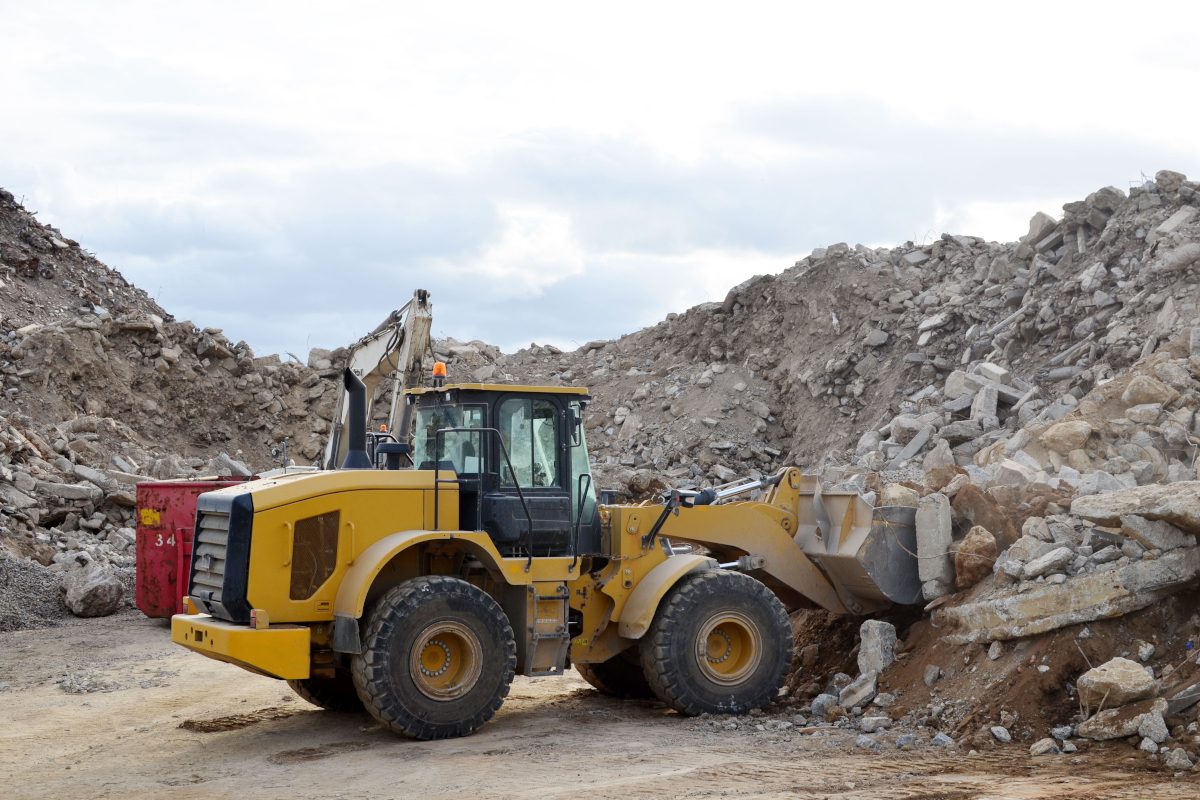

Approximately 0.41% of England and Wales’ land area consists of historic landfill sites, which are often challenging and potentially risky to redevelop due to contamination, ground instability, and gas emissions.1 However, new opportunities are arising for what was once deemed unusable land. Here, general waste experts at BusinessWaste.co.uk share solutions on how to turn these sites into opportunities for sustainability, community benefit, and cutting-edge development.
How much ex-landfill is there in the UK
There are roughly 20,000 historic landfill sites covering approximately 62,000 hectares, or 0.41% of the land area of England and Wales.
These sites vary widely in size, from small local tips to large former industrial waste sites, and many date back decades to a time before modern environmental regulations. As a result, many, especially pre-1990, often have poor documentation on which types of waste were deposited there.
The issues with developing this land
Ex-landfill sites are difficult to develop for several reasons.
Ground instability – The contents of landfill are often diverse, and as this waste continues to decompose and compact, the land can sink unevenly. This can cause issues with instability and settlement, even years after waste was deposited. Any future buildings may experience structural damage and subsidence.
Emissions – As waste in landfills decomposes, it can release harmful gases, including methane, carbon dioxide and hydrogen sulfide, among others. These gases pose health and safety risks, including explosions, toxicity, and environmental damage.
Contamination – Older landfill sites can contain hazardous materials like chemicals, asbestos and industrial waste. When rainwater or groundwater filters through buried waste, it creates a toxic liquid known as leachate. This can then find its way into the surrounding soil and waterways, presenting risks to human health, wildlife and the environment.
All of this also creates hurdles when it comes to obtaining planning permission and adds increased costs to projects.
What it can’t be used for
As a result, this means ex-landfill sites are usually unsuitable for:
High-rise buildings, due to the risk of structural damage.
Underground parking, as this would require excavation, which could disturb the site.
Schools, hospitals or playgrounds, which may bring vulnerable populations close to contamination.
Food production sites, as these carry stronger environmental and public health regulations.
Large industrial plants, which may house heavy machinery unsuitable for this ground.
Some innovative uses for the land
Before an ex-landfill site is developed, it must be properly capped, engineered and requires ongoing monitoring to ensure that contamination, emissions and stability are not compromised. Each site is unique and will require assessment; not every former landfill site will be fit for reuse.
Renewable energy projects – While ex-landfill sites often can’t support heavy buildings, they can be an effective choice for lightweight infrastructure. As a result, we’re seeing much of this land being used for renewable energy with adaptations into solar farms, methane capture projects or battery storage.
Biodiversity and environmental projects – One of the most common uses is to turn these sites into ecological developments. It’s common to see ex-landfill being used for wildlife habitats and nature reserves or rewilding. However, a more innovative use case is to utilise brownfield sites for flood management schemes, helping to protect communities from adverse weather and climate change.
Transport and infrastructure – Ex-landfill sites tend to sit within close proximity to towns, cities or industry, and as a result, they are usually well placed to be transformed into vital infrastructure. These sites can be converted into car parks, park-and-ride systems, cycle routes or even transport depots.
Data centres – with the rise of AI, we need to expand our capacity for data centres, and the brownfield land that is left behind by landfill can make an ideal choice. Data centres are usually low-rise and have a wide footprint, making them compatible with the engineering constraints of ex-landfill.
Mark Hall, waste management expert at BusinessWaste.co.uk, comments on the need to reduce general waste heading to landfill:
“As pressure mounts on land, energy systems, biodiversity, and digital infrastructure, ex-landfill sites are emerging as unlikely but valuable assets which offer well-needed space without the need to sacrifice greenfield land.
“However, utilising brownfield sites doesn’t negate the need to reduce our reliance on landfill. “Around 13.1 million tonnes of waste are still sent to UK landfills each year, enough to cover roughly 1,000 football pitches a metre deep. We must look at how we can divert waste to more environmentally friendly disposal methods and support our circular economy.”