




Iranian Missiles Pound Israel Overnight After US Claims Progress On Talks; Tehran Appoints Larijani Successor, Cuts Gas Flows To Turkey
Summary
Backchannel diplomacy vs skepticism: Abbas Araghchi reportedly signaled openness to negotiations with the US via envoy Steve Witkoff, but Israel has appeared cool on deal prospects or offramp.
Heavy exchange of fire and testing red lines: Iran continues missile and drone waves targeting Israel and US bases, amid reports of overnight airstrikes on military and gas infrastructure near Isfahan.
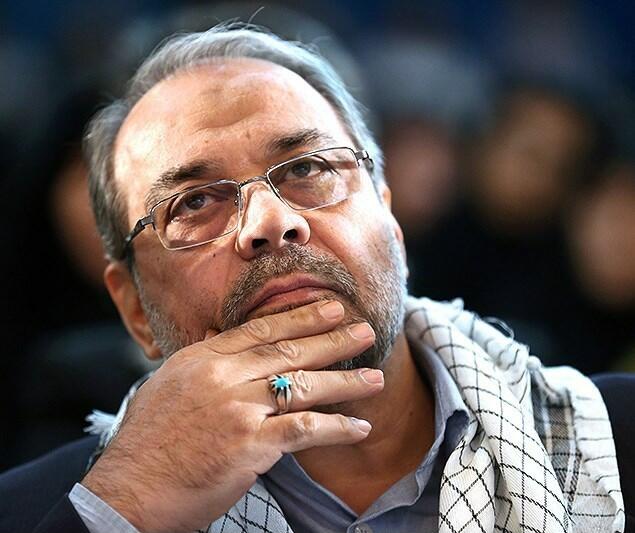
Iran reshuffles its security leadership, appointing Mohammad Bagher Zolghadr: he’s a former IRGC commander and replaces the assassinated Ali Larijani.
Iran halts natural gas exports to Turkey: follows last week’s Israeli strike on the massive South Pars gas field.
* * *
Iran & Israel Trade Blows Despite US Promoting Backchannel Talks
Despite the White House touting backchannel interactions with the Iranians as basis for some kind of peaceful offramp, Israel and Iran intensified direct and regional strikes, in continued escalation of the war. The Israeli military said it had “completed a wave of extensive strikes targeting production sites” across Iran, including in Isfahan, following overnight reports that gas facilities were hit, triggering fears of potential Iranian retaliation on Gulf energy and infrastructure sites – which doesn’t appear to have happened yet.
Iran has kept up its attacks on Israel, launching at least eight overnight missile waves, including reports of cluster munitions as well as new cutting-edge warheads and projectiles. Impacts were reported across Tel Aviv, causing heavy building damage and multiple casualties, as well as with sirens sounding from the Judean Foothills to Eilat. One strike marked a shift in capability, per the NY Times: “One of the Iranian missiles that hit Tel Aviv carried a warhead of around 100 kilograms… This missile was ‘something we have not yet encountered in the war,'” said Col. Miki David.
A 100-kg warhead was used on the Iranian missile that slammed into Tel Aviv early this morning. Significant damage was caused to a residential area. pic.twitter.com/ujkuJpxUVO
— Trey Yingst (@TreyYingst) March 24, 2026
Iran Halts NatGas Exports to Turkey
More energy flows impact and blowback as Iran has halted natural gas exports to Turkey following last week’s Israeli strike on the massive South Pars gas field, according to regional sources and Bloomberg. Turkey sourced roughly 14% of its gas from Iran last year, per industry data, but continues to rely on Russia and Azerbaijan as primary suppliers while drawing on existing reserves. Ankara has not initially confirmed or commented.
The South Pars field, part of the world’s largest natural gas reserve, sits at the core of Iran’s energy system, underpinning both domestic supply and export flows. Per Middle East Eye: “Data from Turkey’s Energy Market Regulatory Authority suggests that the country imports around 13 percent of its gas needs annually, roughly 7 billion cubic metres (bcm), from Iran.”
The report concludes that “A sharp drop in Iranian gas flows to Turkey following Israel’s strike on the South Pars gas field and Tehran’s retaliatory attacks across the Gulf has raised energy security concerns. But analysts say Ankara will likely be able to cushion the blow.
⚡️Sky above Tel Aviv pic.twitter.com/skgWXTOWZ4
— War Monitor (@WarMonitors) March 24, 2026
New National Security Chief (former IRGC), Ongoing Retaliation on Gulf
Iran has continued to signal resilience, downplaying threats to its grid and stating damaged infrastructure could be quickly rebuilt, even as a gas pipeline at Khorramshahr was hit apparently without disruption. Saudi Arabia said it “intercepted and destroyed” more than a dozen drones in its east, while the UAE reported intercepting five ballistic missiles and 17 drones in a single day, bringing totals since the war began to hundreds of missiles and more than 1,800 drones. Bahrain said another facility was set ablaze “as a result of Iranian aggression.”
Tehran has reportedly simultaneously struck US bases, and Gulf states including Kuwait and Saudi Arabia, while warning any attack on its energy network will trigger region-wide blackouts. Northern Iraq has continued to see drone threats. “The entire region will go dark” – Iranian leadership has threatened. Meanwhile, Iran has reshuffled its security leadership, appointing Mohammad Bagher Zolghadr to replace the assassinated Ali Larijani, underscoring wartime consolidation at the top. Zolghadr is a former Revolutionary Guards commander.
Mohammad Bagher Zolghadr in 2013, via Wiki Commons
Status of Diplomacy
Lebanon has declared the Iranian ambassador persona non grata and ordered him to leave the country by Sunday, after an Iranian ballistic missile fell on Lebanese territory. This appears also a way to pressure Hezbollah, given the Lebanese state has long wanted the Tehran-linked group to lay down is arms so war doesn’t engulf the whole country.
Both Pakistan and Qatar have stepped up mediation efforts, with chatter that Islamabad could play host to future Iranian and US talks. Despite the rumors of ongoing backchannel communications, and President Trump himself insisting Sunday into Monday this is happening, there’s as yet no clear evidence that Tehran and Washington are actually dialoguing. Pakistan’s Foreign Ministry has told Al Jazeera that Islamabad is ready to host talks between the US and Iran: “If the parties desire, Islamabad is always willing to host talks,” Foreign Ministry spokesman Tahir Andrabi said. Andrabi’s comment came a day after Trump put on hold, for a period five days, his threat to bomb Iranian power plants.
WSJ meanwhile writes, “Foreign ministers from Egypt, Turkey, Saudi Arabia and Pakistan gathered before dawn Thursday in Riyadh for talks aimed at finding a diplomatic off-ramp to the war in Iran.” The report continues, “But there was one big problem, according to Arab officials involved in the discussions: finding a counterpart in Iran to negotiate with. Earlier that week, Israel killed Iran’s national security chief, Ali Larijani, who had been considered a viable partner who could engage with the West.”
USAF B-52s began to carry out Iran strike missions yesterday using 2,000 pound JDAM guided bombs.
Indicates that the BUFFs are finally carrying out bombing runs over Iran. pic.twitter.com/tzcJQc6LLp
— OSINTtechnical (@Osinttechnical) March 23, 2026
And Bloomberg’s assessment: “Fighting between the US-Israeli alliance and Iran raged unabated, even as President Donald Trump claimed talks are under way to end the conflict.” The report then notes no observable cooling or offramp in the tit-for-tat exchanges of fire:
Iran carried out overnight missile and drone attacks on the Israeli cities of Tel Aviv, Eilat and Dimona, as well as on US bases in the Middle East. Israel launched a wave of strikes in western and central Iran, including Tehran, with Defense Minister Israel Katz saying the campaign would continue “at full intensity.”
Israel is Cool on Prospect of a Deal
Reports out of regional and Israeli media claim Iranian Foreign Minister Abbas Araghchi quietly signaled to US envoy Steve Witkoff that Supreme Leader Mojtaba Khamenei has agreed to negotiations, while Iranian officials said they have received US proposals via intermediaries and are reviewing them. However, Tehran keeps threatening and delivering more ‘retaliatory’ action, perceiving that it has the long-term strategic leverage given the Strait of Hormuz crisis and Trump seeming to issue forth dictates on a back foot.
Israeli officials have by and large dismissed the prospects of a deal, warning the chances of agreement are “very small” and stressing that US force deployments and joint operational planning remain unchanged.
More Regional Spillover: Caspian & Lebanon
The Kremlin has newly warned that any expansion into the Caspian Sea would be viewed “extremely negatively” after Israeli strikes reportedly targeted Iranian naval assets there. Meanwhile, a parallel ground war in Lebanon is accelerating. Israeli Defense Minister Israel Katz signaled a long-term buffer zone and mass displacement, stating, “Hundreds of thousands… will not return south of the Litani River until security is guaranteed.”
Video purports to show large Israeli strike on Southern Lebanon overnight – an apparent hit on a gas station:
⚡️Israeli strike on Southern Lebanon tonight. Strike on Gas Station pic.twitter.com/5r0teCUZ6n
— War Monitor (@WarMonitors) March 24, 2026
Israel has already destroyed key infrastructure, with Katz confirming, “All five bridges over the Litani… have been blown up,” as forces move to control the area. There are over 1,000 dead and more than a million displaced in Lebanon, with much of Israel’s north also still under emergency evacuation orders, given Hezbollah rocket fire there. At least two Lebanese died in the last day due to Israeli strikes Bshamoun.
Tyler Durden
Tue, 03/24/2026 – 09:00