








Mamdani Proposes Massive Estate Tax Exemption Cut From $7M To $750K, Among Other Tax Increases
New York City Mayor Zohran Mamdani is urging Albany to consider a sweeping overhaul of New York’s estate tax, proposing to sharply lower the exemption threshold and dramatically increase the top rate on large inheritances. His plan would cut the exemption from more than $7 million to $750,000 while boosting the highest tax rate from 16 percent to 50 percent, Bloomberg reported.
The idea was included in a policy memo his administration recently shared with state lawmakers as they negotiate the state budget, according to NY Focus.
The estate tax proposal is one of several revenue measures Mamdani’s office has floated as the city prepares for a significant budget gap. New York City is projecting a $5.4 billion deficit for the fiscal year that begins July 1, and the mayor is asking state officials to help identify new sources of funding to help close the shortfall.
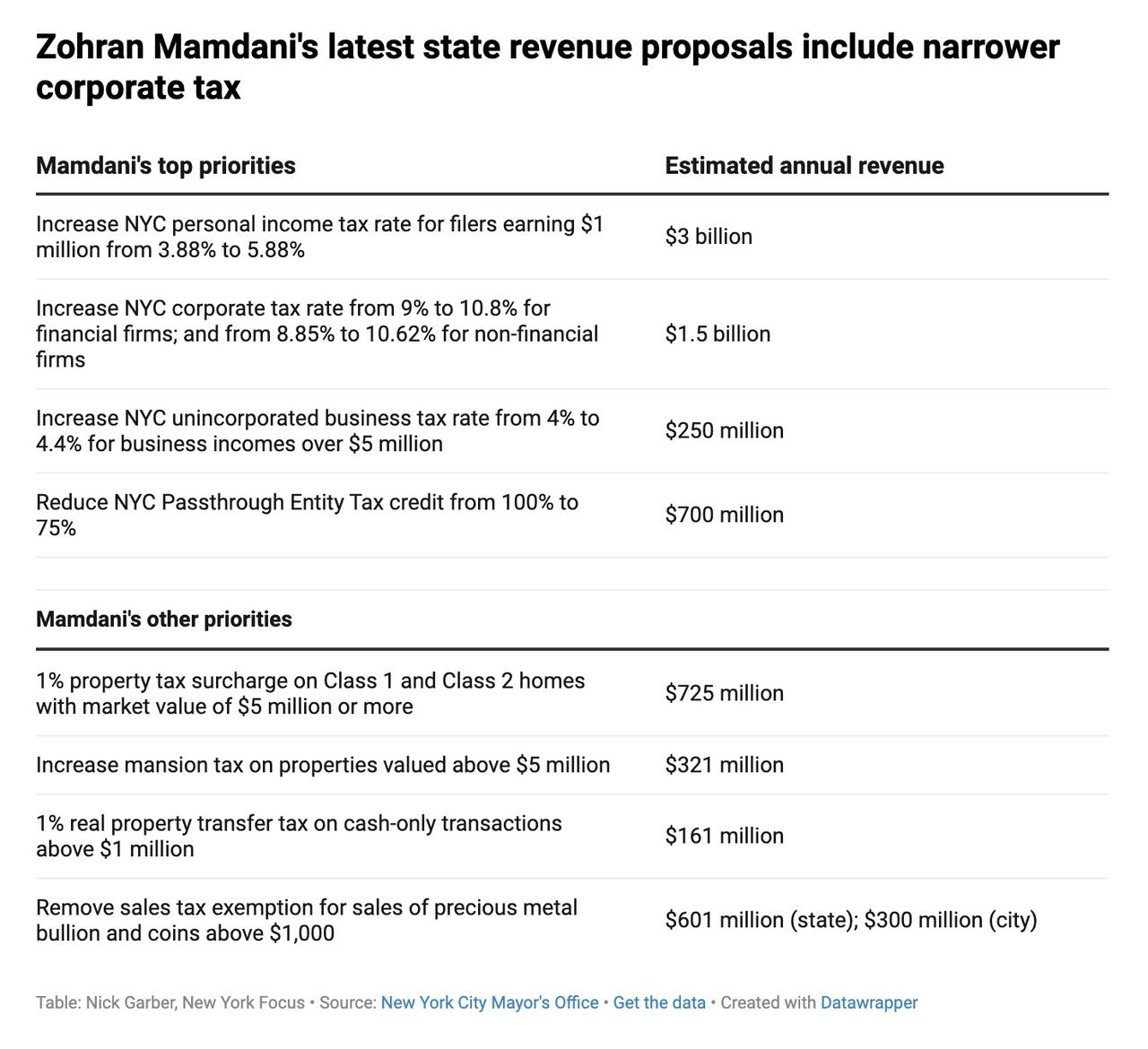
Among the other proposals is a narrower package of business tax increases aimed specifically at companies operating in the city. The administration estimates those changes could generate about $1.75 billion annually. Under the plan, the city’s corporate tax rate would rise to 10.8 percent for financial firms and to 10.62 percent for other corporations, while the tax on large unincorporated businesses would increase modestly for firms earning more than $5 million.
Mamdani is also proposing to scale back the Pass-Through Entity Tax credit, which currently allows certain business owners to use company tax payments to fully offset what they owe in personal income taxes. Limiting that credit to 75 percent of its value would produce roughly $700 million a year, according to city estimates. The mayor continues to advocate for raising the local income tax rate on residents earning more than $1 million annually, a measure projected to bring in about $3 billion each year.
The report says that several ideas in the memo target high-end real estate transactions and ownership. They include a one percent surcharge on homes valued above $5 million, a one percent tax on cash-only property purchases exceeding $1 million, and a broader version of the existing mansion tax on luxury home sales. Combined, these changes could generate roughly $1.2 billion in additional annual revenue. Mamdani has also backed eliminating the sales-tax exemption on gold bullion and similar precious metals, which city officials estimate would produce about $300 million for the city each year.
Despite the aggressive estate tax proposal, it appears unlikely to gain traction in the current budget negotiations. Neither chamber of the state legislature has included it in their spending plans, and Governor Kathy Hochul did not incorporate it into her own budget proposal. Lawmakers in both the Senate and Assembly have, however, endorsed separate plans that would increase income and corporate taxes.
Longer-term fiscal pressures are also shaping the debate. Mark Levine has warned that New York City could face cumulative deficits of at least $28 billion over the next four fiscal years, suggesting that state and city officials may continue exploring tax increases and other revenue measures in the years ahead.
As we wrote just hours ago, Moody’s changed its outlook on New York City’s credit rating to negative while keeping its Aa2 rating in place, citing growing concerns about sizable and persistent projected budget deficits that suggest a structural imbalance in the city’s finances and reduced fiscal flexibility.
The shift follows updated spending projections showing larger gaps than previously expected, with the city needing to close at least a $5.4 billion deficit across this year and next as expenses continue to rise faster than revenues. New York’s $127 billion budget also relies on using its rainy-day fund, potentially limiting its ability to manage a future economic downturn.
Moody’s decision signals that a formal downgrade could follow in the coming months if the city fails to address its widening fiscal gaps.
Tyler Durden
Sat, 03/14/2026 – 15:45