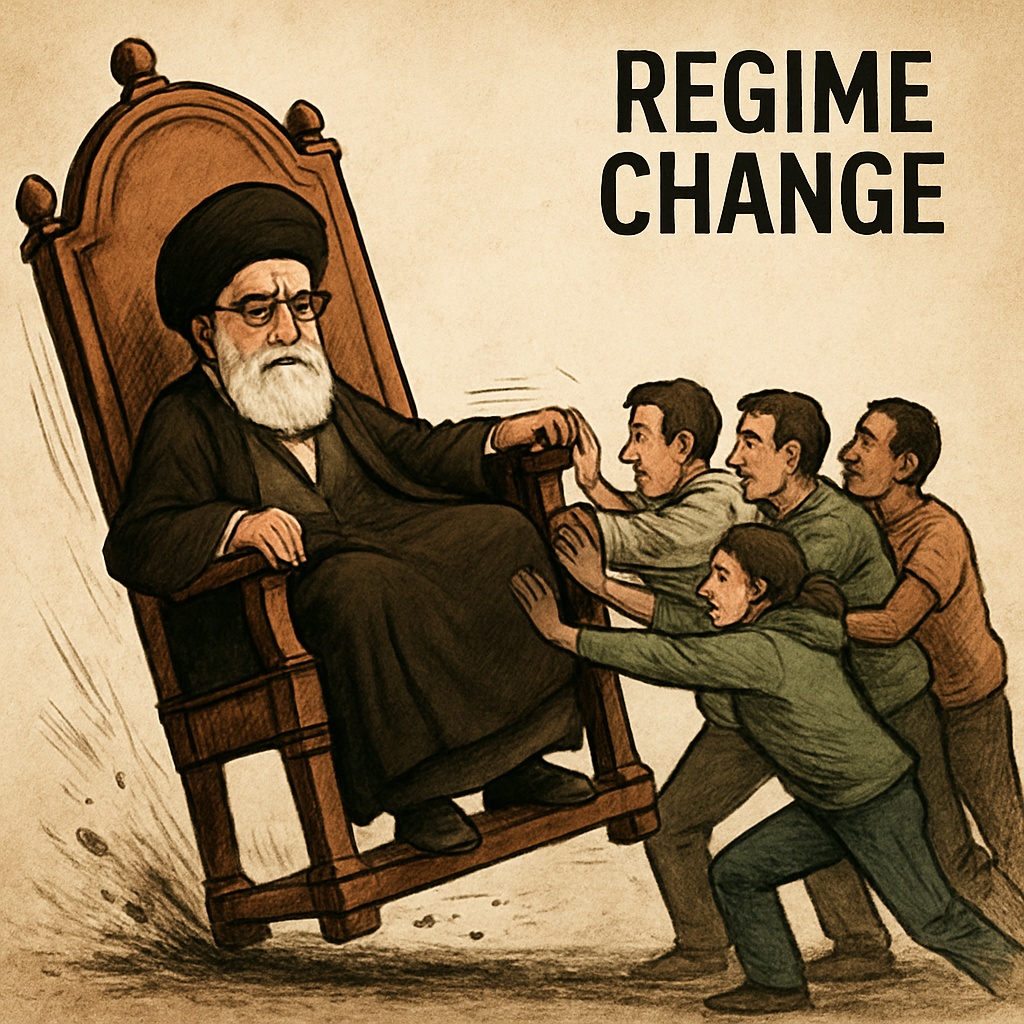










One of the greatest mistakes Western policymakers repeatedly make is assuming that other cultures think the same way they do. They approach international conflicts through a secular lens of power, economics, and negotiation. But when dealing with Iran, they are confronting a political system deeply intertwined with religious ideology. When an Ayatollah or senior clerical leader is killed, the event does not necessarily weaken the movement. In many cases, it strengthens it.
In Shiite Islam, the concept of martyrdom sits at the center of religious identity. The defining event for the Shia world was the death of Imam Hussein at the Battle of Karbala in 680 AD. Hussein, the grandson of the Prophet Muhammad, was killed after refusing to submit to what he regarded as illegitimate rule. His death became the foundational narrative of Shia resistance. To this day, millions commemorate Ashura every year, mourning Hussein’s death and celebrating the idea that righteous martyrdom is preferable to submission to injustice.
This is not merely historical symbolism. The religious narrative reinforces the belief that suffering and sacrifice in the face of oppression ultimately leads to divine justice. The Quran repeatedly praises those who die in the path of God. One verse states that those killed in the cause of God should not be considered dead but alive with their Lord receiving provision (Quran 3:169). Another passage declares that God has “purchased from the believers their lives and their wealth in exchange for Paradise; they fight in the cause of God, kill and are killed” (Quran 9:111). These passages shape a worldview in which death during a struggle against perceived injustice can be interpreted as spiritual victory.
From that perspective, killing a religious leader such as an Ayatollah risks transforming that individual into a symbol of sacrifice. Instead of eliminating the movement, it can reinforce the belief that the struggle itself is righteous. In a secular political system, the death of a leader may weaken an organization. In a religious revolutionary system, it can unify followers under the banner of martyrdom.
The Western mindset approaches assassination very differently. When a leader is killed in the United States or Europe, the reaction is generally political or emotional rather than religious. When President John F. Kennedy was assassinated in 1963, the event shocked the nation and certainly increased patriotism and unity for a time. Yet Americans did not interpret his death as a religious sign or martyrdom that would justify continuing a sacred struggle. It was viewed as a national tragedy, not a divine narrative unfolding.
This difference is profound. Western societies mourn their leaders, investigate the crime, and eventually move forward politically. The death does not typically transform the leader into a theological symbol driving long-term resistance or warfare. In the Shia tradition, however, martyrdom is embedded in religious identity itself. The story of Karbala is reenacted every year precisely to reinforce that belief.
This is why Western policymakers often misunderstand the psychological dynamics of such conflicts. The assassination of leaders like Qassem Soleimani did not collapse Iranian influence in the region. Instead, it triggered massive demonstrations and strengthened the narrative that Iran was engaged in a sacred struggle against external enemies.
When a Shia religious authority is killed, the event is interpreted through the lens of Karbala. The leader becomes another martyr in a long line of figures who died resisting oppression. That narrative carries enormous emotional power. It binds communities together and legitimizes continued struggle.
Politicians in Washington often believe removing a leader will end a conflict. Yet in ideological and religious movements, the opposite frequently occurs. Killing a leader can transform a political confrontation into a moral crusade, reinforcing the belief that the faithful must continue the struggle no matter the cost.
Understanding this cultural and religious framework is essential. Without it, policymakers will continue to miscalculate the consequences of their actions. History repeatedly shows that wars are not fought only with weapons. They are also fought with ideas, beliefs, and narratives that can outlive any individual leader.