





Meta’s AI Would Like To Keep You Posting After You’re Dead
Ever since social media became a fixture of daily life, an uncomfortable question has lingered: what should happen to someone’s account after they die? Leave it frozen in time? Hand it to family members as a memorial? Or quietly let it fade into the algorithm?
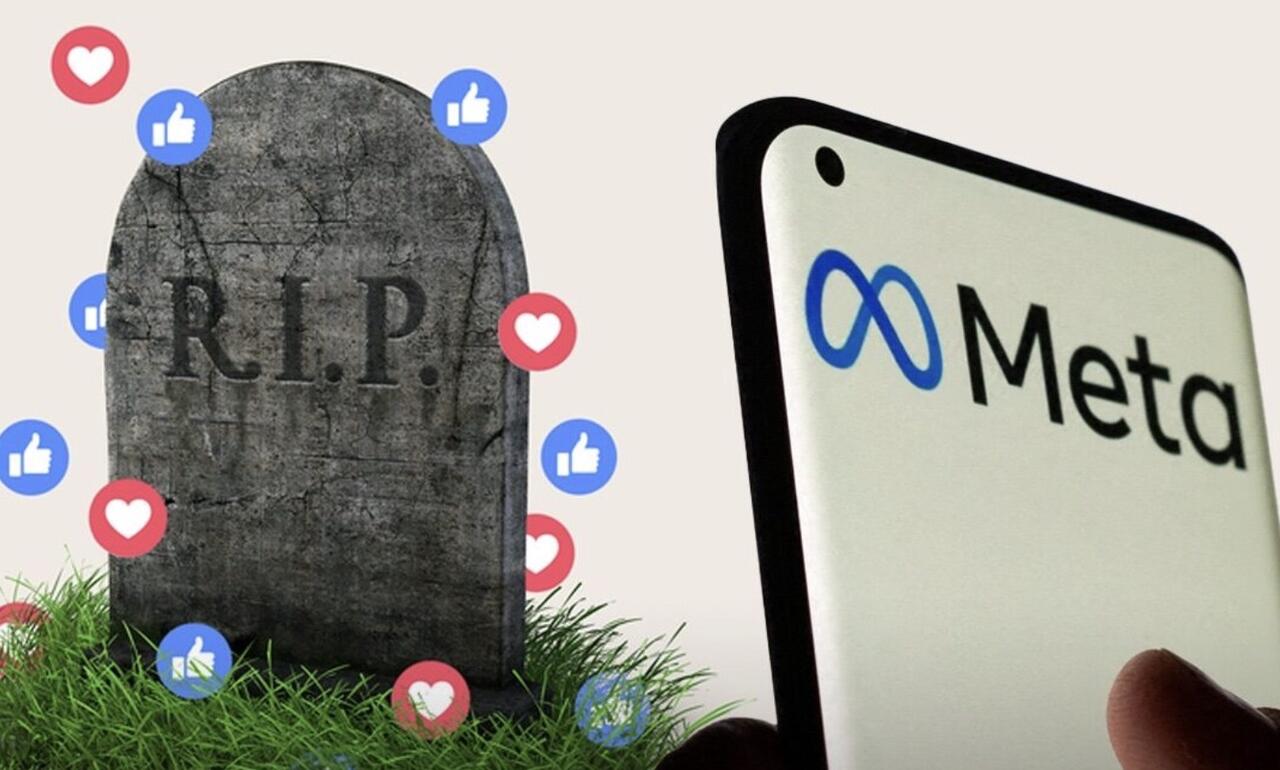
A few years ago, Meta Platforms explored a far more ambitious possibility, according to Futurism. In 2023, the company received a patent describing how a large language model could be trained on a user’s past posts to simulate their voice and behavior — keeping an account active if the person were “absent,” including in the event of death. The filing, led by CTO Andrew Bosworth, outlined how such a system could generate posts, comments, likes, and even private messages in the user’s style.
The idea was striking, and for many, unsettling. Meta has since said it has no plans to move forward with that example. But the patent offers a snapshot of a moment when tech companies were aggressively testing the limits of what generative AI might do — including extending a person’s digital presence beyond their lifetime.
The Futurism piece says that the concept isn’t entirely theoretical. A small but growing “grief tech” sector has promoted AI tools that recreate voices or personalities of the deceased using photos, recordings, and written messages. Proponents argue that such tools could offer comfort. Critics worry they could complicate the grieving process.
Even within Meta’s own public comments, there has been ambivalence. CEO Mark Zuckerberg has spoken about AI companions as a way to address loneliness and, in a 2023 interview with podcaster Lex Fridman, suggested that interacting with digital representations of loved ones might help some people cope with loss. He also acknowledged the psychological risks and the need for deeper study.
The business logic behind such experiments is difficult to ignore. Platforms like Facebook are filled with dormant accounts — profiles that remain but are rarely updated. More AI-generated activity could mean more engagement and more data. As University of Birmingham law professor Edina Harbinja observed, the commercial incentive is clear, even if the ethical path forward is not.
Others urge caution. University of Virginia sociologist Joseph Davis has argued that part of grieving involves confronting the reality of loss, not blurring it with simulations.
Meta has distanced itself from the patent’s more provocative scenario. Still, its existence underscores how far companies have been willing to push generative AI — and how complex the questions become when technology intersects with death, memory, and identity.
Tyler Durden
Fri, 02/20/2026 – 12:00