



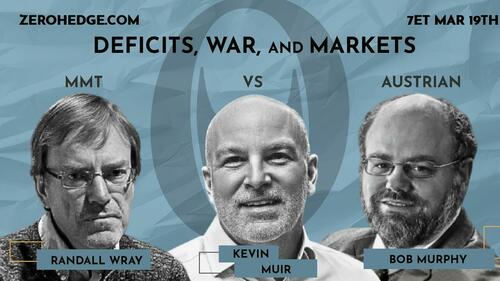
MMT Vs Austrian Economics: Deficits, War, & Markets
The Keynesian-Austrian debate has raged for over a century. Questions of deficits, taxes, money printing, and their impact on inflation are at the center of the disagreement. War breaking out in the Middle East means we will see more of these three inputs, so how will they show up as inflation: in assets, consumer goods, everywhere?
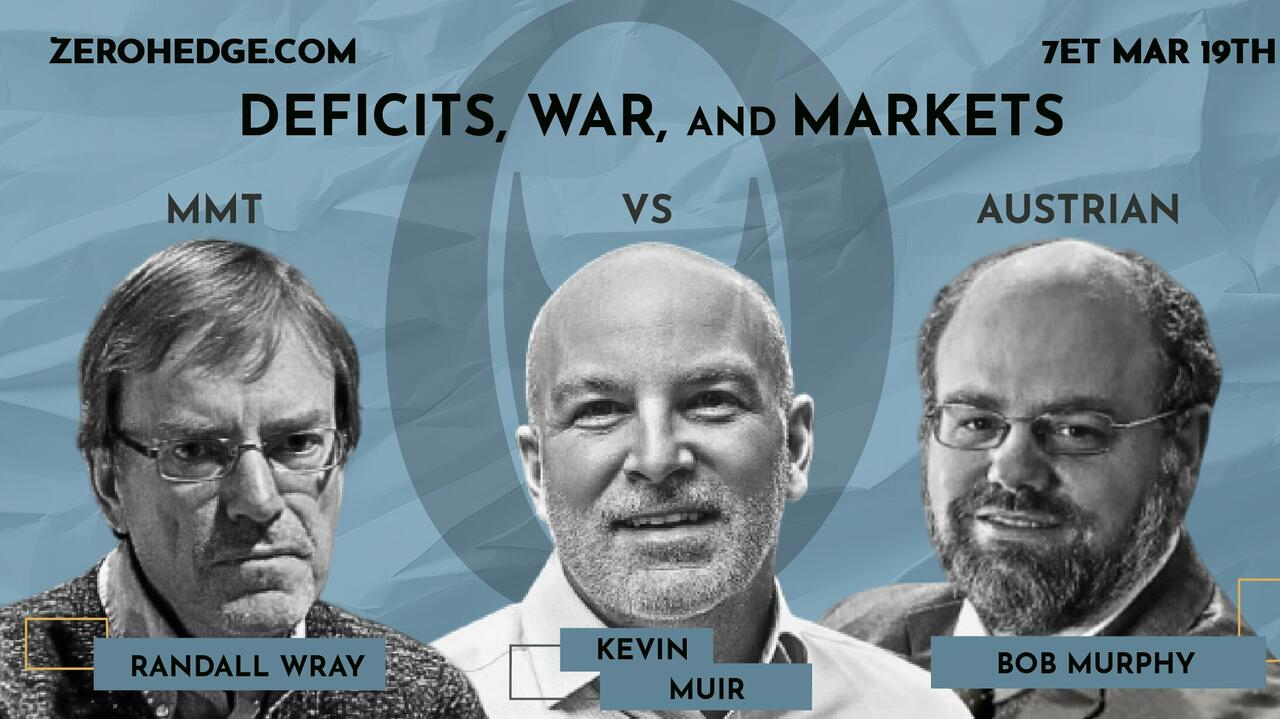
Tonight, two opposing economists will answer those questions and how these macro trends are likely to impact markets.
On one side is Bard College professor Randall Wray, a leading advocate of Modern Monetary Theory (MMT). Opposing him is Robert Murphy, senior fellow of the Mises Institute, representing the Austrian school. The discussion will be moderated by Kevin Muir, author of the widely read Macro Tourist newsletter.
Join us on the ZeroHedge X feed or YouTube channel at 7pm ET tonight to watch the showdown.
Deficits: Constraint Or Illusion?
Wray and MMT-schoolers argue that for a sovereign currency issuer, deficits are not inherently problematic but instead a necessary tool to support demand, employment, and financial stability.
Murphy and the Austrians conversely believe that deficits, particularly when monetized via the printing press, have all sorts of negative effects:
Distort price signals
Crowd out productive investment (by offering high-interest risk-free government bonds to wealthy investors that might otherwise loan to a business).
Lead to economic imbalances that must be corrected
Those “corrections”, often in the form of painful recessions, are what the Keynesians (and today’s MMTers) try very hard to avoid. But can we kick the can down the road indefinitely? With the national debt now reaching $39 trillion.
The inflation debate remains unresolved as well. MMT proponents tend to frame inflation as the only real constraint and one that should be managed through taxation and policy calibration.
From the Austrian perspective, central planning does not work. Inflation cannot be managed because governments will always be incentivized to overspend and undertax (politically unpopular). Therefore, the printing press is left to fill the gap.
Both parties will likely agree that nobody benefits from the energy shocks of the Iran war, the deficits from the $100 billion+ spent since its inception, and the diverting of limited resources towards guns/explosives that might otherwise make goods to improve our daily lives.
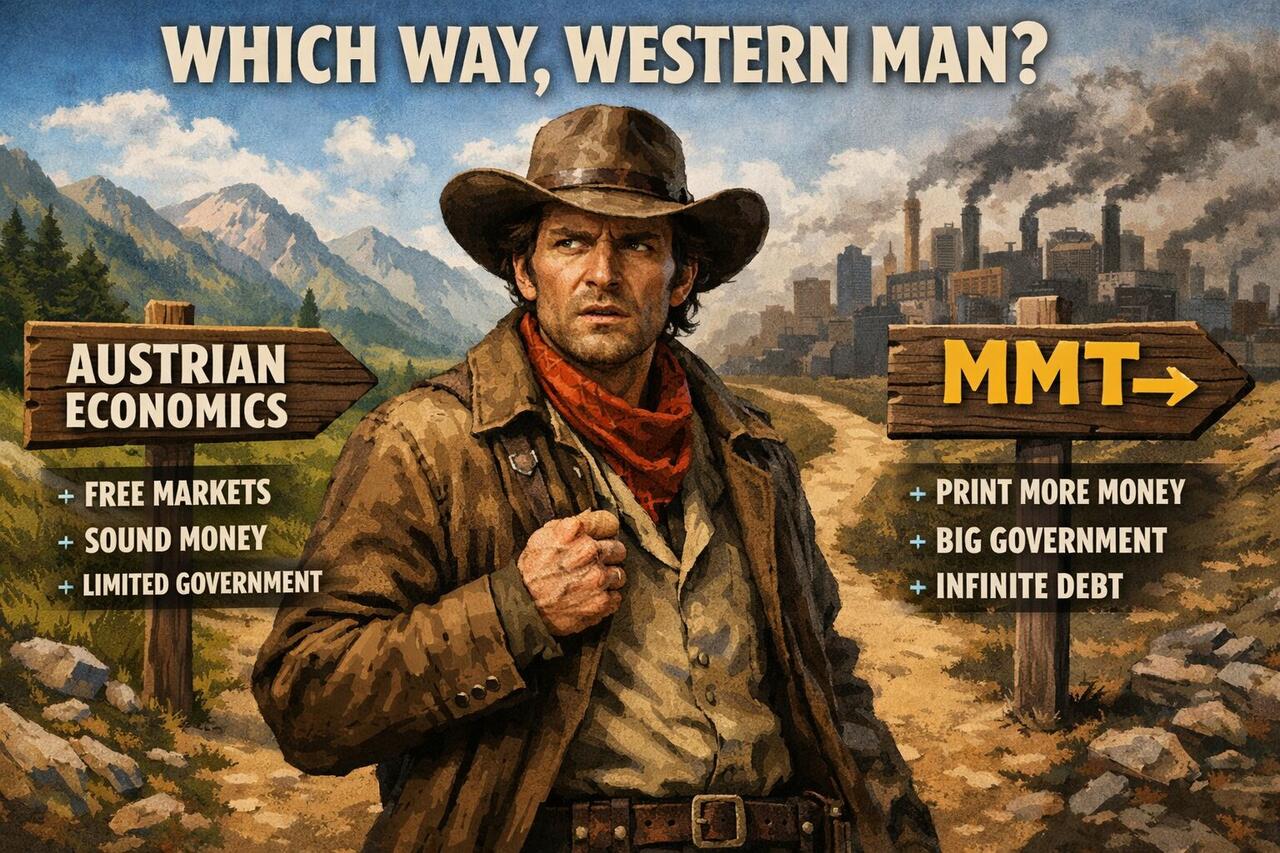
It is a question of how to solve our economic ailments and how to manage a crisis. Top-down or bottom-up? Government-led or free markets?
Tune in tonight at 7pm ET to hear from both sides.
Tyler Durden
Thu, 03/19/2026 – 11:20