






“No One Knows What Will Happen Now”: Justice Jackson Warns Against Unbridled Free Speech
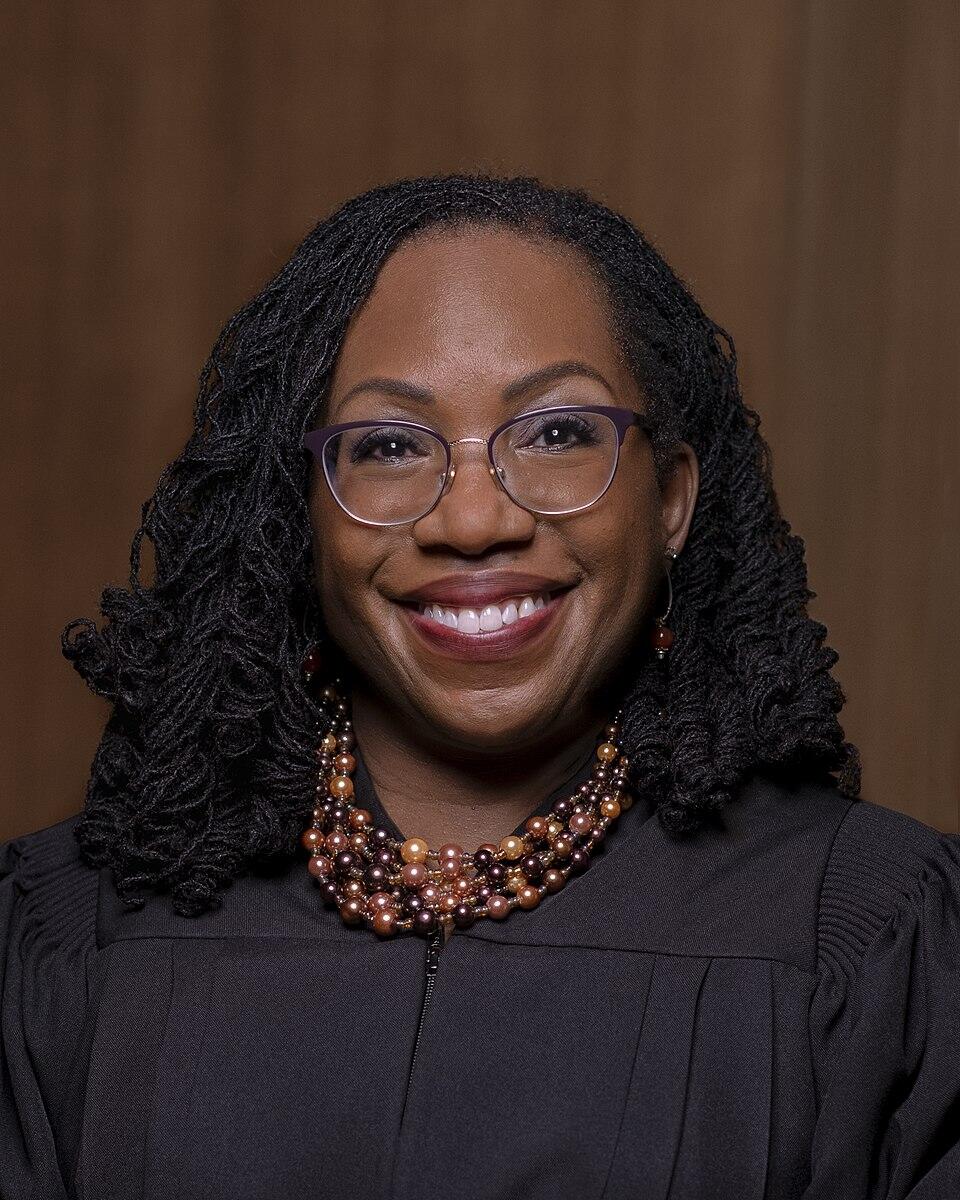
Justice Ketanji Brown Jackson is again warning of a growing threat to the nation. In her lone dissent in Chiles v. Salazar, Jackson observed that “to be completely frank, no one knows what will happen now.” The ominous tone stemmed from the fact that free speech had prevailed over state-imposed orthodoxy in a Colorado case.
Eight justices, including her two liberal colleagues, ruled that Colorado could not prevent licensed counselors from “any practice or treatment” that “attempts or purports to change” a minor’s sexual orientation or gender identity.
The win for free speech was catastrophic for Jackson and many on the left. Allowing counselors to discuss the causes and basis for sexual orientation changes, Jackson maintained, would “open a can of worms.” It would be far better for the majority to simply silence such dissenting voices in the name of science.
The dissent in Chiles is only the latest example of the chilling jurisprudence of Justice Jackson, including a pronounced dismissal of free speech values. Consider the holding of her colleagues that Jackson finds so horrific.
Justice Neil Gorsuch wrote that the First Amendment “reflects … a judgment that every American possesses an inalienable right to think and speak freely, and a faith in the free marketplace of ideas as the best means for discovering truth … any law that suppresses speech based on viewpoint represents an ‘egregious’ assault on both of those commitments.”
What a nightmare.
Instead, Jackson would have declared the ban on anything deemed “conversion therapy” to be “conduct,” not speech.
It is that easy.
You simply impose an orthodoxy and then treat any dissenters as being regulated for their conduct, not their viewpoints.
Justice Elena Kagan could not withhold her frustration with her colleague, noting that “[b]ecause the State has suppressed one side of a debate, while aiding the other, the constitutional issue is straightforward.” She added that Jackson’s view “rests on reimagining—and in that way collapsing—the well-settled distinction between viewpoint-based and other content-based speech restrictions.”
Other countries have embraced Jackson’s permissive approach to speech curtailment.
Recently, Malta failed to convict a man who was facing five months in prison for merely discussing his own abandonment of homosexuality due to a religious conversion.
Of course, we just went through a pandemic when censorship and orthodoxy were dressed up as science.
Leading scientific figures were canceled and harassed. That was the case with Jay Bhattacharya, who co-authored the Great Barrington Declaration and was a vocal critic of COVID-19 policies. Bhattacharya was targeted due to his dissenting views on health policy, including opposing wholesale shutdowns of schools and businesses.
He and other scientists were later vindicated. European allies that did not shut down their schools fared far better than we did, including avoiding a national mental health and learning crisis. We simply never had that debate.
He was recently honored with the prestigious “Intellectual Freedom” award from the American Academy of Sciences and Letters. He is also now the 18th director of the National Institutes of Health.
Yet, years ago, the courts, the media, and politicians joined in treating dissenting views as “conspiracy theories.”
Some argued that the virus’s origin was likely the Chinese research lab in Wuhan. That position was denounced by the Washington Post as a “debunked” coronavirus “conspiracy theory.” The New York Times Science and Health reporter Apoorva Mandavilli called any mention of the lab theory “racist.”
Federal agencies now support the lab theory as the most likely based on the scientific evidence.
Likewise, many questioned the efficacy of those blue surgical masks and supported natural immunity to the virus — the government later recognized both positions.
Others questioned the six-foot rule, which shut down many businesses, as unsupported by science. In congressional testimony, Dr. Anthony Fauci later admitted that the rule “sort of just appeared” and “wasn’t based on data.” Yet not only did it result in heavily enforced rules (and meltdowns) in public areas, but the media further ostracized dissenting critics.
For years, pundits portrayed those who questioned gender reassignment surgeries and treatments as bigots. Now, leading medical associations and European nations have decided that such procedures should not be generally allowed.
All of it was orthodoxy masquerading as science.
Yet, Jackson sees the protection of dissenting scientific and professional views as a “can of worms” that the courts should avoid in favor of state and assocational imposed truths. She wrote that allowing such opposing views “ultimately risks grave harm to Americans’ health and wellbeing.”
Keep in mind that counselors can still be sued for any harm that they cause due to malpractice or negligence. Indeed, recently in New York, a jury awarded $2 million to Fox Varian, 22, over the double mastectomy performed on her while she was a minor.
State associations can also publish positions on such therapy and seek to convince both professionals and the public on the best practices for children.
None of that was sufficient for Justice Jackson or Colorado. Ironically, Colorado has now succeeded in dramatically strengthening free speech in its repeated failures to curtail it. The Democratic legislators have made the state arguably the most hostile to free speech in the nation.
Colorado’s Supreme Court sought to bar President Donald Trump from the ballot. Notably, while many of us viewed Trump’s views on the 2020 election to be protected speech, Colorado treated it as conduct and advocacy of insurrection.
It was Colorado that sought to force bakers, photographers, and web designers to produce work in favor of same-sex marriages despite their religious objections. Each effort was supported by the Tenth Circuit and each failed in spectacular fashion before the Supreme Court.
As many of us celebrate this victory for free speech, these advocates are denouncing the ruling in apocalyptic terms.
What is most chilling is that Jackson is now routinely called the model for new nominees, including the push to pack the Supreme Court with an instant liberal majority.
If so, Jackson’s radical views on constitutional interpretation could be replicated on a new packed Court. To paraphrase this decision, “to be completely frank, we know exactly what will happen then.”
Jonathan Turley is a law professor and the best-selling author of “Rage and the Republic: The Unfinished Story of the American Revolution.”
Tyler Durden
Wed, 04/01/2026 – 11:00