








Public access bleeding control kits put life‑saving tools in the hands of bystanders, empowering everyday people to act quickly and effectively when every second counts. Uncontrolled bleeding is a main cause of preventable death. Seconds matter when an individual has a major injury that causes severe bleeding, and they could bleed to death in as little as three to five minutes.
This calls for stricter policies when it comes to equipping bystanders with the right tools to stop bleeding in its tracks. The best bleeding control kits are packed with essentials that were designed by professionals and are easy to use in emergencies. You don’t have to be a professional to save a life; all it takes is the right tools, a bit of basic training, and the confidence to act.
If you are looking for a public access bleeding control kit, here are the contents that must be included in your kit:
1. Tourniquets: The First Line of Defense
A tourniquet is one of the most important tools in any bleeding control kit. It works by constricting blood flow to an injured limb, stopping life‑threatening hemorrhage in seconds. This is a critical difference when every minute counts.
Worried about tourniquet use leading to limb loss? Don’t. A study published in the World Journal of Emergency Surgery found that early prehospital tourniquet use can improve survival rates for major extremity injuries without significantly increasing the incidence of serious complications.
What to look for:
Windlass-style tourniquets (such as C‑A‑T® or SOF® Tourniquets) are clinically proven to be effective and easy to use, even for lay responders.
Clear instructions on where to place and tighten the tourniquet (above the wound and “high and tight” on limbs).
Important:
Not all tourniquets are created equal. Generic options from outdoor supply stores or general first-aid stores may lack the same professional endorsement as those included in specialized bleeding control kits.
Selecting a purpose-built kit, such as the SWAT-medic-designed True Rescue bleeding control kit, ensures that your tourniquet is both reliable and complies with up-to-date standards.
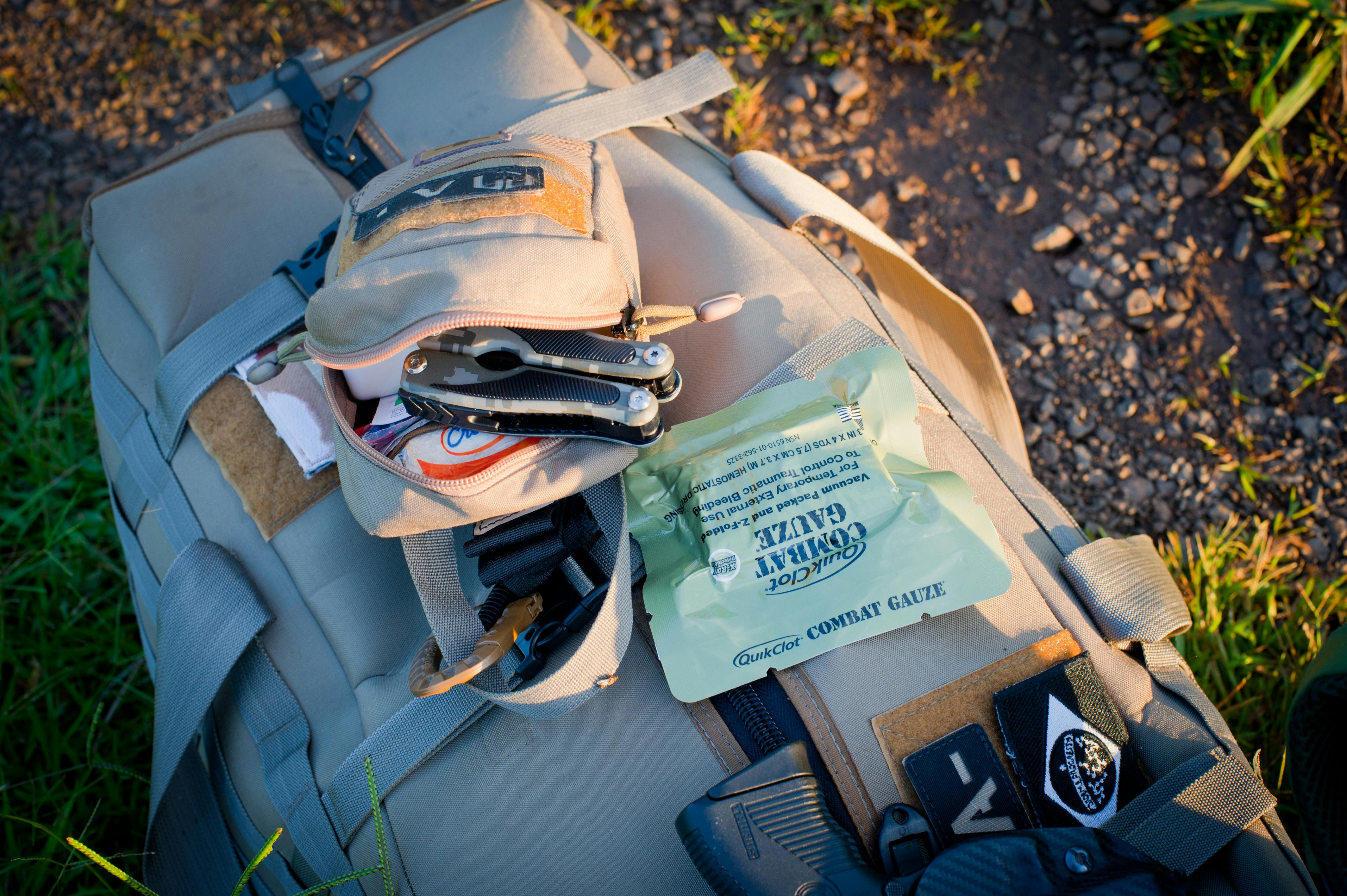
2. Compressed Gauze and Wound Packing Materials
Gauze is essential for applying direct pressure and packing deep wounds, especially when the bleeding is located in areas that a tourniquet cannot reach (e.g., the torso, or junctional areas like the shoulders or pelvis).
Essentials include:
Multiple rolls of compressed gauze
Gauze that can be stuffed directly into wounds to control hemorrhage
Some kits include hemostatic gauze (infused with clot‑promoting agents) for faster clotting
Why this matters:
Wound packing is a core step in the Stop the Bleed sequence when direct pressure alone won’t work. Without proper packing materials, it is nearly impossible to control severe hemorrhage effectively.
3. Pressure Dressings and Bandages
After packing a wound, you need to keep pressure firmly applied to encourage clot formation and prevent further blood loss. Pressure dressings integrate gauze with straps or wraps that hold dressing material in place under sustained pressure.
Look for:
A 4-inch or larger pressure dressing to secure wound packing
Bandage material that is easy to wrap and secure with one hand in high‑stress situations
Pressure dressings allow responders to free up their hands for other tasks, like managing the patient’s airway, calling for help, or applying a tourniquet.
4. Trauma Shears (Medical‑Grade Scissors)
Quick access to a wound is impossible without the ability to cut clothing and expose the injury site. Trauma shears enable responders to do this quickly and safely. They have two features that distinguish them from regular scissors:
Heavy‑duty medical scissors capable of cutting through denim, leather, or thick fabrics
Blunted tips for safety during frantic, time‑sensitive use
While inexpensive scissors may seem similar, trauma shears are specifically designed for emergency medical environments to minimize snagging and reduce the chance of causing accidental cuts.
5. Protective Nitrile Gloves
Protective gloves are essential for infection control and protecting responders from bloodborne pathogens while assisting a casualty.
Best practices:
Include at least two pairs of nitrile gloves per kit.
Ensure sizes are varied or that the gloves stretch comfortably for most hand sizes.
Gloves also help the responder maintain dexterity and grip, which is critical when applying a tourniquet or packing a wound.
6. Permanent Marker or Sharpie
It may seem simple, but recording the time a tourniquet was applied is crucial for EMS and hospital staff. This detail helps clinicians make informed decisions about subsequent treatment.
Where and how to mark:
Mark the tourniquet strap with the time of application.
Write notes on bandages if multiple interventions occur.
Regular first aid kits don’t usually include a marker, but a public access bleeding control kit should.
7. Instruction Cards With Clear Diagrams
Not all responders are medically trained, so clear, step‑by‑step instruction cards are essential. They guide a bystander through the correct sequence of actions, from identifying life‑threatening bleeding to applying a tourniquet properly and packing a wound.
High‑visibility instructional cards reduce hesitation and give non‑professionals confidence to act, which saves time and lives.
8. Emergency Survival Blanket (Optional but Valuable)
Including an emergency blanket in a bleeding control kit might not seem directly related to bleeding, but it serves an important purpose: prevention of shock. Keeping a victim warm helps maintain blood pressure and comfort while waiting for the emergency medical services.
This addition is a small investment with a potentially significant impact, especially during cold weather or prolonged waits.
9. Organized Storage for Visibility & Accessibility
An emergency-ready bleeding control kit is designed to be grabbed and used in seconds. Essential qualities of an effective public access bleeding control kit include:
High‑contrast labeling (e.g., bright red or clearly marked “BLEEDING CONTROL”) so it’s easy to find.
Wall‑mountable or centralized placement near other emergency gear (like AEDs). A study in Disaster Medicine and Public Health Preparedness shows that placing bleeding control kits near AEDs and first-aid stations improves accessibility and (according to the model) saves more lives.
Compact organization so responders don’t waste seconds digging through the bag or case.
Clear labeling and accessibility significantly reduce response time, which is critical when every minute matters.
10. Support & Training Resources
A bleeding control kit is only as effective as the people using it. While kits include basic instruction, high‑quality training (such as Stop the Bleed® courses or similar hemorrhage control training) is invaluable. Even basic training increases confidence and effectiveness.
Consider including training QR codes or links directly in the station near the kit so bystanders can access short instructional videos or reminders.
Have Everything You Need on Hand
When assembled thoughtfully, a public access bleeding control kit is often the difference between life and death. Combining high‑quality tools with clear instructions and strategic placement in public spaces empowers ordinary people to act as first responders in critical moments.
These kits are equipped with everything you need to act fast in an emergency. Before purchasing a kit, make a checklist of the contents suggested in this article. Read reviews and make an informed decision before deciding what public access bleeding kit is appropriate for your space. Remember, it’s better to be prepared than face an emergency totally unarmed.
The post Public Access Bleeding Control Kit Essentials appeared first on Suntrics – Your Daily News/Guide for Biz, Health, Tech & Lifestyle!.