







Russia Accused Of Intercepting, Shadowing European Satellites For Signals Intelligence
Russian spacecraft have reportedly been intercepting the communications of at least a dozen high-value European satellites, according to EU security officials, in the latest Ukraine-related ‘scare’ by Moscow. However, any information gleaned would be from communications that the satellite operators failed to encrypt.
Officials told the Financial Times that such interceptions risk exposing sensitive data and could even give Russia the ability to interfere with satellite trajectories or even force them offline entirely.
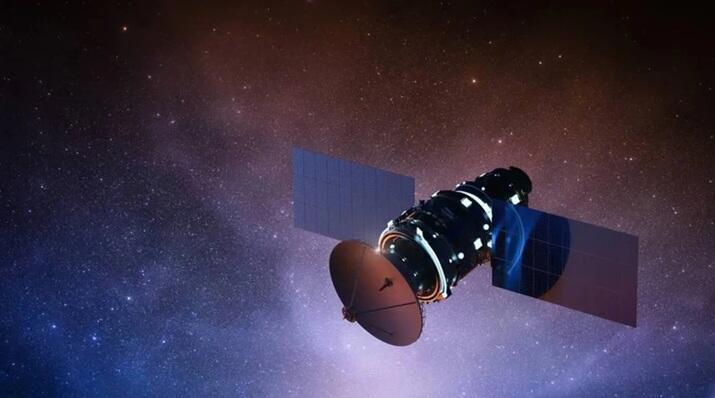
“Two Russian satellites ‘Luch-1’ and ‘Luch-2’ repeatedly approached European communication satellites and could intercept information from at least ten key geostationary satellites located over Europe,” the report says.
It was already widely reported that Russian spacecraft have increasingly shadowed European satellites in recent years, tracking them closely as tensions with the West spiraled related to Ukraine – a trend also highlighting how space is fast becoming the next battlefield.
Also, this isn’t the first time some very specific allegations have been publicly made, as last year German Defense Minister Boris Pistorius said Russian Luch Olymp surveillance satellites were trailing Germany’s Intelsat satellites, which are also used by other governments.
The Russian craft are said to linger near their targets for weeks at a time, with Luch-2 in particular being known to have approached at least 17 satellites.
German officials have bluntly alleged that these Russian satellites are not benign or for civilian use, but clearly are in the “signals intelligence business”.
In the background, there are fears that Ukraine and its European backers are far outmatched by Russia’s space capabilities. One publication called this a wake-up call:
Russia, they found, could draw on a fleet of roughly 200 satellites with military utility. Ukraine had just one. The disparity underlined not only Kyiv’s vulnerability in the early stages of the war, but a broader strategic gap that now occupies European policymakers: in modern conflict, space-based intelligence isn’t a luxury but a prerequisite for survival.
Since then, Ukraine has ramped up its domestic capability and secured access to images from commercial and allied constellations.
The lesson hasn’t been lost on Brussels.The EU’s commissioner for defense and space, Andrius Kubilius, has called for a “big bang” approach to space, arguing that investments must match those of more traditional defense priorities.
Very early in the conflict the Kremlin had warned that non-military satellites used by Ukraine “constitute indirect involvement in military conflicts” – warning that they could eventually be targeted.
At that early phase (in 2022) the deputy chief of the Russian Foreign Ministry’s arms control and nonproliferation department, Konstantin Vorontsov, has said “Quasi-civilian infrastructure could be a legitimate target for retaliation.“
Tyler Durden
Sun, 02/08/2026 – 08:45