





Slower EV Sales Will Be The “New Normal” For Tesla Amidst AI, Robotics Push
Tesla Inc. is increasingly betting its future on AI, autonomy and robotics — but it still depends on selling cars to finance that shift, and that core business is under pressure, Bloomberg reported this week.
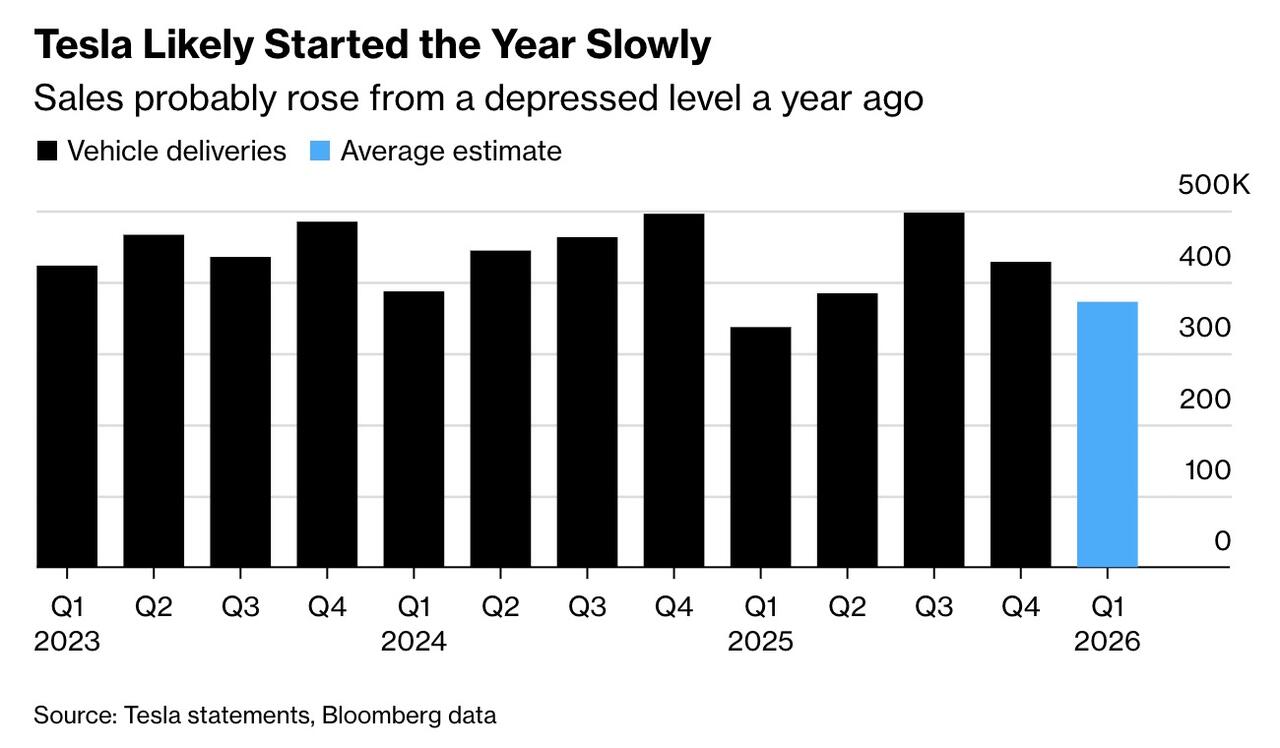
Wall Street estimates point to roughly 372,160 vehicle deliveries last quarter. That would mark an 11% increase from a weak year-ago period, yet still place among Tesla’s softer recent results and far below its near-500,000 peak quarters. Earlier headwinds — including political backlash involving Elon Musk and Model Y production interruptions — weighed on prior performance.
A slower pace of growth may persist. Demand for EVs is cooling globally, US buyers no longer benefit from federal tax credits, and Tesla’s lineup is narrowing as Models S and X are phased out, all while competition intensifies.
“If they can show that there’s stability in the numbers without the tax credit — and they can, at least with the delivery number — I think that that would be a win,” said Gene Munster.
Bloomberg notes that regional trends are mixed: Europe remains subdued, while China is rebounding, with February shipments from Shanghai surging 91%, according to preliminary industry data. Investors are closely watching whether demand can hold without incentives.
At the same time, attention is shifting away from quarterly deliveries. Many investors are more focused on Tesla’s long-term bets — including robotaxis, the Cybercab and the Optimus robot — with the car business increasingly seen as a means to fund those efforts. After reaching a record high in December, the stock has since cooled.
Garrett Nelson, senior vice president of equity research at CFRA said: “It’s not so much about the deliveries, it’s more about bigger picture like the Terafab announcement, and this spending binge that Tesla is embarking on. Concerns regarding this explosion in spending are really weighing on sentiment towards the company.”
Tyler Durden
Mon, 04/06/2026 – 07:50