







Supreme Court Limits ISPs’ Liability For Online Piracy
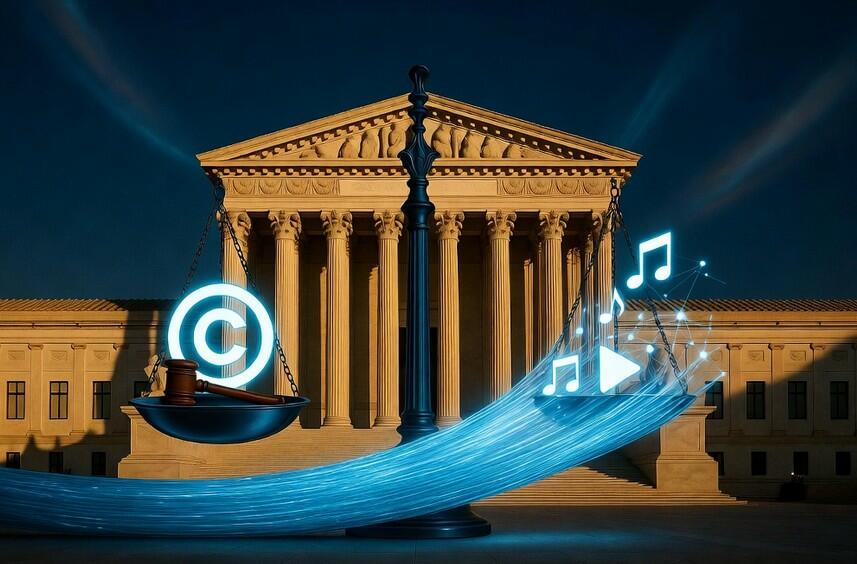
The Supreme Court on Tuesday sharply curtailed when internet service providers can be held liable for copyright infringement committed by their subscribers, handing a major victory to broadband companies and dealing a setback to Sony Music Entertainment and other major labels seeking to combat online piracy.
In a 7-2 decision (with Justices Sotomayor and Jackson concurring only in the judgment), the justices ruled that Cox Communications Inc. cannot be held liable for the actions of customers who illegally downloaded and shared songs using its network, even after the company received more than 163,000 infringement notices from copyright holders. The ruling reverses a $1 billion jury verdict against the Atlanta-based cable and internet giant and clarifies long-standing uncertainties about secondary liability under U.S. copyright law.
The case stemmed from a 2018 lawsuit in which the labels accused Cox of willful contributory and vicarious infringement for failing to terminate repeat offenders. A federal jury in Virginia sided with the labels on both theories and awarded $1 billion in statutory damages. The Fourth Circuit upheld the contributory-liability finding but tossed the vicarious-liability verdict, leading to the Supreme Court appeal on the contributory issue alone.
Writing for the majority, Justice Clarence Thomas said a service provider is liable for a user’s infringement only if it intended its service to be used for that purpose. “The provider of a service is contributorily liable for a user’s infringement only if it intended that the provided service be used for infringement, which can be shown only if the party induced the infringement or the provided service is tailored to that infringement,” he wrote.
Such intent exists only when the provider actively induces infringement – such as by marketing a product as a tool for piracy – or offers a service that is “not capable of ‘substantial’ or ‘commercially significant’ noninfringing uses,” the opinion stated, citing the court’s landmark 1984 decision in Sony Corp. of America v. Universal City Studios Inc. and the 2005 ruling in Metro-Goldwyn-Mayer Studios Inc. v. Grokster Ltd.
“Mere knowledge that a service will be used to infringe is insufficient to establish the required intent to infringe,” Thomas emphasized, rejecting the broader “material contribution” standard applied by the U.S. Court of Appeals for the Fourth Circuit.
The decision rejects the Fourth Circuit’s holding that Cox could be liable simply by continuing to provide internet service to subscribers whose accounts were linked to repeated violations. “The Fourth Circuit’s holding went beyond the two forms of liability recognized in Grokster and Sony,” the opinion states.
Cox, which serves about six million subscribers, had argued it took reasonable steps to address piracy, including sending warnings, suspending service and terminating accounts after multiple notices. The company contractually prohibits subscribers from using its network for infringing activity. Sony Music Entertainment and other major labels countered that Cox’s efforts were insufficient.
Tuesday’s ruling is expected to have ripple effects across the telecom and entertainment industries – with industry executives long warning that expansive secondary-liability rules could force providers to monitor and police all user activity, raising costs and privacy concerns. Copyright owners have argued that without stronger accountability for intermediaries, online piracy remains rampant.
For Cox, the ruling caps years of litigation. The company has said it will continue to cooperate with copyright holders through the Digital Millennium Copyright Act’s notice-and-takedown process, though the court noted that the statute creates defenses rather than new causes of action.
The decision comes as Congress continues to debate updates to copyright law in the digital age. In the meantime, Tuesday’s opinion provides clear guidance: Internet providers cannot be turned into copyright enforcers simply by virtue of knowing that some of their subscribers are breaking the rules.
Tyler Durden
Wed, 03/25/2026 – 11:05