





Tehran’s Toll Booth For Hormuz Strait Divides Countries Into 3 Categories
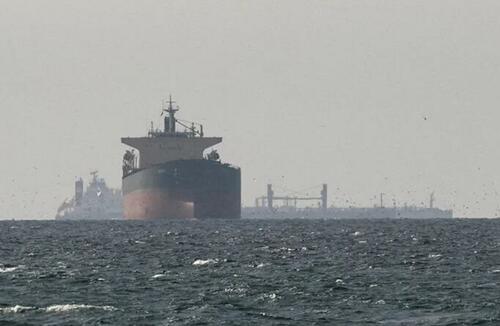
The last several days have seen a limited number of foreign vessels successfully and safely cross the Strait of Hormuz for the first time, amid the ongoing de facto military blockage by Iran.
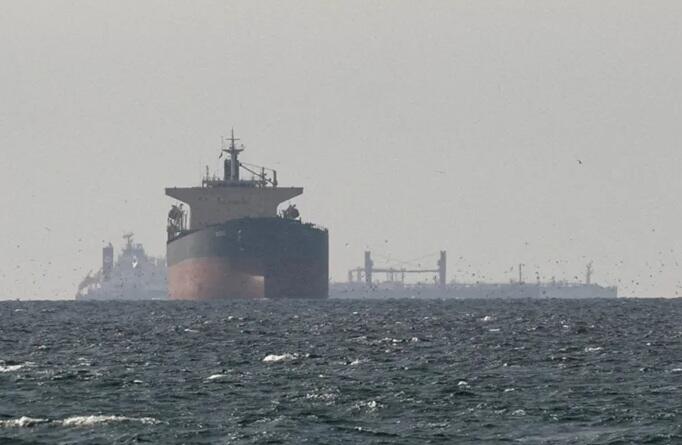
A group of several vessels, namely French, Japanese, and Oman-linked ships were reported to have crossed the strait at the end of this week. This included Malta-flagged ‘Kribi,’ owned by French shipping group CMA CGM, having exited the Gulf through an Iranian-approved corridor, broadcasting “owner France” – as we reported earlier.
Interestingly, its route was identified by the shipping sourcel Lloyd’s List as the “Tehran Tollbooth” – which references an emerging system imposed by Tehran that requires vessels to undergo vetting, disclose ownership and cargo details, as well as obtaining approval before transiting designated corridors.
Three additional tankers, including the LNG carrier ‘Sohar LNG,’ co-owned by Japan’s Mitsui O.S.K. Lines, also completed the crossing, reportedly by hugging the Omani coastline.
Mitsui confirmed the transit, stating the vessel is “the first Japan-linked vessel and the first LNG carrier” to exit the Gulf since the US-led war began.
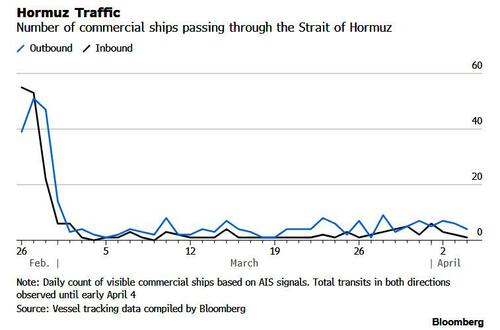
As for more details on this emerging Tehran-erected toll booth: “Following a 90% plunge in traffic through the Strait of Hormuz, as reported by CNBC, Iran has established a highly controlled shipping corridor near Larak Island. The IRGC is now charging tolls starting at $1 per barrel of oil, payable in Chinese Yuan or stablecoins,” describes one source. This could amount to up to $2 million for each ship seeking passage.
As for the vetting process, Russian media – citing Al Jazeera – says there will be three categories:
Iranian authorities have developed a system for managing shipping in the Strait of Hormuz and ensuring passage for vessels from different countries depending on the level of their relations with Tehran, Qatar’s Al Jazeera reported.
According to the TV channel, under Iran’s scheme, all states are divided into three categories: “hostile,” “neutral,” and “friendly.” Countries in the first group will be prohibited from using the Strait of Hormuz, ships from “neutral” states will be subject to high fees, and “friendly” states will be granted the right of free passage through the strait.
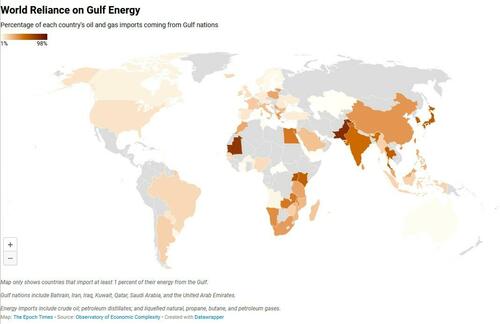
Tehran has not provided a complete list of the three categories; however, according to Al Jazeera, virtually all Arab countries in the Persian Gulf are classified as “neutral” or “hostile” states. Under Iran’s plan, these states will either have to pay “substantial fees” or be completely barred from passing through the Strait of Hormuz.
Will WTI Crude Oil (WTI) hit (HIGH) $200 in April?
Yes 2% · No 98%
View full market & trade on Polymarket
As a reminder, Brent futures and WTI futures both closed Friday in triple-digit territory as traders are becoming increasingly alarmed not just of the crude oil and LNG shortage spreading worldwide but also of petrochemical supply disruptions that are inbound that could affect plastics production, the core material that is bedrock for the modern economy.
Tyler Durden
Sat, 04/04/2026 – 18:40