









The Global Race To Unlock Nuclear Fusion
Authored by Felicity Bradstock via oilprice.com,
Governments worldwide have been racing to unlock the secret to nuclear fusion energy for several decades, with the aim of producing abundant, clean energy. While several generation milestones have been achieved in recent years, accomplishing commercial-scale production continues to be extremely complex. However, with more recent successes, are we edging closer to achieving this goal and producing vast quantities of clean power?
Nuclear fusion is the process that powers the sun and stars. Fusion takes place when two atomic nuclei – typically formed of hydrogen – are combined into a heavier nucleus, which releases a large quantity of energy. The difficulty in achieving this process is that scientists must recreate extreme temperatures and pressures that cause fusion in stars on Earth.
By contrast, nuclear fission – the method currently used to produce nuclear power – occurs when the central core of an atom, known as the nucleus, of uranium or plutonium, splits into two smaller nuclei. Splitting the core results in the release of a large amount of energy and the creation of additional neutrons, which can go on to split more atoms in a chain reaction. The chain reaction allows nuclear reactors to produce a stable supply of energy.
Fusion energy is extremely attractive as it could provide massive amounts of clean power at a time when the electricity demand is soaring. Just one gramme of fusion fuel could supply 90,000 kilowatt-hours of energy in a power plant, compared to the power produced from around 11 tonnes of coal. Fusion plants are also viewed as very safe, as they do not have the same risks as in fission plants, such as reactions, meltdowns or high-level, long-lived radioactive waste. This also means that fusion facilities may be easier to gain licenses for than fission plants.
In recent years, advancements in the generation of fusion power have mainly been seen in the private sector. In the United States, a site in Virginia was established for the development of the world’s first grid-scale commercial fusion power plant, to supply clean fusion electricity to the grid by the early 2030s. The U.S. Office of Fusion is focused on making this dream a reality.
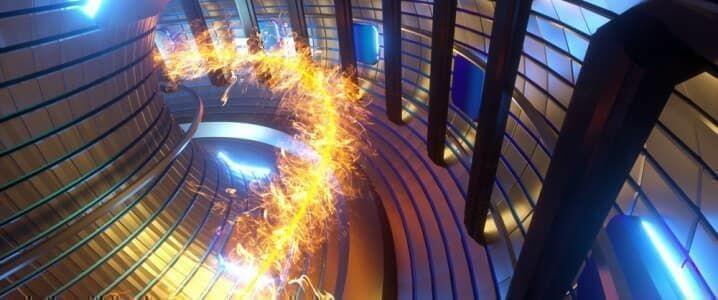
Elsewhere, China is investing billions of dollars a year in advancing its fusion capabilities. In January, researchers in China broke through a long-standing density barrier in fusion plasma using the “artificial sun” fusion reactor – the Experimental Advanced Superconducting Tokamak (EAST).
The experiment confirmed that plasma can remain stable even at extreme densities if its interaction with the reactor walls is carefully controlled. This finding removes a major obstacle that has slowed progress toward fusion ignition and could help future fusion reactors produce more power.
“The findings suggest a practical and scalable pathway for extending density limits in tokamaks and next-generation burning plasma fusion devices,” the project’s co-lead, Ping Zhu, of Huazhong University of Science and Technology, stated of the breakthrough.
Researchers have also extended plasma durations beyond previous benchmarks at the WEST reactor in France and KSTAR in South Korea. These successes have led to the construction of ITER, a 23,000-ton reactor in southern France. More than 30 countries are supporting ITER’s development, with the hope that it will be able to produce more power than it consumes in a fusion process. It will include the world’s most powerful magnet, the central solenoid.
Meanwhile, Germany is creating a funding programme as part of its Fusion Action Plan for startups and several states around the globe, including the United Kingdom and Japan, and adopting regulatory frameworks to provide certainty to developers, according to the World Economic Forum. “With the Fusion Action Plan, we are paving the way for the world’s first fusion power plant in Germany,” explained Germany’s Minister for Research, Technology and Space, Dorothee Bär.
And, in Canada, the government recently announced the launch of a new Centre for Fusion Energy in Ontario, to be built using $33 million from the federal government and Crown corporation Atomic Energy of Canada Ltd., $19.5 million from the Ontario government and Crown corporation Ontario Power Generation, and $39 million from fusion startup Stellarex Group Ltd. The aim of the government is to develop a demonstration reactor, although it has not yet provided a timeline for this.
Nolan Quinn, Minister of Colleges, Universities, Research Excellence and Security, stated, “Ontario’s world-renowned researchers are driving the energy sector into a new era of clean energy.” Quinn added, “Through this investment, our government is leveraging our province’s position as a nuclear powerhouse to fuel fusion energy discoveries that will advance our industries, build our energy workforce and protect Ontario.”
Governments worldwide are investing huge quantities of funding into nuclear fusion research and development, with the hope of making a breakthrough to produce abundant, clean power. With global electricity demand set to soar in the coming years, particularly due to the deployment of complex technologies, such as artificial intelligence, a breakthrough in fusion power could help significantly reduce the world’s dependence on fossil fuels and support a global green transition.
Tyler Durden
Wed, 03/04/2026 – 17:15