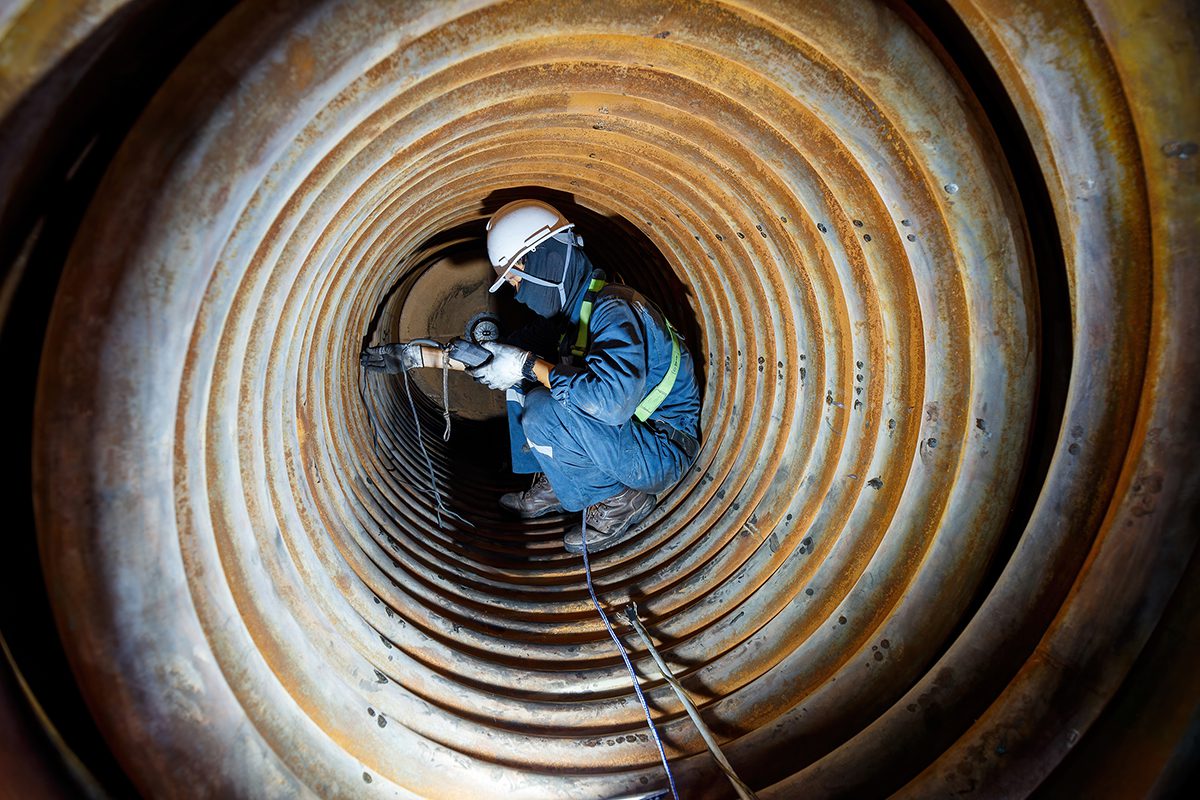






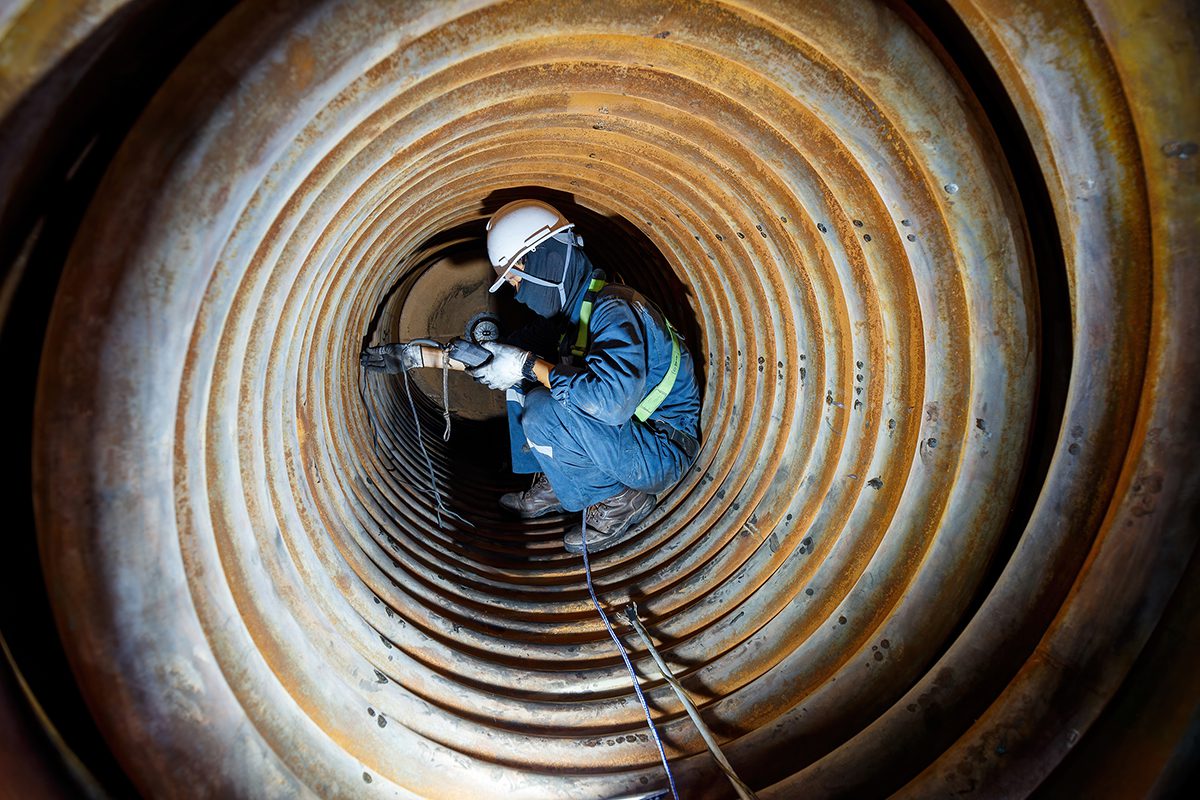
Oxygen measurement plays an important role in industrial safety.
January saw the launch of the first ever lead-free galvanic oxygen sensor for industrial safety, permitting a long-sought-after leap in sustainability. Lead’s traditionally indispensable role in galvanic oxygen sensors means the announcement counts as a true industry breakthrough. That this win has been secured by a relatively small UK company, Alphasense, is maybe all the more remarkable. Speaking to Envirotec, Director of Technology Ronan Baron shared his views on the significance of the new O2-A2-GLF (galvanic lead-free) sensor, and insights on how his team approached its development.
The O2-A2-GLF provides a drop-in replacement for the two-pin oxygen sensor used in portable and fixed gas monitoring instruments. It provides reliable performance under challenging humidity, temperature and pressure conditions, meeting the expectations of critical, safety-oriented applications in an enormous variety of settings.
But achieving this accuracy and reliability without lead has been anything but trivial. The near-five-year development effort by the firm (now a subsidiary of global instrumentation company AMETEK), appears a triumph of creative thinking and the blending of very disparate lines of research. Ronan’s colleagues include PhDs in electrochemistry and other arcane areas. Undertaking this kind of development work in a commercial setting means juggling constraints quite distinct from those that occupy university-based researchers, he explains.
Lead’s traditional role
A popular workhorse of the industrial safety arena, the galvanic oxygen sensor functions almost like a small battery. Oxygen diffuses through a membrane and reacts at a cathode, producing a proportional quantity of current. No external voltage need be applied. It’s a simple piece of electrochemistry. The useful electrical and mechanical properties of lead allow it to be encapsulated in commercially attractive components. These properties also provide stable electrical performance, and mean the lead anode doesn’t expand too much as it oxidizes, contributing to integrity and durability.
Lead is very malleable and soft, making it easier to work with. It also has the advantage that, as it oxidises, it dissolves in an electrolyte solution, preventing the constitution of a passive layer on the surface of the anode, which would lead to sensor failure.
Since it emerged in the 1970s, lead has been a big part of the success of galvanic sensors which have come to dominate oxygen sensing for industrial safety. Of course, the toxicity of lead has been a problem when it comes to their disposal. There has been a push for a replacement to permit future compliance with the EU’s RoHS Directive. It currently permits an exemption for the use of lead in these sensors, but that is due to expire in 2027.
Interim alternatives
Lead-free amperometric sensors emerged in recent years to help meet this need, although with trade-offs. These sensors always require a bias voltage (or for a significant amount of time, each time it is switched on) which depletes the material more quickly and shortens sensor lifetime. This is one reason why galvanic sensors have held an upper hand in the market, especially in portable or intermittent-use instruments. Amperometric sensors also require potentiostatic electronic circuitry, a bias voltage and a greater amount of power. This means that they are not a drop-in replacement for galvanic sensors, as an extensive product redesign is required.
With the continued reliance on galvanic electrochemistry, the Alphasense O2-A2-GLF lead-free sensor is a proper drop-in replacement for lead-based sensors, presenting none of the problems of amperometric sensors.
Long-term thinking
Although Alphasense are not divulging anything about the new materials or chemistry, Ronan had much to say about how the part came into being, a development effort that took five years.
“Many people working in this area had abandoned the idea of a drop-in replacement for lead sensors,” he says, explaining that it required “a lot of will, courage and motivation” for a small company to keep this goal in sight over the long-term. And understandably, there is much satisfaction that they have been able to produce a commercially viable technology, for which a patent is pending.
Accelerated life testing (ALT) was a big part of the work, establishing that the new sensor concept not only worked as well as lead-based sensors, but did so under challenging conditions. This was vital as such components are often destined for safety- or mission-critical applications.
His group made “in excess of 1,000 prototypes before getting there”. In this respect, he said he was inspired by James Dyson’s descriptions of how he developed his vacuum cleaner, and that “it is very much about trying and trying again.”
The new O2-A2-GLF parts are a lead-free drop-in replacement for existing 2-pin galvanic oxygen sensors.
“Anyone working on long-range R&D cycles, from concept to product, will know that the conditions are much more stringent than for university research,” he explains. “There is always a risk in research,” he says, “that it doesn’t turn into anything”. He speaks about being willing to disrupt conventional thinking, while also striving to keep things in balance, and to avoid going down unproductive rabbit holes. Above all, it seems, you need an organization that values innovation. It is not something that can be conducted in isolation, since “everything is connected”. Without a strategy and leadership that is committed to innovation, “you are not able to nurture long term success”.
The O2-A2-GLF demonstrates what can be achieved on a relatively modest scale. Ronan explains: “We don’t have tens of millions in R&D budget.” In his view, galvanic lead-free oxygen sensors deserve a place on the sector’s timeline of milestones — alongside the advent of galvanic oxygen sensors in the 1970s and the emergence of amperometric sensors in the 1980s.
Many tons of lead are used globally in the manufacturing of oxygen sensors for industrial safety—and the prospect of manufacturers finally moving decisively away from toxic lead can scarcely be overstated. In a world where mountains of electronic waste continue to flow into landfills and informal recycling sites in Africa and Asia, the stakes are unmistakably high and the impact is global.