

QUESTION: Mr. Armstrong, about half the cargo ships are headed to the US to get oil. Some have claimed that Trump is trying to replace the Middle East. This seems to be a conspiracy theory that contradicts what you have reported. What do you make of that?
RW
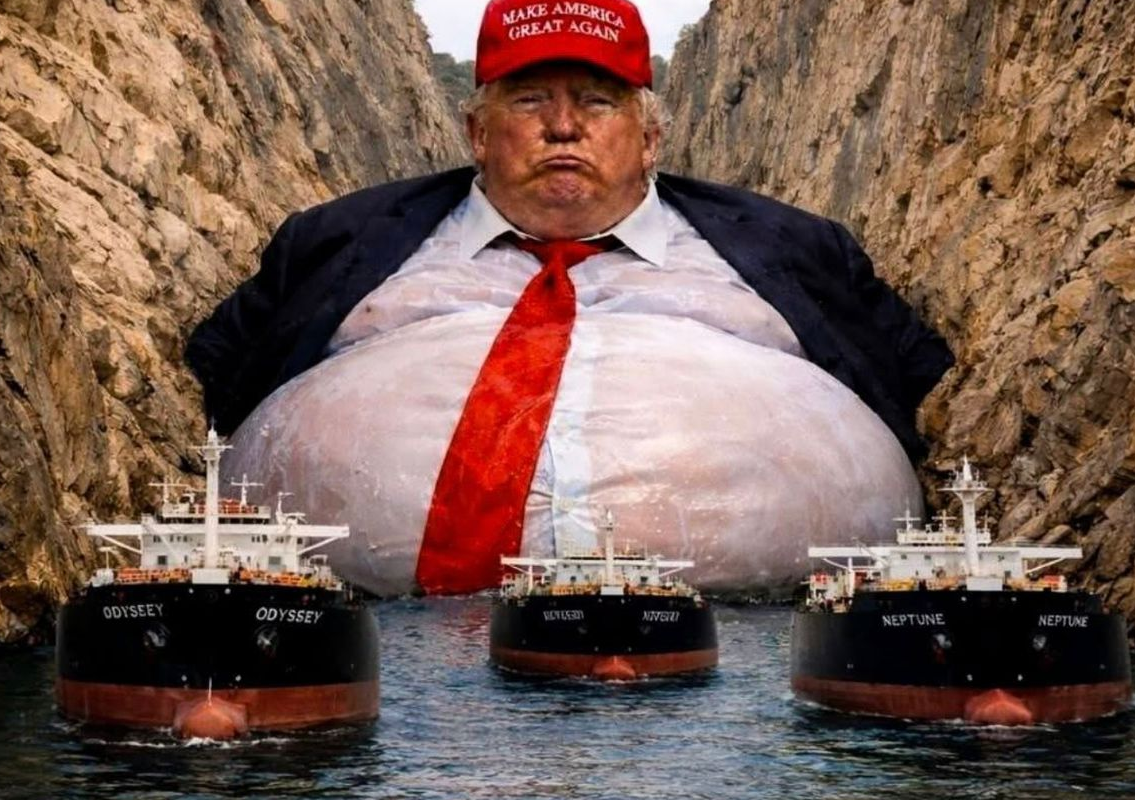
ANSWER: I know, there are wild conspiracy theories being proposed. I have even heard that Trump did this to force the EU to collapse. Sending the world into recession/depression is absurd. Trump is trying to sell more widgets, not fewer. Plus, rising oil prices put the Midterms at risk. That just makes no sense. Most of these conspiracy theories assume the people in government are smart – that is NOT the case.
As for tankers, there are not enough in the world to transport all the oil that needs to be transported. We have had some of the world’s largest shippers as clients for decades. There is what is known as “Tonne-miles” (or tonne-kilometers), which is the standard unit for measuring freight transportation volume, and it’s a key metric for understanding crude oil logistics.
A single ton-mile represents moving one ton of cargo over a distance of one mile. In the oil industry, a “ton” of crude oil is approximately 7.5 barrels. This metric allows you to directly compare the total transport “work” done by different modes (pipeline, rail, ship, truck), regardless of the shipment size or distance.
The most notable shift in the data is from water carriers to pipelines. In 1980, water carriers held a slight lead over pipelines for crude oil ton-miles. By 1999, pipelines had grown their share to over 75%, while water carriers had dropped to under 24%.
On a global scale, the focus shifts to seaborne trade, which is measured in tonne-miles (the metric equivalent). Recent data shows this is a massive and growing industry, currently being reshaped by geopolitical events. Global oil tonne-miles (for all products) grew from roughly 15.3 trillion in 2020 to 16.4 trillion in 2024, an increase of about 6%. Crude oil itself constitutes roughly 70% of total global seaborne tonne-miles.
In 2025, the global figure stood at approximately 12.2 trillion (year-to-date), indicating a contraction. This decline is partly due to the rerouting of tankers away from the Red Sea because of Houthi attacks, which caused tanker tonne-miles to hit a five-year high earlier in 2024 before the current dip. The reason this is critical to our analysis is that this is a core measure of economic activity. The total volume of crude oil moved is a key input for GDP figures, while changes in tonne-miles affect the costs of energy and consumer goods.
This allows for a direct comparison of efficiency between modes. For example, pipelines and large tankers are far more energy-efficient per ton-mile than trucks or rail. Some look at this also as a carbon footprint and other environmental costs of transporting crude oil over long distances. Energy companies and governments rely on tonne-mile forecasts to decide where to build new pipelines, expand ports, or invest in rail infrastructure.
The longer the trip to transport oil the higher the cost to ship that oil. Therefore, we have another variable here regarding the cost of shipping. On top of all of this, the claim that the United States is somehow displacing Iran is really absurd. The United States is a NET IMPORTER of crude oil. We may be able to facilitate some for geopolitical reasons and to try to keep prices down, but the US can in no possible way replace the Middle East. Who ever makes up these stories are really beyond hope.