

The Reality Behind US-Iran Negotiations
Authored by Bryan Brulotte via The Epoch Times,
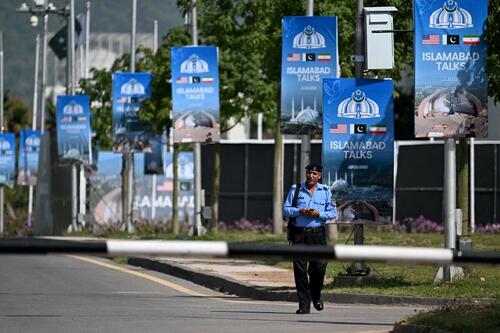
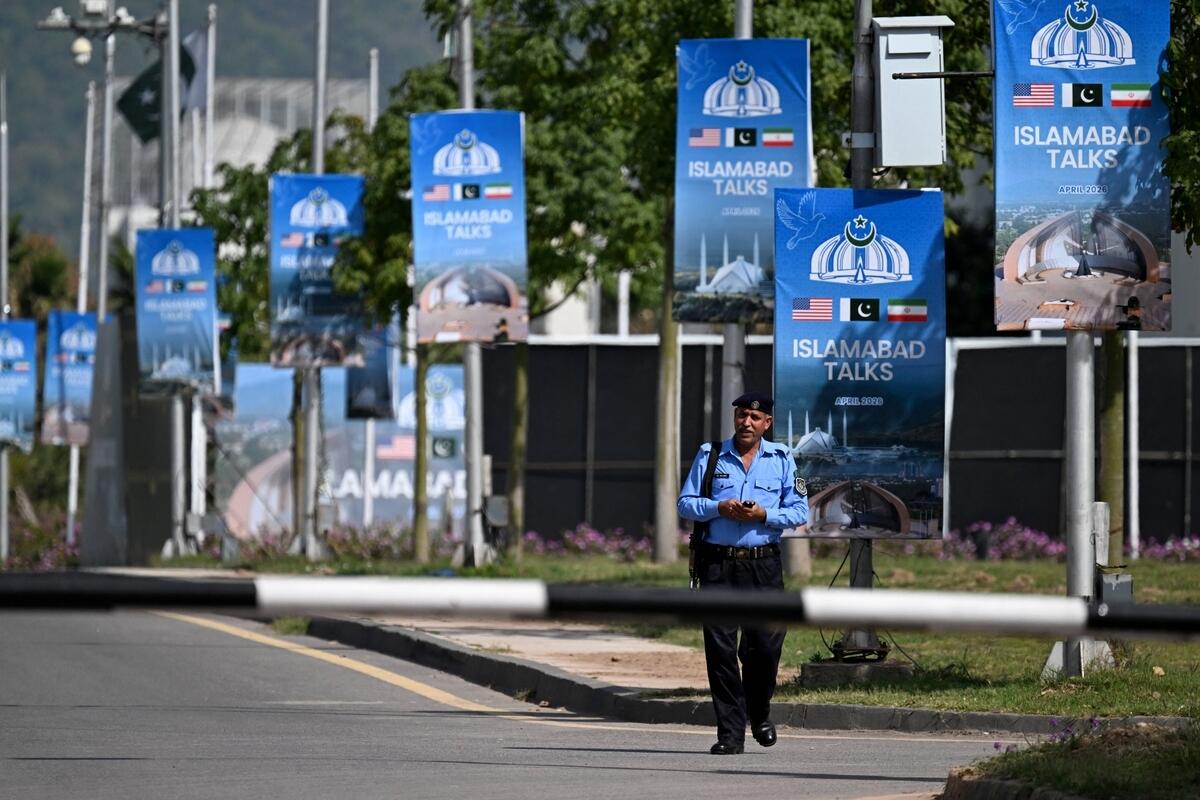
The current negotiations between the United States and Iran are being misread as a chaotic exercise in brinkmanship. They are not. They are the predictable endgame of a contest in which leverage has shifted decisively, and in which one side is now negotiating under constraints it can no longer escape.
Strip away the theatrics, and the picture becomes clear. Iran attempted to weaponize the Strait of Hormuz, calculating that disruption of global energy flows would fracture Western resolve and force Washington into concession. That calculation has failed. The United States has imposed sustained economic and maritime pressure, degrading Iran’s ability to monetize its oil and constraining its room for maneuver. Although Tehran retains the capacity to harass shipping, it no longer controls the strategic environment.
Much of the commentary has focused on President Donald Trump’s negotiating style; his deadlines, his threats, his reversals. This misses the point. Style is not strategy. Outcomes are. And the outcome, to date, is that Iran has been compelled back toward negotiations while publicly insisting it will not negotiate under pressure. That contradiction is not a sign of strength. It is evidence of it eroding.
Iran is not negotiating from parity. It is negotiating from a position of weakness. This is not to suggest the regime is on the verge of collapse. It is not, but it is under strain: economic, military, and internal. The fragmentation within Tehran’s leadership, between hardliners and more pragmatic elements, further complicates its ability to act coherently. That raises a critical question for any agreement: who, precisely, can commit the Iranian state, and who can enforce compliance?
Absent clarity on that point, any deal risks becoming performative. What is emerging, however, is a familiar and realistic framework. Constraints on uranium enrichment. Disposition of existing stockpiles. Monitoring by the International Atomic Energy Agency. Conditional sanctions relief. Limited provisions on missile activity and regional proxies. This will not be a transformative agreement. It will be a containment outcome, but that is not a weakness—it is the correct objective.
There is a persistent tendency in Western analysis to overstate what diplomacy can achieve with regimes that define themselves in opposition to the international order. Iran is not negotiating to become a liberal partner. It is negotiating to survive. The United States is not negotiating to normalize Iran. It is negotiating to constrain it. Those aims can intersect, but they will not converge.
The more serious issue lies elsewhere. The current negotiations are narrowly framed around nuclear thresholds, but the strategic risk extends beyond centrifuges. Iran has demonstrated that it can impose global costs through maritime disruption. Even limited interference in Hormuz reverberates through energy markets, supply chains, and inflation. A durable settlement must therefore address freedom of navigation as a core security issue, not a peripheral one.
This requires more than bilateral understandings. It requires a credible enforcement mechanism, ideally with an international dimension, that removes ambiguity about consequences. The absence of such a framework invites repetition of the current cycle: provocation, response, negotiation, relapse. That cycle is not stability. It is managed volatility.
It is also necessary to dispense with illusions about allied coherence. The Western response has been uneven. Some partners have equivocated. Others have postured. Few have demonstrated the operational seriousness required in a moment where global energy security and regional order are directly at stake. This is not a peripheral observation. It goes to the credibility of collective security arrangements in a more contested world. Against that backdrop, the United States has done what serious powers do. It has applied pressure, maintained optionality, and forced a narrowing of choices on its adversary. That does not guarantee success, but it is the precondition for it.
Negotiations conducted without leverage are exercises in self-deception. The path forward is therefore clear, if not easy. Iran can accept verifiable constraints on its nuclear program, curtail its destabilizing regional conduct, and regain access to the global economy under defined terms. Or it can continue to absorb economic attrition and strategic isolation under conditions it cannot indefinitely sustain. That is the choice.
Peace, if it comes, will not be the product of goodwill or rhetorical restraint. It will be the product of pressure, clarity, and enforcement. That is how durable agreements are made and how serious states behave. The outcome will not be determined at the table, but by the balance of power behind it.
Views expressed in this article are opinions of the author and do not necessarily reflect the views of The Epoch Times or ZeroHedge.
Tyler Durden
Sun, 04/26/2026 – 21:20