








Travel Stocks In Focus After Cartel Chaos Erupts In Mexico
The U.S. State Department has lifted its “shelter in place” alerts for Americans after Mexican special forces, aided by U.S. intelligence, killed a top drug cartel boss, sparking cartel-related chaos across at least one key tourism town in the third-world country just south of the U.S. southern border.
Helicóptero del ejército mexicano operando ayer en Puerto Vallarta (Jalisco) contra el Cartel Jalisco Nueva Generación.
Instagram/Cornett pic.twitter.com/ADcgqnusdW
— Niporwifi © (@niporwifi) February 23, 2026
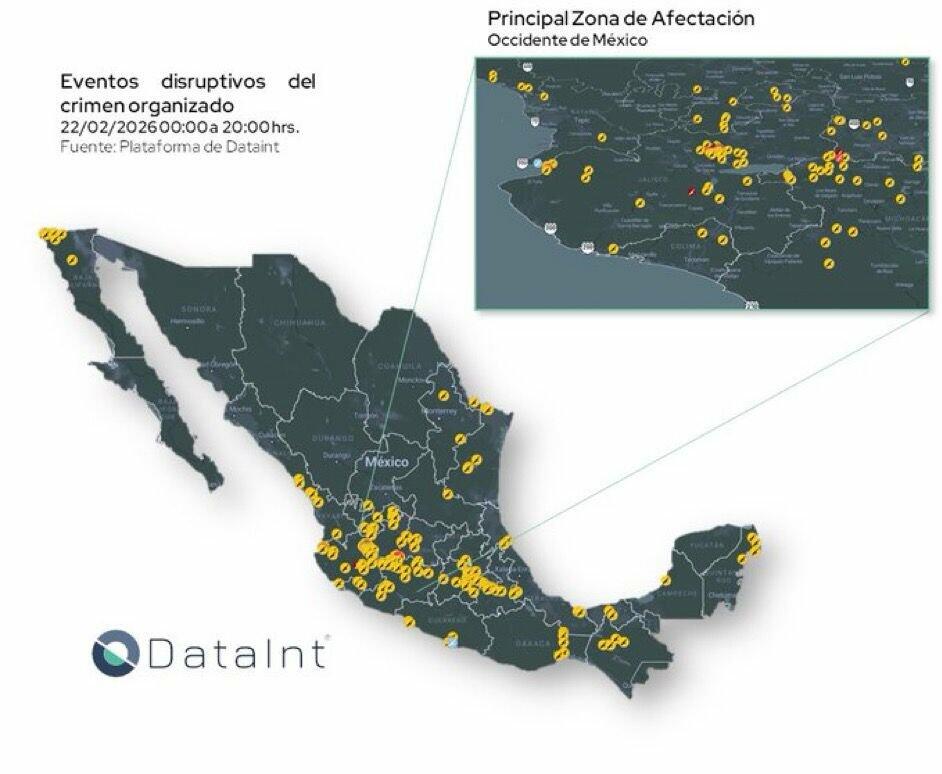
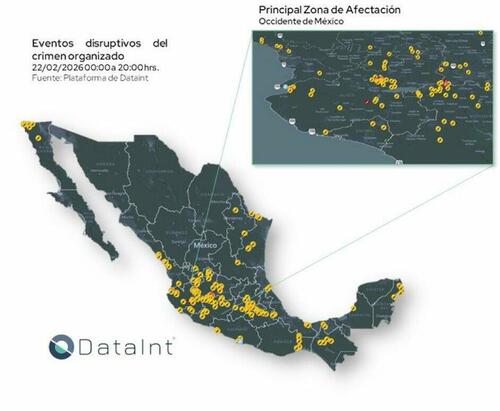
On Sunday, Mexican Army Special Forces carried out a decapitation strike against the Jalisco New Generation Cartel (CJNG), killing Nemesio “El Mencho” Oseguera Cervantes. The operation triggered dangerous cartel-related uprisings shortly after that, which extended into Monday and Tuesday, with 250 blockades recorded, many of them in Jalisco state.
Footage from Puerto Vallarta, the popular tourist town in Jalisco, was on the front cover of many major U.S. newspapers and sent a chill through the American travel industry that funnels tourists into the region. What Americans saw was cartel gunmen torching vehicles and buildings in an immediate response to the death of El Mencho, reinforcing what everyone has known all along: Mexico is a third-world hellhole.
Officials say at least 62 people died in the raid that caught “El Mencho,” longtime head of the Jalisco New Generation Cartel, and violence that followed. This @vantortech satellite image of yesterday shows thick smoke across Puerto Vallarta, Mexico. More in thread.… pic.twitter.com/Cztlz8IWGY
— Christiaan Triebert (@trbrtc) February 23, 2026
Assessing the impact on the US travel industry is Goldman analyst Lizzie Dove, who found the biggest effect has been on airlines, not cruises or hotels.
For airlines, most U.S. carriers have limited exposure to Mexico. For most, less than 3% of their flights in early 2026 are tied to the country. But if travelers stay cautious, some may shift their plans to safer destinations, including Florida, the Caribbean, and other parts of Latin America.
Focusing on the airline impact, here’s an excerpt from Dove’s note:
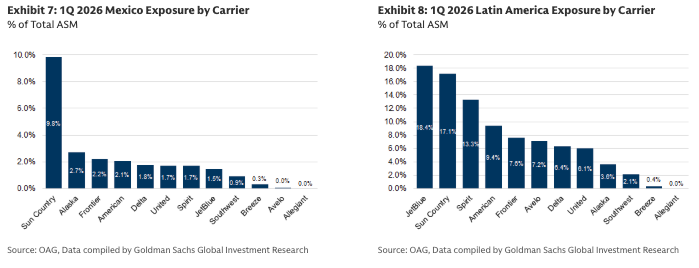
Bottom line: There were significant cancellations in select airports following the events in Mexico over the weekend; however, these cancellations were in-line with or lower than cancellations at airports impacted by Winter Storm Hernando. Separate from the cancellations over the last couple days, the larger question in our view is if there will be a lasting impact on demand. We take no view on the length of the unrest in Mexico. While not directly comparable, we note that other recent geopolitical events have had a short-lived impact, if any, on demand for travel. As such, while there could be an impact from recent events, we could see the dissipation of demand headwinds fairly quickly if the situation is resolved (Volaris, one of the largest airlines in Mexico, resumed normal operations Monday 2/23). In the short-term, Sun Country has the highest exposure to Mexico, with ~10% of 1Q 2026 capacity scheduled to fly to various airports in Mexico. We note that February and March in particular represent seasonally high demand months for North to South travel to warm weather destinations as various regions of the US have spring breaks over this period. It is possible that some trips planned for Mexico could instead be re-booked to a domestic warm weather destination or elsewhere in Latin America/the Caribbean if there are lingering concerns around Mexico over the next couple months.
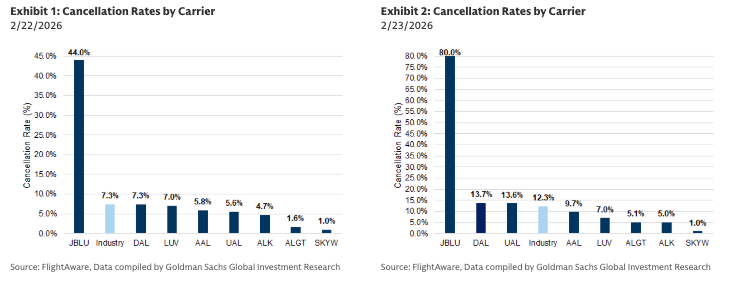
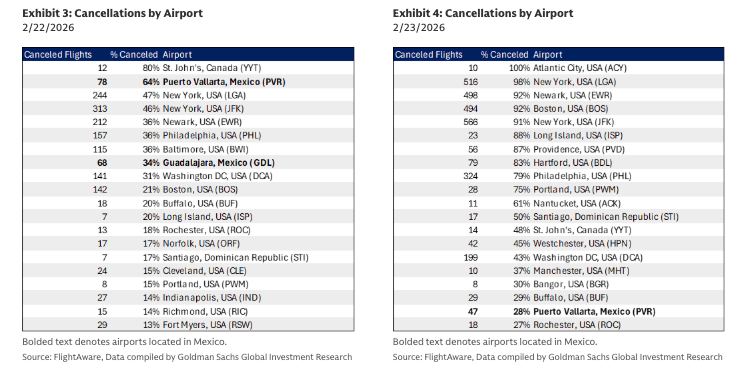
Cancellations were elevated on Sunday 2/22 and Monday 2/23, but largely driven by Winter Storm Hernando. On Sunday 2/22 and Monday 2/23, the industry saw an elevated level of cancellations, some of which were related to the ongoing unrest in Mexico, but with the majority driven by Winter Storm Hernando (see Exhibit 1 and Exhibit 2). For example, JetBlue had significantly higher cancellations than its peers on 2/22, with 44% of flights canceled vs. its competitors canceling less than 10% of flights, but JetBlue has <2% of capacity deployed to Mexico in 1Q 2026. Cancellations at select airports in Mexico were material, even from a global perspective, with Puerto Vallarta and Guadalajara among the top 20 airports with the highest cancellation rates across the world on Sunday 2/22 and Puerto Vallarata in the top 20 again on Monday 2/23 (see Exhibit 3 and Exhibit 4).
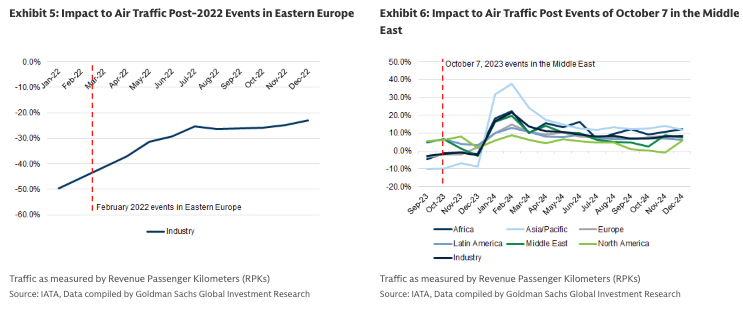
Recent geopolitical events showed short-lived impact to demand. While not directly comparable, if we look to two recent events we see potential for limited lasting impact to air travel demand. For example, while likely complicated by the broader post-pandemic recovery, following the events in Russia/Ukraine in February 2022, global air travel continued to recover (see Exhibit 5) and Delta had not seen any impact for travel to broader Europe as of April 2022. Following the events on October 7, 2023 in the Middle East, there was similarly a limited lasting impact to air travel (Exhibit 6; year-over-year global industry air traffic growth continued to improve following October 2023, and while there was a step-down in Middle Eastern air traffic growth in November and December 2023, January 2024 saw a marked step-up in traffic growth. We acknowledge each event may be different, and look for evidence of whether any potential demand headwind will similarly dissipate fairly quickly.
Mexico exposure is <3% of 1Q 2026 capacity for most US Airlines, except Sun Country. Looking across the US Airlines with greater than 0.1% domestic market share, Sun Country (Not Rated), Alaska (Buy), Frontier (Not Covered), and American (Sell) have the most scheduled capacity exposure to Mexico directly (see Exhibit 7). We do not currently expect a broader impact across Latin America and Caribbean demand, and believe some Mexico trips could be re-booked to other Latin American/Caribbean destinations if there are lingering consumer concerns around Mexico travel over the next couple months. Of the US Airlines with greater than 0.1% market share, JetBlue (Sell), Sun Country (Not Rated), and Spirit (Not Covered) have the most 1Q 2026 capacity scheduled to Latin America (see Exhibit 8). If there is demand to re-book Mexico vacations, domestic warm weather destinations could benefit.
Dove’s view on the impact of hotels appears limited for now, but if travel warnings last, demand could weaken over time. Only a small share of the rooms at major hotel companies are in the affected Mexican states. Hyatt has the highest exposure, while Choice has very little. Hyatt could also soften the blow by moving travelers to its other all-inclusive resorts outside of Mexico.
As for cruises, she said the impact is also minor so far. Only a few Puerto Vallarta port stops have been canceled. Cruise lines do have some Mexico exposure, but many itineraries include multiple destinations, which helps reduce the risk if one Mexican port becomes problematic.
Related:
Cartel Kingpin “El Mencho” Dead. Here’s A Shortlist Of Possible Successors
Mexico’s Cartel Decapitation Strike Fallout: “Not The End, Just The Beginning”
The full travel-impact note is available to Professional Subscribers on our new Marketdesk.ai portal.
Tyler Durden
Thu, 02/26/2026 – 13:20