


Trump Threatens To ‘Blow Up’ World’s Largest Gas Field, But Distances US From Israeli Actions, As Macron Urges Direct Talks
Summary
Trump dials up threat, seeking leverage, denies approving Israeli Pars strikes: however, reports from The Wall Street Journal and Axios say the White House was aware.
Energy war hits breaking point: tit-for-tat strikes are now directly targeting Gulf energy infrastructure, with Qatar’s Ras Laffan damaged, KSA, Kuwait, Bahrain sites attacked; Saudi trust in Iran “completely shattered.”
Europe pushes off-ramp, refuses entry into conflict: Macron urges direct talks “reckless escalation,” while Friedrich Merz signals support for de-escalation—Brussels’ stance: “This is not our war.”
Iran signals not done exacting revenge: IRGC warns retaliation “not yet finished,” vowing escalating strikes across region as Gulf states, Iraq, and shipping lanes absorb widening fallout.
Strait of Hormuz a de facto war zone as prices rise at the pump with oil spiraling higher: Iran’s parliament is floating tolls on shipping – weaponizing control.
* * *
Trump Threatens To “Massively Blow Up” South Pars, Tries To Distance US & Israel Ops
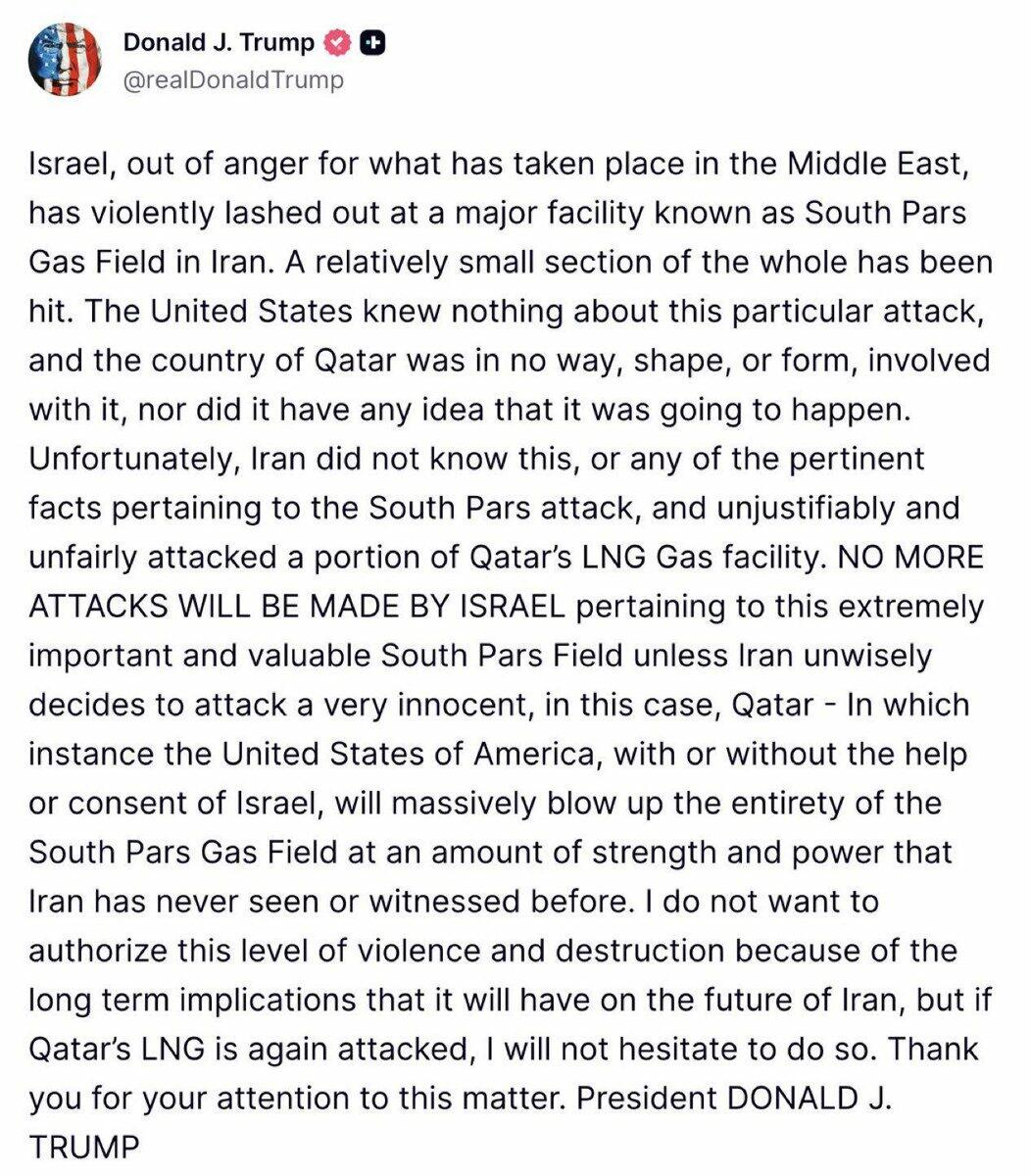
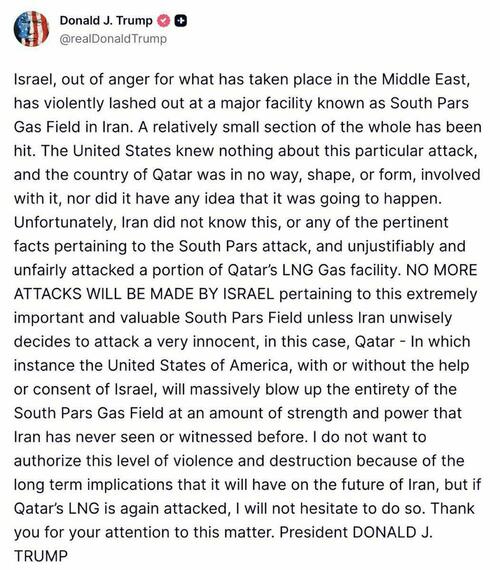
In a late-night Truth Social post, President Trump has once again cranked the rhetoric to eleven, warning he’ll “massively blow up” Iran’s crown jewel gas field if Tehran dares hit Qatar’s LNG infrastructure again. Trump insisted the US “knew nothing” about Wednesday’s Israeli strike on the shared South Pars field, claiming neither did Qatar, while simultaneously declaring “no more attacks will be made by Israel” there – unless Iran escalates.
Then came the kicker: “In which instance the United States of America, with or without the help or consent of Israel, will massively blow up the entirety of the South Pars Gas Field at an amount of strength and power that Iran has never seen or witnessed before,” he wrote.
However, US media reports have been quick to say otherwise – that the US did actually know about it and greenlit the risky escalation. The Wall Street Journal reports the White House was aware – and also Axios’ Barak Ravid insists so too, and he’s seen as very close to the Israeli government.
Heavy Air War Ongoing Amid Potential Energy Point of No Return
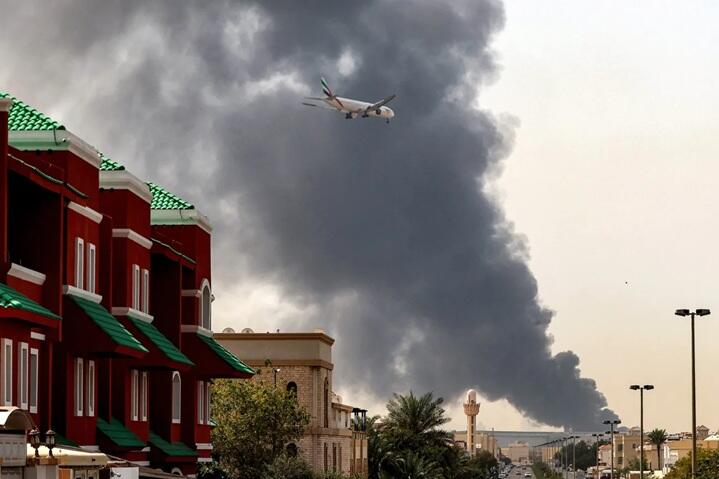
Meanwhile, the Gulf is still being lit up by tit-for-tat major attacks on energy, as Western populations brace for severe impact at the gas pumps. Iran’s retaliation is already hitting energy nodes across the region after Israel’s Wednesday South Pars strike, pushing tensions with neighbors past a potential point of no return. Qatar quickly expelled Iranian military attaches after missiles caused “extensive damage” at Ras Laffan – its main LNG export hub, while Saudi officials say “the little trust that remained in Iran has been completely shattered.”
The air war is continuing against Iran, with retaliatory strikes still raining down on Israel, but reportedly at slower pace when compared to the opening days of the war. A strike in western Iran’s Dorud county reportedly killed at least a dozen civilians, Al Jazeera has reported.
Macron Urges Direct Talks: ‘Return to Reason’
At a moment Gulf shipping lanes are freezing up with tankers idling in the Gulf of Oman waiting for a greenlight through what’s been for most a no-go zone, Iranian lawmakers have proposed a plan to impose tolls and taxes on ships passing through the strategic Strait of Hormuz – which of course would not include passage of US and Israeli ships, or others deemed participants of Operation Epic Fury.
Europe is watching nervously from the sidelines, itching for some kind of presentable offramp, also after NATO allies this week snubbed joining Trump’s coalition to seek to militarily open the strait back up to global shipping. Germany’s Friedrich Merz welcomed signals that Trump might dial things back, saying “I am particularly grateful that the US president sent a signal last night that he prepared to bring the fighting to an end” – while France’s Emmanuel Macron warned of a “reckless escalation” as energy infrastructure becomes the primary battlefield, and so has called for direct talks between Washington and Tehran. Here’s what he said in part before an EU leaders’ summit in Brussels on Thursday:
“We will obviously defend a de-escalation, a return to stability in the Middle East,” Macron said, adding that he spoke to Qatari emir Tamim bin Hamad Al Thani and Donald Trump about the war on Wednesday night.
“I think that everyone should calm down and the fighting should stop at least for a few days to try to give negotiations a chance again,” the French leader added. “I hope that, in any case, everyone will return to reason.”
⚡️ The US military has released documentation of the destruction of Iranian naval ships pic.twitter.com/tWeyUWoPFb
— War Monitor (@WarMonitors) March 19, 2026
Brussels’ bottom line has consistently been over the last days: “This is not our war.”
Iran Signals No Signs Of Stopping Revenge Attacks
Tehran, however, is signaling the opposite of de-escalation, perhaps seeing Trump’s latest Truth Social post claiming no foreknowledge of the Israeli attack on Pars as a sign of weakness. A spokesman for the IRGC Khatam has newly warned retaliation is “not yet finished,” adding:
“We warn the enemy that you made a major mistake by attacking the energy infrastructure of … Iran… the next attacks on your energy infrastructure and that of your allies will not stop until their complete destruction.”
Kuwait: Iranian drones attacked one of the largest oil refineries, Al-Ahmadi Refinery.
⚡️#BREAKING Kuwait: Iranian drones attacked one of the largest oil refineries, Al-Ahmadi Refinery. pic.twitter.com/g6MTtLUpcR
— War Monitor (@WarMonitors) March 19, 2026
The last 24 hours saw unprecedented destruction on key Gulf energy sites, summarized in the following:
Separately, UAE authorities said they were responding to incidents at the Habshan gas facilities and at the Bab oilfield caused by falling debris from intercepted missiles. The Abu Dhabi Media Office said the facilities were shut down and no injuries were reported.
Saudi Arabia said it intercepted and destroyed four ballistic missiles launched towards Riyadh on Wednesday and an attempted drone attack on a gas facility in its east. On Thursday, Iran targeted the Saudi capital, Riyadh.
Attacks on Kuwait and Bahrain were also reported.
Elsewhere, Iraq has shut its airspace, vessels are taking hits in the Gulf, with on Wednesday Trade Winds having reported: “A ship is on fire after being hit by an unknown projectile near the United Arab Emirates deepwater port of Khor Fakkan.”
Tyler Durden
Thu, 03/19/2026 – 08:40