





UK Locks In Critical Minerals Deal With Kazakhstan To Cut Reliance On China
UK Foreign Secretary Yvette Cooper has unveiled a critical minerals agreement with Kazakhstan on Thursday as Western governments move to shift supply chains away from China, moving ahead on London’s plans to diversify its critical mineral sourcing.
This after the British government in its Critical Mineral Strategy published last year identified Kazakhstan as producing 22 of the 36 minerals identified in the report as vital and needed by Britain.
Britain’s top diplomat is hosting foreign ministers from Kazakhstan, Kyrgyzstan, Tajikistan, Turkmenistan, and Uzbekistan at Lancaster House in London – and Beijing officials are no doubt watching closely from afar.
“Central Asia is an important region with huge potential to boost economic growth,” Cooper said in a statement to Politico. “These agreements deliver for British businesses, strengthen economic security and are a clear demonstration of U.K. support for the independence of the Central Asian states.”
A memorandum of understanding has been signed by Kazakhstan’s Deputy Industry Minister Olzhas Saparbekov and UK Trade Minister Chris Bryant, amid the summit.
Kazakhstan supplies more than 40% of the world’s uranium and ranks among the top producers of titanium. It is also a top-ten exporter of copper and zinc.
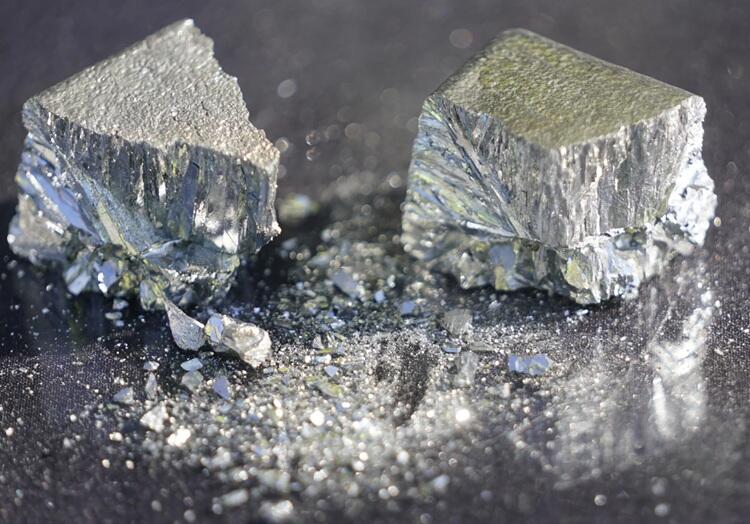
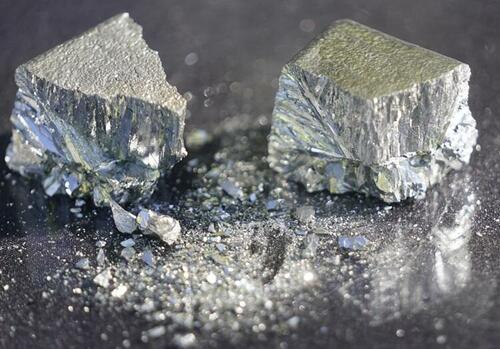
Needless to say, this makes the central Asian country a top competitor to China – and thus ‘alternative’ source for the West – given it has huge rare Earth deposits that could power the next tech boom.
“Unlike in the West, Central Asian governments are enthusiastic about the prospect of turning their vast deposits of [rare earth minerals and rare metals] into a new source of revenue for the local economies,” a prior report in The Interpreter stated.
“The U.K. set out a Critical Minerals Strategy last November to ensure that by 2035 no more than 60 percent of Britain’s supply of any one critical mineral comes from a single country.” —Politico
Chinese firms have have also recently invested heavily in Kazakh copper, aluminum, and rare earth projects – driven by President Xi’s long-running and ambitious Belt and Road Initiative.
“The shortages center on rare earths such as yttrium and scandium, niche members of the family of 17 elements, which play tiny but vital roles in defence technology, aerospace and semiconductors and are almost entirely produced in China.” https://t.co/SRJffJXj1c
— Shehzad Qazi (@shehzadhqazi) February 26, 2026
As we’ve highlighted previously – and something the UK, US, and Europe are belatedly becoming fully aware of – Beijing has been eagerly acquiring rare earth reserves and contracts in emerging markets across the world for years now, resulting in what is currently an effective chokehold on global supply chains.
Tyler Durden
Fri, 02/27/2026 – 04:15