


US Is Rapidly Expanding Its Nuclear Supply Chain: It’s Not Nearly Fast Enough
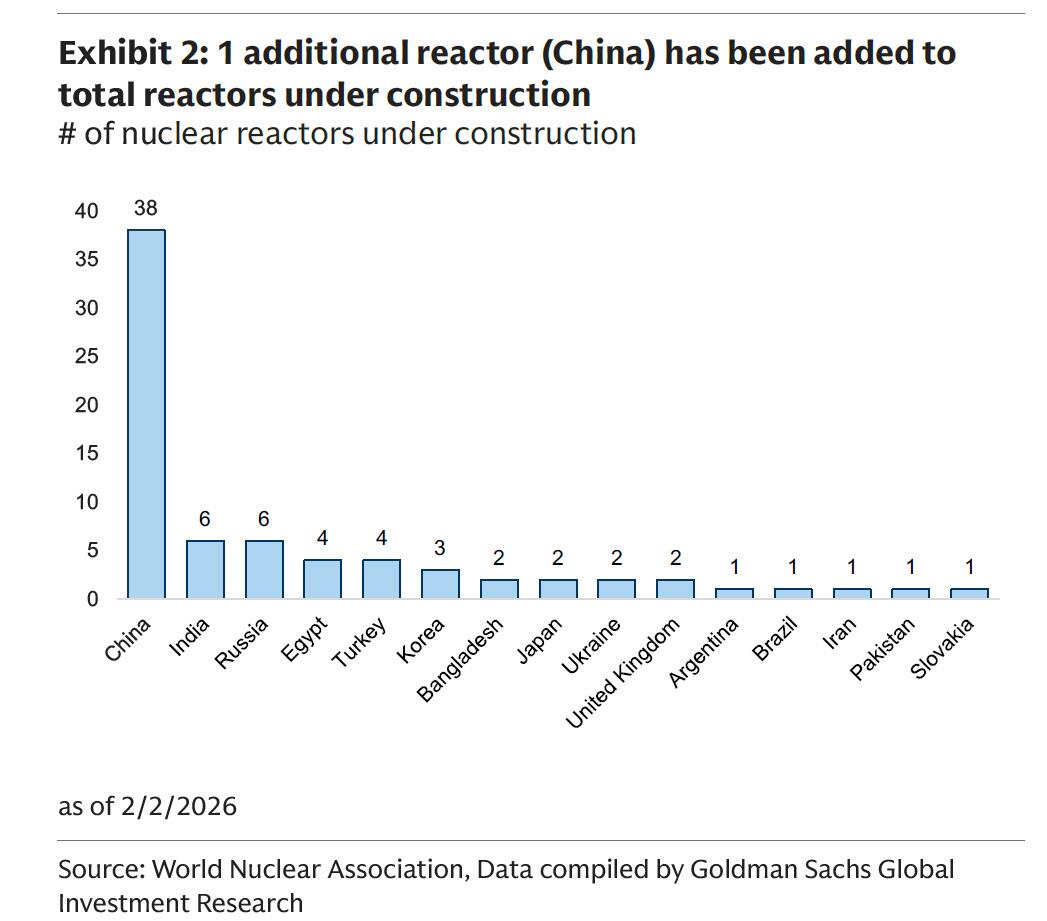
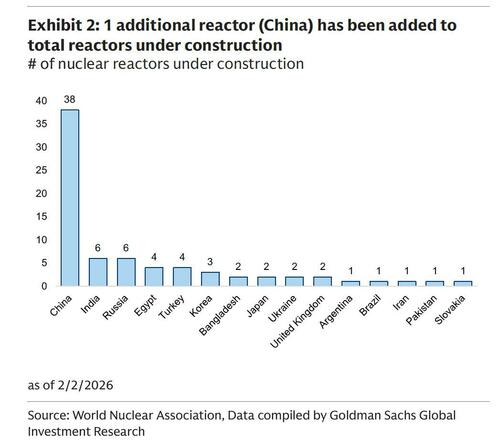
As we have repeatedly highlighted (most recently here), the much-hyped resurgence in US nuclear power is notable for one thing: the lack of actual new reactors. In fact, according to the latest Goldman Nuclear Nuggets monthly report, while China is currently building 38 new nuclear reactors – and both India and Russia have 6 reactors under construction – the US is not even on the chart.
Indeed, despite splashy announcements, like November’s agreement for Japan to fund a $80 billion plan to build as many as 10 big reactors in the US, no new commercial-scale facilities are actually under construction. Meanwhile in China, work has started on 10 new sites since the beginning of 2025 (for the full list see the February Nuclear Nuggets report).
And even if reactors were being built in the US right now (which they aren’t) it’s unclear how they would be fueled.
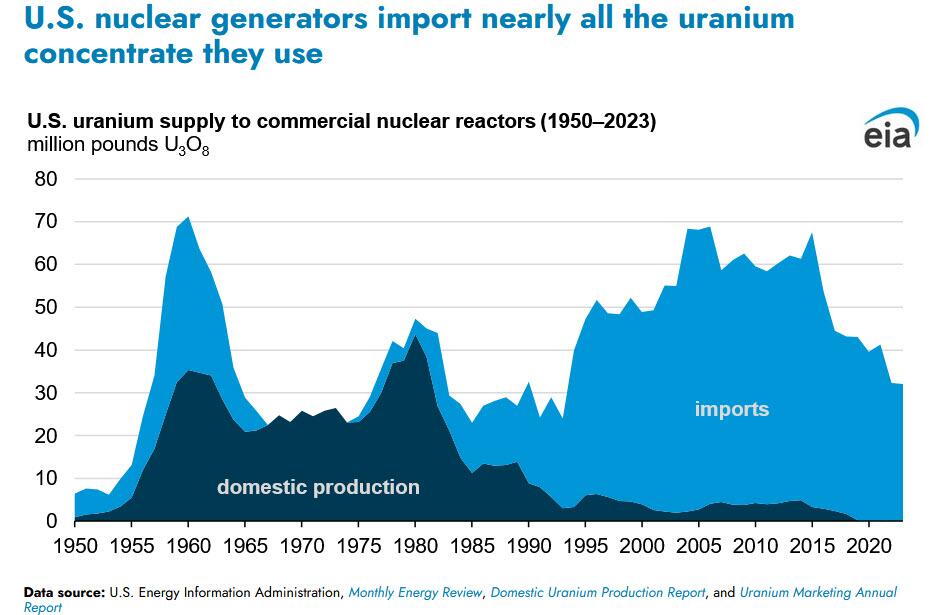
As Bloomberg writes, almost all of the uranium going into the current US nuclear fleet is imported, and there’s only enough enrichment capacity to supply about one-third of domestic reactors.
If next-generation atomic reactors eventually get built, they’ll need a new type of more potent fuel called high-assay low-enriched uranium, or HALEU, for which there’s just a single demonstration production line in the US that makes small volumes (it belongs to Centrus Energy, one of our favorite stocks).
“The core of the issue is insufficient capacity,” says Amir Vexler, the chief executive officer of enrichment company Centrus Energy Corp. “We need a lot of everything.”
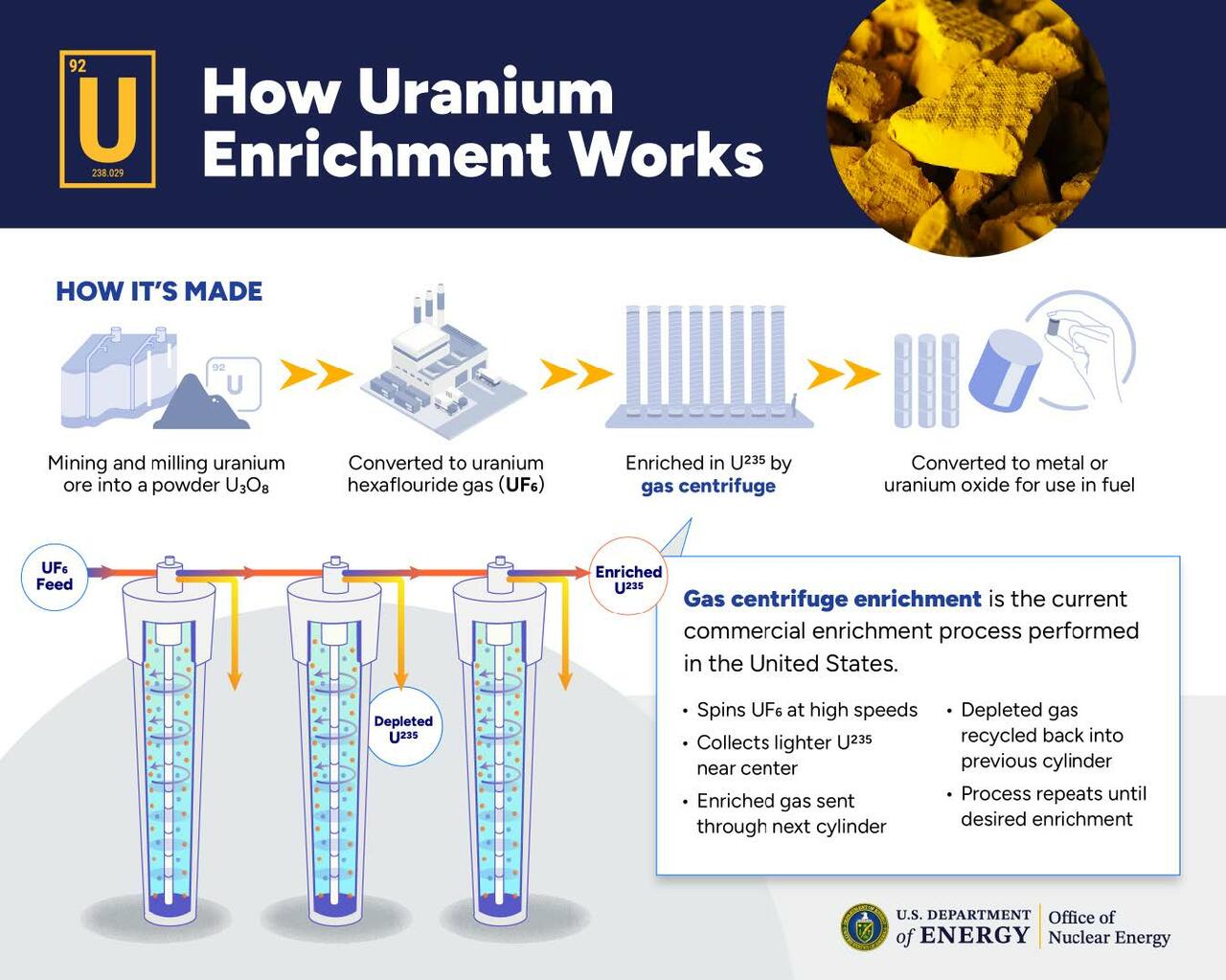
However, efforts are under way to expand the nation’s nuclear supply chain, at all four stages of the fuel cycle.
First, several uranium miners, including Ur-Energy, are planning to boost US output. Next, when it comes to converting that uranium into gas, Solstice Advanced Materials – the only US conversion company – said last week it plans to increase capacity.
The third stage, enriching the gas, will get a boost from Centrus. It hired construction giant Fluor Corp. for a multibillion-dollar facility in Ohio, and was one of three companies that each received $900 million in January from the Department of Energy to expand US enrichment capacity.
The fourth and final stage in the chain, fuel fabrication, is also seeing progress. X-Energy Reactor, an advanced nuclear company backed by Amazon.com, received US approval for a new plant just last week.
It’s the first such license in more than five decades — another sign of how activity is picking up in the US nuclear sector, even if major new reactors remain years away.
Tyler Durden
Thu, 02/19/2026 – 08:20