




Why China Might Have Pressed Iran To Compromise With The US
The sequence that Trump threatened if no deal was reached before the expiry of his deadline would have cut China off from half of the oil that it imported by sea last year and likely set Afro-Eurasia aflame in resource wars for the indefinite future that would have derailed China’s superpower rise.
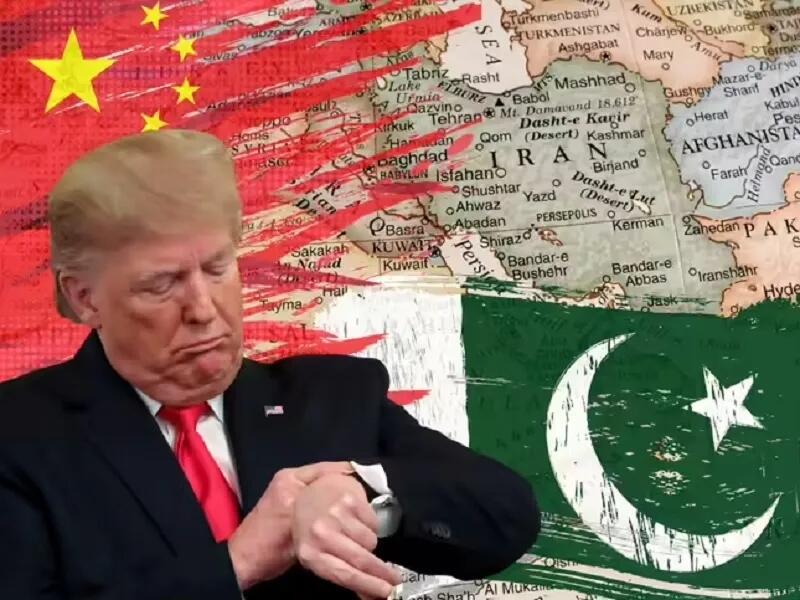
Three unnamed Iranian officials reportedly told the New York Times (NYT) that China pressed their country to compromise with the US by agreeing to a two-week ceasefire and resuming talks.
When asked about whether China played such a role, Trump responded that, “I hear yes. Yes they were.”
This was followed by Chinese Foreign Ministry spokeswoman Mao Ning revealing that “China made its own efforts in this regard.”
Although she didn’t directly confirm the report, she didn’t outright deny it either.
Interestingly, Drop Site founder Ryan Grim noticed that the edit history of Pakistani Prime Minister Shehbaz Sharif’s tweet imploring Trump to extend his deadline for destroying Iran’s civilization if a deal isn’t reached saw him originally post “*Draft – Pakistan’s PM Message on X*”. Grim wrote that “Sharif’s own staff don’t call him ‘Pakistan’s PM,’ they would just call him prime minister. The U.S. and Israel, of course, would call him ‘Pakistan’s PM.’” Trump cited his talks with Sharif when extending his deadline.
In light of the NYT’s report, Trump’s positive affirmation thereof, and Mao’s related innuendo, an alternative hypothesis is that it wasn’t the US or Israel that drafted Sharif’s tweet, but China. Regardless of whoever did, it’s reasonable that China might have indeed pressed Iran to compromise with the US, not least because it would have tremendously suffered had Trump carried through on his threat. As a reminder, he threatened to destroy Iran’s power plants, bridges, and possibly even oil infrastructure too.
In response, Iran threatened to destroy the Gulf’s, and the sequence that Trump could have catalyzed would have resulted in the region’s energy exports going offline indefinitely. China would have then suddenly lost the 48.4% of oil that it imported by sea last year, 13.4% of which came from Iran and 35% from the Gulf Kingdoms (excluding Oman whose exports are from the Arabian Sea). Although it has strategic reserves and is producing more alternative energy, that would still its economy very, very hard.
China’s superpower rise would end, while resources wars would break out all across Afro-Eurasia except in resource-rich Russia, thus destabilizing the Eastern Hemisphere for years to come as the US relatively insulates itself in “Fortress America” and divides-and-rules the other side of the world. Naturally, China would prefer to avert that dark scenario even if the lesser evil results in the end of Iran’s petroyuan experiment and perhaps also its oil exports to China. Continued Gulf exports are much more important.
It’s unrealistic to imagine that China promised to intervene in Iran’s support if the US dupes it with talks for a third time in less than a year when it won’t risk World War III over Taiwan nor in furtherance of its “no-limits” Russian strategic partner’s goals in Ukraine.
Observers can therefore only speculate what China credibly offered Iran in exchange for compromising with the US by agreeing to a two-week ceasefire and resuming talks, but at the least, generous reconstruction support was probably included.
To recap, China’s interest in pressing Iran to cut a deal with the US would have stemmed from fears of the sequence that Trump threatened setting Afro-Eurasia aflame for the indefinite future, though there has yet to be any unambiguous confirmation from its side that it played such role and might never be.
Nevertheless, it’s clear that something happened close to the expiry of Trump’s deadline for the IRGC to agree to a ceasefire with the US instead of embrace martyrdom, and it’s likely connected to China.
Tyler Durden
Wed, 04/08/2026 – 16:20