


Will The New Fed Chair Fix The Money?
Authored by Jeffrey Tucker via The Epoch Times,
The choice of Kevin Warsh as the new chairman of the Federal Reserve has received mixed reviews, as can be expected. His professional connections lean establishment in every way, which is perhaps not what Trump’s base expected.
More interesting is that Warsh is on record as an inflation hawk, a critic of zero-interest rate policies, and a critic of the war on cryptocurrency. All of this strikes me as a good sign, even if he has since hinted in the direction of favoring lower rates.
In 2023, he wrote the following:
“History will give a full accounting of the grave errors committed in recent years in economic policy. A central lesson is already clear: Nothing is as expensive as free money. The costs of the Federal Reserve’s zero-interest policy are multiplying: The misallocation of capital—goosing the price of the riskiest and least-productive of assets—set the conditions for boom and bust. The financing of the ‘big state’ set the country on an unsustainable fiscal trajectory. The extraordinarily loose financial conditions created herd behavior among market participants and firms and complacency among policy makers, including regulators. The surge in inflation substantially raised the cost of living for citizens and undermined business planning.”
Every word of that is true. Having someone at the Fed who believes that way should come as a great relief.
The surprising part is that Trump himself has spent years denouncing the Fed for having raised interest rates faster than ever before in Fed history. He has also called for a dramatic lowering of rates to make the United States more competitive, thoughts that have people like me worried that such a policy would kick off a second wave of inflation.
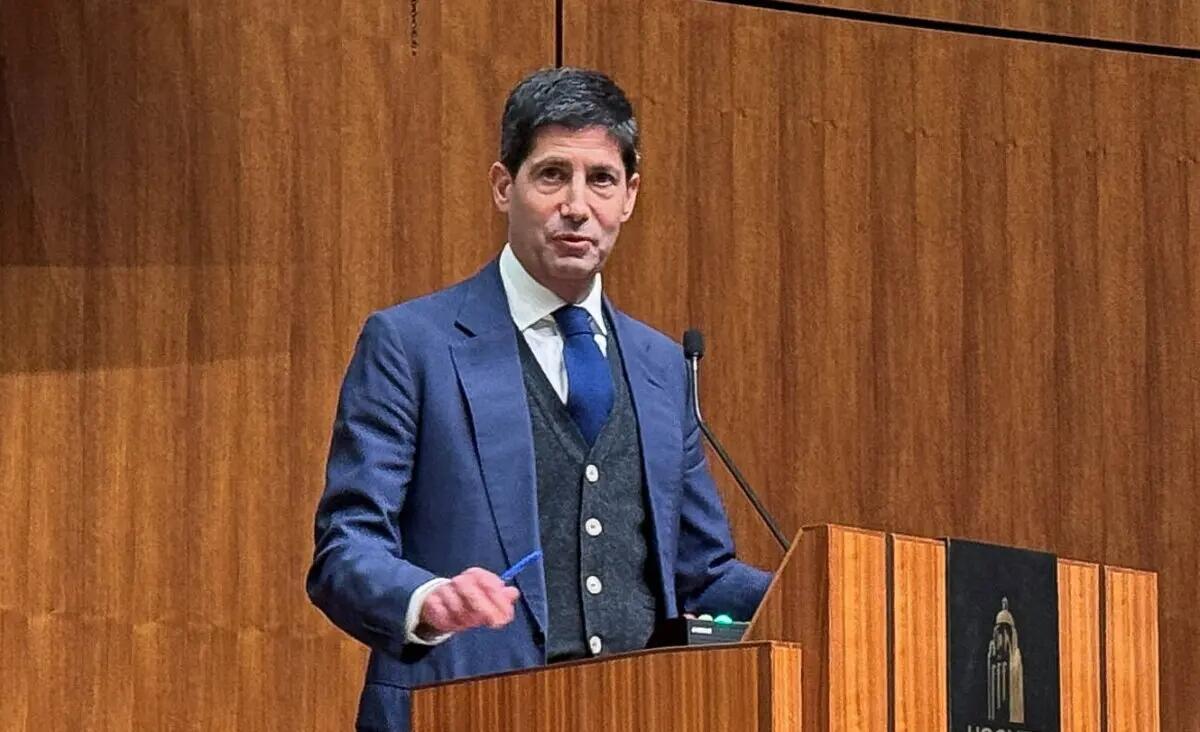
Former Federal Reserve board member Kevin Warsh speaks during a monetary policy conference at Stanford University’s Hoover Institution in Palo Alto, Calif., on May 9, 2025. Ann Saphir/Reuters
Warsh seems to have his doubts about such a policy:
“The Fed seeks to fix interest rates and control foreign-exchange rates simultaneously—an impossible task with the free flow of capital. Its ‘forward guidance,’ promising low interest rates well into the future, offers ambiguity in the name of clarity. It licenses a cacophony of communications in the name of transparency. And it expresses grave concern about income inequality while refusing to acknowledge that its policies unfairly increased asset inequality.”
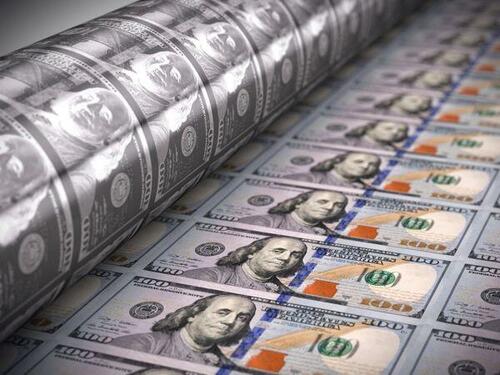
In the backdrop of all of this is what has been a disastrous policy at the Fed from 2020 onward, creating some $6 trillion in new money in service of a congressional plan to shower the country with money directly into people’s bank accounts. That this would lead to a devastating inflation is hardly a surprise. No student of money and finance could possibly doubt that this would be the result.
Why did this not happen with a similar quantitative easing back in 2008? Because in those days, the policy of then-Chairman Ben Bernanke was to pay more than the market rate for bank deposits, thus keeping hot money off the streets and safely in the bank vaults.
Warsh identifies the underlying problems with such a policy:
“The misallocation of capital—goosing the price of the riskiest and least-productive of assets—set the conditions for boom and bust.”
What he has identified here is a pattern known since the 1930s. John Maynard Keynes imagined that the central bank could drive rates to zero and generate prosperity as if by magic. The American and Austrian critics of that policy drew attention to deeper complexities. Interest rates serve a crucial role as a signaling system for investment. Artificially low rates essentially send false signals that set up conditions for a subsequent bust.
In other words, the policy of discretion designed to blow countervailing winds toward business cycle trends actually ends up creating and worsening the thing it was designed to fix. When that happens, the only possible way out is to let the recession happen, rebalance the capital structure, and clear the table to enable a new round of prosperity and growth.
To be sure, it’s been 40 years since the Fed has permitted a recession to happen without wild interventions designed to prevent them.
The layers upon layers of interventions keep piling up higher and higher, all built on a false foundation of debt. This is not only a national problem; the entire world economy is now addicted to debt finance, with no end in sight.
Let’s please take a step back and understand how this whole system is supposed to work in a genuine free market with sound money and no central bank.
In a state of nature, you consume what you produce: You catch a fish and eat it. If you want to grow more prosperous, you have to spend your time making a capital good such as a net that enables you to catch more fish. That little story illustrates the central point: All prosperity grows out of deferred consumption.
What about loan markets? When capital grows and the funds become available for lending, the price at which they are lent is called the interest rate. It is a measure of risk that the loan won’t be paid back and also a sign of time horizons. Longer time horizons would typically involve paying a higher rate rather than a lower rate of interest. This is what creates the yield curve, which is typically upward-sloping.
What about a base interest rate? It should be exactly what the market of supply and demand determine it should be, no higher and no lower. For example, if there is a vast amount of saved capital in the banking system—because people are really socking away funds for the future—there is a great quantity available for borrowers. This higher savings will lead to a lower rate of interest.
That’s the supply side of the equation. On the demand side, lower interest rates will intensify the desire for loaned funds from businesses and consumers. In effect, loan markets make it possible for savers to profit from lending to borrowers and be rewarded for doing so. All told, this is a beautiful system from which everyone benefits—provided it is not abused or manipulated for political purposes.
When interest rates are suppressed by the central bank or when government issues debt instruments below market rates, they are effectively gaming the system. It sends a signal that there are more savings, more capital, more loanable funds available in the loan markets than really exist. This affects capital investment in particular, as the most enterprising sector takes on liabilities with the intention of servicing them from future revenue streams.
When the plans flip in the other direction is when consumers lack the savings to justify the level of investment. That’s essentially what recession is: a reset toward reality. But if the central bank tries to ride through the recession with more and more cheap money, it risks more inflation unless there is a market for the funds. This is when the debt contagion spreads to more enterprises, more consumers, and more financial companies looking for a sure return. So long as the increase in financial outpaces the burden of debt obligations, this crazy system can create the appearance of something that works.
In case you haven’t guessed, that’s where we are right now, not just in the first stages but in very advanced stages. This is the world that the new Fed chair inherits. It makes his job even harder that the Fed’s own balance sheet is still out of whack from the 2008 rescue that saddled the Fed with mispriced debt assets that it still has not off-loaded.
People ask whether I’m optimistic or pessimistic about the new Fed chair. I’m neither. My prediction is that he will do a competent job at what he is supposed to do, which is keep the whole system of banking and finance afloat and out of crisis. All of Warsh’s editorializing at this point becomes mere theory as compared with the burdens of actually performing this job.
The Fed is not really a stabilizer of macroeconomic policy. It is a banking cartel designed to protect the financial system and government against the consequences of mismanagement.
In general, my sense is that Trump could have done better or he could have done worse. The real problem is that the job exists at all. Ideally, we would move back toward an honest system of enterprise, with a correctly priced loan market, sound money, competitive banks, and honest economic structures that are not so debt addicted. On that score, there is no reason for very high expectations.
Tyler Durden
Wed, 02/04/2026 – 20:55