


Virginia Governor Signs Law Banning ‘Ghost Guns’
Authored by Michael Clements via The Epoch Times,
Virginia Gov. Abigail Spanberger signed a bill to ban so-called “ghost guns,” another making it easier to sue gunmakers and sellers, and two other bills concerning possession of firearms by persons under court orders.
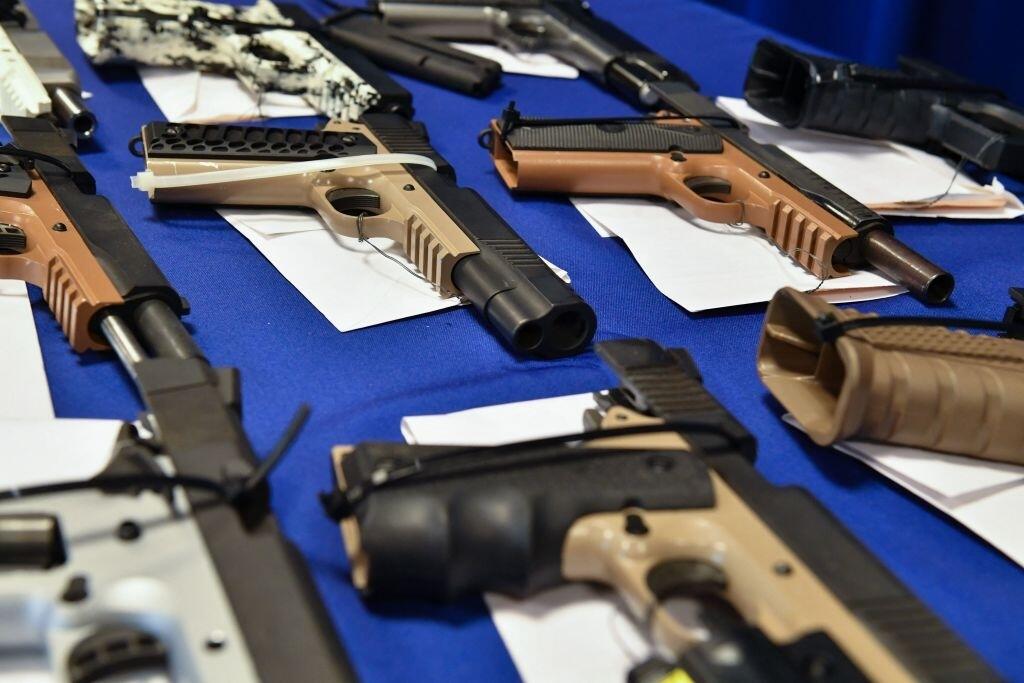
The bills – signed on April 10 – are among more than two dozen gun control and gun safety bills that the Virginia General Assembly sent to Spanberger after its regular session ended on March 24.
“Preventing gun violence is an issue of public safety – both for the officers who protect our streets and the children and families they work to keep safe,” the governor said in a statement.
Spanberger signed Senate Bill 323, which bans the manufacture, sale, and possession of firearms without serial numbers.
The new law also outlaws any gun that “after removal of all parts other than a major component, … is not detectable as a firearm when subjected to inspection by the types of detection devices, including X-ray machines, commonly used at airports, government buildings, schools, correctional facilities, and other locations for security screening.”
Senate Bill 27, which Spanberger also signed, sets standards of “responsible conduct” for firearm manufacturers, distributors, and retailers.
It calls for “reasonable controls” over the manufacture, sale, distribution, use, and marketing of firearm-related products.
It also allows the attorney general, local government attorneys, or private citizens to sue firearm businesses for injunctions, damages, and costs.
Spanberger also signed two bills concerning the possession of firearms by those under court orders.
According to Spanberger’s office, Senate Bill 160 closes an “intimate partner loophole” by prohibiting intimate partners convicted of misdemeanor domestic violence crimes from possessing a firearm.
The law adds to the definition of “family or household member,” an individual who, “within the previous 12 months, was in a romantic, dating, or sexual relationship with the person.”
Senate Bill 38 allows a person subject to a protective order or convicted of misdemeanor domestic violence and prohibited from possessing a firearm, to transfer their firearm to a person who is age 21 or older, who does not live in their home, and can legally own a gun.
These bills are the first of a slate of gun control and gun safety laws to be signed after the most recent session.
The new gun laws become effective in the state on July 1.
Deadline Is April 13
Spanberger has until April 13 to sign, veto, or request amendments to the bills. If she takes no action, they will become law that day. The General Assembly will reconvene to consider Spanberger’s actions on April 22.
Democrats passed similar gun control packages over the past two years. But then-Gov. Glenn Youngkin, a Republican, vetoed them.
In November 2025, Democrats took control of both houses in addition to sending Spanberger to the governor’s office. Many of the freshman legislators, as well as the new governor, were active in the gun control movement.
One of the most anticipated of the new laws is Senate Bill 749, the so-called “assault weapon ban.”
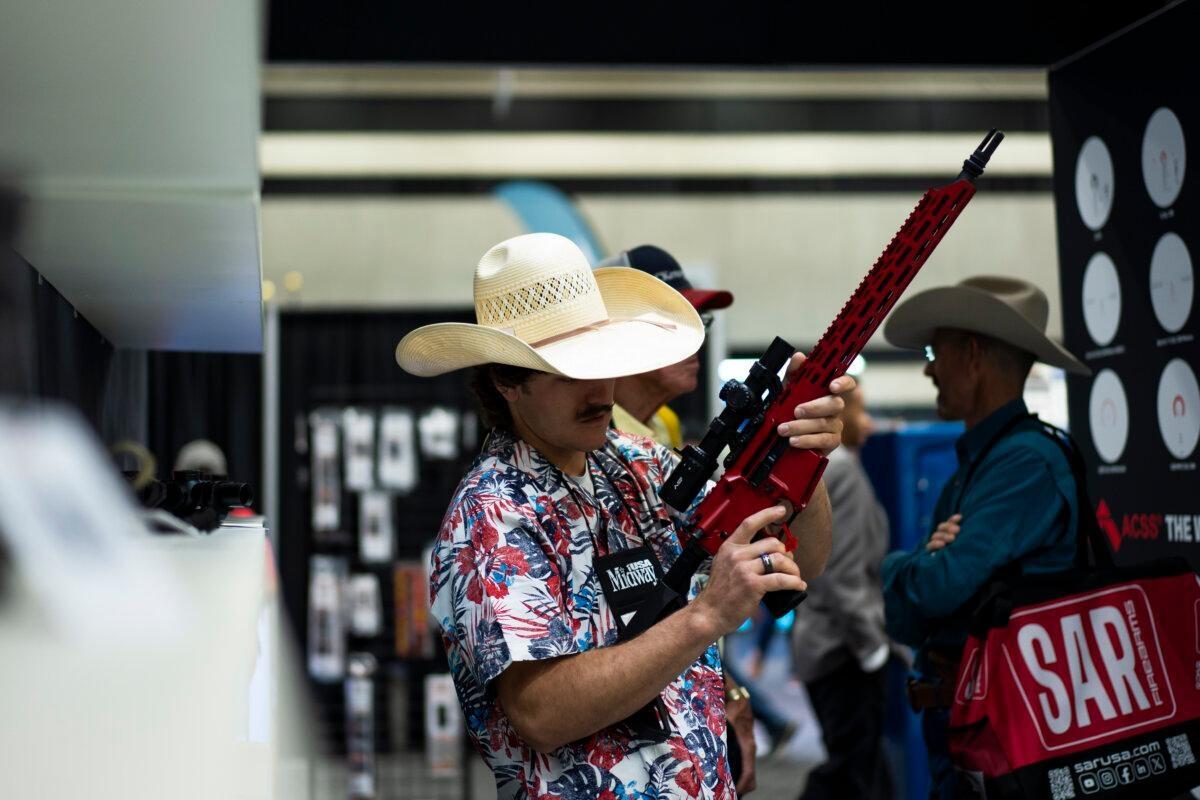
People try out firearms at the National Rifle Association exhibits at the Kay Bailey Hutchison Convention Center in Dallas on May 18, 2024. Madalina Vasiliu/The Epoch Times
It defines an assault weapon as any semiautomatic rifle, shotgun, or pistol with a collapsible, telescoping, or thumbhole stock, a bayonet lug or grenade launcher, a magazine that holds more than 15 rounds, a second handgrip, or a threaded barrel to install a flash suppressor, muzzle brake, or compensator, among other things.
Rifles legally bought before July 1, 2026, are grandfathered in but can only be transferred to licensed gun dealers outside the state, or to family members through private sale, gifting, or inheritance.
Antique guns, guns that are permanently inoperable, and those operated by bolt, pump, lever, or slide action are legal.
A conviction under this law is a Class 1 misdemeanor. Those convicted would be barred from buying, possessing, or transporting a firearm for three years.
Tyler Durden
Mon, 04/13/2026 – 21:45