



QUESTION: Do you think the blockade will be effective in bringing Iran to collapse? You also said that Iran is winning. Could you explain that.
Will
ANSWER: Regardless of how you might feel about the Iran war, as I previously stated, when I was called in to give me a briefing on Russia, I was told that we would NOT be at war with Russia – it would be with China. As they say, you only know who your friends are in times of trouble. This war has revealed that our supposed allies are really enemies waiting for the opportunity to stab this upstart colony called America in the back. In reality, they were always enemies, jealous that they lost their power to this fledgling upstart. The United States has only been feared – not admired.
Everyone has an opinion. That does not make one right and another wrong. Opinion requires experience – not second guessing. To think for one minute that this blockade will force Iran to collapse and yield to everything demanded by the Trump administration is rather naive. It is a desperate effort on the Trump Administration because they know that they cannot bomb Iran to end the Persian Civilization. What nobody seems to address is the one major point of Iran – a US guarantee that Iran will NOT be attacked again by the rogue Netanyahu. That is something Trump cannot deliver for Netanyahu is also up for election and he too needs a victory. As mentioned, there has been open discussions in Israel about nuking the granite tunnels the Iranians have dug because no bunker-buster-bomb can possible destroy their nuclear program.

Turkish Straits
Then there is what is being presented as ab surd that Iran wants a toll to pass through the Strait of Hormuz. Every other seaway that is a chokepoint ships myst pay a toll from manmade Panama Canal and the Suez Canal and to between Canada & USA in the Saint Lawrence Seaway. The Turkish Straits are the unique legal exception to the principle of free passage through natural waterways. Comprising the Bosphorus and Dardanelles straits, they form a critical maritime chokepoint connecting the Black Sea to the Mediterranean. Under the 1936 Montreux Convention, Türkiye has the authority to regulate transits and collect fees, which are legally defined as “navigation service costs” rather than tolls on the passage itsel. Iran can do the same and not call it a “toll” but “navigation service costs.”
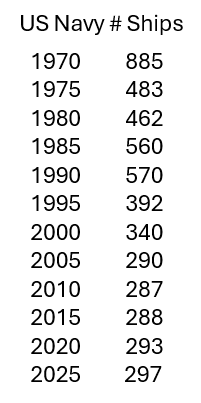
Then an embargo on Iran is an embargo on China impacting their national security. China must know what I was told in that briefing and that means that this is also an indirect confrontation with China. This war has seriously depleted the US capability to wage war since it relies on high-tech. Our Navy has about only 33% of the number of ships that President Regan had back in 1970. For decades, money was shifted from military to social spending and the US became more and more sophisticated in its weapons to replace the decline in the raw size of the force.

We have enter a new world of warfare that the vast majority are still blind to this new strategy than can defeat the United States and Israel much easier than andone realizes because of the propaganda of the Western Press that constantly prints the Neocon propaganda.

Let’s put it this way. You and I go to war against each other. You want to pretend you are the richest and most powerful. So you have fancy silver bullets that cost you $100 each. I have cheap copper bullets that cost me $1 each. I can produce 100 bullets to your one. Who do you think will win if a long-drawn-out war?
US air-defense inventories have been significantly drawn down by defending Israel and its own forces from Iranian attacks, but NOT to the point of functional depletion. The U.S. still retains sizable reserves, but the pace of use has exposed a critical gap in its ability to replenish stocks quickly in a major conflict.
Terminal High Altitude Area Defense (THAAD)
U.S. forces fired 100 to 150 interceptors (approx. 25% of its inventory) during a 12-day war in June 2025 to defend Israel against Iranian ballistic missiles. This was the most significant operational use of the system to date. Production and replenishment have been a major concern, with only 11 new interceptors produced in 2024, 12 expected in 2025, and a plan for 37 in 2026. To address the shortage, the Pentagon authorized an extra $2 billion to Lockheed Martin to replenish stocks.
Standard Missile (SM) Family (SM-2, SM-3, SM-6)
The Navy’s Standard Missiles have been heavily expended. From October 2023 to December 31, 2024, the Navy expended an estimated 168 SM-2s, 17 SM-3s, and 112 SM-6s in the Red Sea. During the 12-day 2025 war, the Navy increased its destroyer presence in the region from two to five to support Israel, further drawing on these stocks. The fleet has been expending these missiles faster than they can be replaced, with senior Navy officials describing the rate as “alarming”.
Patriot Missiles
Depletion: While specific depletion figures for the Patriot system are not detailed in the search results, it’s understood that the system has faced significant demand. The U.S. produces roughly 600 to 650 Patriot PAC-3 MSE missiles annually, but analysts warn that in a high-intensity war, even a year’s production could be consumed within weeks.
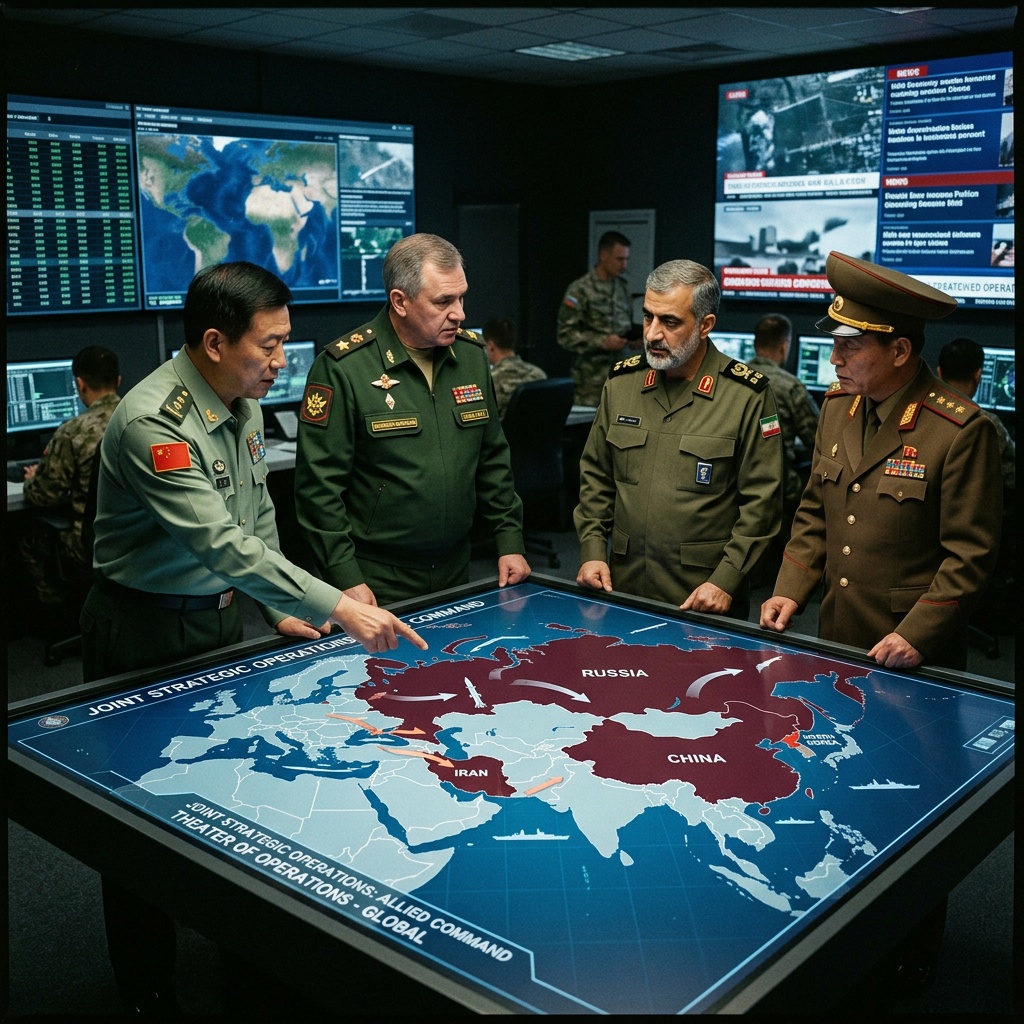
The U.S. still has significant missile stocks for now, but the strategic risk is that the US has moved to high-tech rather than normal weapons and that has reduced the supply, increased the cost, and reduced the ability to mass produce such weapons ro replenish during a war as we are witnessing with Iran. Fighting on multiple fronts was a central and decisive factor in the military defeats of both Napoleon and Hitler. While not the only reasons, the immense strain of splitting their forces made them vulnerable to the very thing they tried to avoid: a war of attrition fought against powerful coalitions. Both ultimately collapsed under the pressure of coordinated enemies they could no longer overwhelm with speed and decisive victories. I have warned that the way to strategically defeat even the United States is for a joint coalition of China, North Korea, Russia, and Iran. Waging a war of attrition is a crippling strategy.
The military has seven THAAD systems and eight Patriot battalions, each with substantial interceptors. However, the depletion of THAAD has exposed serious vulnerabilities. The critical issue is the Replenishment Rate. The current U.S. production capacity is far too slow for a high-end conflict. It could take years to replace interceptors used in just two weeks of fighting!
Then we have the Strategic Risk. The drawdown has hollowed out U.S. defense capacity against China. Given that we are already struggling to deal with threats from Iran, how do we think we’re going to do against China?” The U.S. Sixth Fleet’s local inventory of SM-3 interceptors was nearly depleted after helping defend Israel from the October 1 Iranian missile strike.
We have strategically made the unsustainable cost in trying to fight a war. The economic burden is immense to put this mildly despite the pro-war contingent and the analysts preaching Iran has lost. THAAD interceptors cost roughly $12.7 million each, while SM-3s range from $9 million to $12 million. By mid-April 2024, the Navy had already spent close to $1 billion on munitions defending against Houthi attacks.
In short, the U.S. missile inventory may not be not exhausted as of yet, but the recent pace of operations has revealed a dangerous gap between peacetime production rates and wartime demands.
The higher the Tech, the greater the cost, and the fewer bullets you have to fire. Knowing this is not the Achilles Heel of modern warfare. The Iranian attacks in 2025 involved tactics specifically designed to force Israel to expend its expensive air defense arsenal, leveraging an economic war of attrition. However, the 2025 war was a “two-way bleed“—while Israel was forced to fire costly interceptors, Iran’s own missile and launch infrastructure was also devastated. Iran’s approach relied on overwhelming Israel’s defenses through saturation and exploiting a massive cost asymmetry.
Iran cleverly adopted a saturation and the Economic War of Attrition. Iran’s strategy was a direct response to the layered Israeli air defense network, which includes the Iron Dome (rockets), David’s Sling (short-to-medium range missiles and drones), and the Arrow system (long-range ballistic missiles). Iran employed two specific tactics. First, by launching mass waves of threats from multiple directions (Iran, Iraq, Lebanon, Syria, and Yemen), Iran aimed to overwhelm Israel’s multi-layered defenses with more targets than they could handle at once. The core of this tactic was economic warfare. Each interception by a sophisticated Israeli system was tens or hundreds of times more expensive than the cheap drone it was destroying.
The Iranian Shahed Drone cost was $20,000 – $50,000 A very low-tech, one-way attack drone.
The Israeli David’s Sling cost $1,000,000 per launch Interceptor for short-to-medium range threats.
Israeli Arrow 3 System $3,500,000 – $4,000,000 per interception. Exo-atmospheric interceptor for long-range ballistic missiles.
Was the Strategy Successful? The tactic was partially successful. It placed immense strategic pressure on Israel but did not achieve total victory in 2025. The financial burden on Israel was staggering. For example, during the June 2025 “12-Day War,” the combined cost of U.S. and Israeli defensive operations was between $1.48 billion and $1.58 billion. A senior Israeli official estimated a single night’s defense could cost $1-1.3 billion. Israeli intelligence warned that if attacks continued at their peak rate, Israel’s defense reserves might only last 10 to 12 days.
Iran’s cost is cheaper, but the sheer volume of attacks still costs Iran significantly, with estimates of its missile and drone expenditures ranging from $1.1 billion to $6.6 billion during the 12-day war. The U.S. and Israeli DEPLETION during the conflict also put a major dent in the U.S. inventory, which was already stressed from supporting Ukraine. The U.S. used up an estimated 14% of its global stockpile of THAAD missile interceptors in just 12 days, and at current production rates, it would take three to eight years to replenish them!
In essence, the 2025 conflict showed that while Iran’s economic-attrition strategy was a potent NEW form of warfare, it was not a silver bullet. It forced Israel to expend critical resources at an alarming rate, but the war’s kinetic phase ended with Iran’s launch infrastructure in ruins, highlighting the extreme risks of such a direct confrontation for both sides.
Iran has made a decisive and public shift towards a strategy of economic warfare and attrition. The 2025 war is now seen as a blueprint that forced a hard pivot in their approach, moving away from seeking a decisive military victory to a long-term strategy designed to bankrupt their enemies.
The most tangible evidence of this shift is the staggering 10-fold increase in production of attack drones in just the seven months after the war. This industrial surge is the engine of their economic warfare, designed to overwhelm air defenses through sheer, cheap numbers.
Iran possessed an estimated 80,000 to 100,000 Shahed drones at the start of this 2026 war, with a monthly production capacity of up to 500 for sustained pressure, or over 12,000 during wartime peaks. This strategy exploits the massive cost gap, where a $35,000 drone can force the use of a $4 million Patriot missile, creating an economic calculus that is “100 times” in Iran’s favor. By forcing two interceptors per target, they accelerate the depletion of American and Israeli stockpiles.
I have been warning about the sheer stupidity of the Neocons and their arrogance that Having the Biggest Military automatically means you win. Because we Cannot win a war of attrition, this means the only weapon they will be able to deploy when they run out of bullets is nuclear.
